Disclosure (1994)

Our next 3D file browsing system is from the 1994 film Disclosure. Thanks to site reader Patrick H Lauke for the suggestion.

Like Jurassic Park, Disclosure is based on a Michael Crichton novel, although this time without any dinosaurs. (Would-be scriptwriters should compare the relative success of these two films when planning a study program.) The plot of the film is corporate infighting within Digicom, manufacturer of high tech CD-ROM drives—it was the 1990s—and also virtual reality systems. Tom Sanders, executive in charge of the CD-ROM production line, is being set up to take the blame for manufacturing failures that are really the fault of cost-cutting measures by rival executive Meredith Johnson.

The Corridor: Hardware Interface

The virtual reality system is introduced at about 40 minutes, using the narrative device of a product demonstration within the company to explain to the attendees what it does. The scene is nicely done, conveying all the important points we need to know in two minutes. (To be clear, some of the images used here come from a later scene in the film, but it’s the same system in both.)

The process of entangling yourself with the necessary hardware and software is quite distinct from interacting with the VR itself, so let’s discuss these separately, starting with the physical interface.

Tom wearing VR headset and one glove, being scanned. Disclosure (1994)

In Disclosure the virtual reality user wears a headset and one glove, all connected by cables to the computer system. Like most virtual reality systems, the headset is responsible for visual display, audio, and head movement tracking; the glove for hand movement and gesture tracking. 

There are two “laser scanners” on the walls. These are the planar blue lights, which scan the user’s body at startup. After that they track body motion, although since the user still has to wear a glove, the scanners presumably just track approximate body movement and orientation without fine detail.

Lastly, the user stands on a concave hexagonal plate covered in embedded white balls, which allows the user to “walk” on the spot.

Closeup of user standing on curved surface of white balls. Disclosure (1994)

Searching for Evidence

The scene we’re most interested in takes place later in the film, the evening before a vital presentation which will determine Tom’s future. He needs to search the company computer files for evidence against Meredith, but discovers that his normal account has been blocked from access.   He knows though that the virtual reality demonstrator is on display in a nearby hotel suite, and also knows about the demonstrator having unlimited access. He sneaks into the hotel suite to use The Corridor. Tom is under a certain amount of time pressure because a couple of company VIPs and their guests are downstairs in the hotel and might return at any time.

The first step for Tom is to launch the virtual reality system. This is done from an Indy workstation, using the regular Unix command line.

The command line to start the virtual reality system. Disclosure (1994)

Next he moves over to the VR space itself. He puts on the glove but not the headset, presses a key on the keyboard (of the VR computer, not the workstation), and stands still for a moment while he is scanned from top to bottom.

Real world Tom, wearing one VR glove, waits while the scanners map his body. Disclosure (1994)

On the left is the Indy workstation used to start the VR system. In the middle is the external monitor which will, in a moment, show the third person view of the VR user as seen earlier during the product demonstration.

Now that Tom has been scanned into the system, he puts on the headset and enters the virtual space.

The Corridor: Virtual Interface

“The Corridor,” as you’ve no doubt guessed, is a three dimensional file browsing program. It is so named because the user will walk down a corridor in a virtual building, the walls lined with “file cabinets” containing the actual computer files.

Three important aspects of The Corridor were mentioned during the product demonstration earlier in the film. They’ll help structure our tour of this interface, so let’s review them now, as they all come up in our discussion of the interfaces.

  1. There is a voice-activated help system, which will summon a virtual “Angel” assistant.
  2. Since the computers themselves are part of a multi-user network with shared storage, there can be more than one user “inside” The Corridor at a time.
    Users who do not have access to the virtual reality system will appear as wireframe body shapes with a 2D photo where the head should be.
  3. There are no access controls and so the virtual reality user, despite being a guest or demo account, has unlimited access to all the company files. This is spectacularly bad design, but necessary for the plot.

With those bits of system exposition complete, now we can switch to Tom’s own first person view of the virtual reality environment.

Virtual world Tom watches his hands rezzing up, right hand with glove. Disclosure (1994)

There isn’t a real background yet, just abstract streaks. The avatar hands are rezzing up, and note that the right hand wearing the glove has a different appearance to the left. This mimics the real world, so eases the transition for the user.

Overlaid on the virtual reality view is a Digicom label at the bottom and four corner brackets which are never explained, although they do resemble those used in cameras to indicate the preferred viewing area.

To the left is a small axis indicator, the three green lines labeled X, Y, and Z. These show up in many 3D applications because, silly though it sounds, it is easy in a 3D computer environment to lose track of directions or even which way is up. A common fix for the user being unable to see anything is just to turn 180 degrees around.

We then switch to a third person view of Tom’s avatar in the virtual world.

Tom is fully rezzed up, within cloud of visual static. Disclosure (1994)

This is an almost photographic-quality image. To remind the viewers that this is in the virtual world rather than real, the avatar follows the visual convention described in chapter 4 of Make It So for volumetric projections, with scan lines and occasional flickers. An interesting choice is that the avatar also wears a “headset”, but it is translucent so we can see the face.

Now that he’s in the virtual reality, Tom has one more action needed to enter The Corridor. He pushes a big button floating before him in space.

Tom presses one button on a floating control panel. Disclosure (1994)

This seems unnecessary, but we can assume that in the future of this platform, there will be more programs to choose from.

The Corridor rezzes up, the streaks assembling into wireframe components which then slide together as the surfaces are shaded. Tom doesn’t have to wait for the process to complete before he starts walking, which suggests that this is a Level Of Detail (LOD) implementation where parts of the building are not rendered in detail until the user is close enough for it to be worth doing.

Tom enters The Corridor. Nearby floor and walls are fully rendered, the more distant section is not complete. Disclosure (1994)

The architecture is classical, rendered with the slightly artificial-looking computer shading that is common in 3D computer environments because it needs much less computation than trying for full photorealism.

Instead of a corridor this is an entire multistory building. It is large and empty, and as Tom is walking bits of architecture reshape themselves, rather like the interior of Hogwarts in Harry Potter.

Although there are paintings on some of the walls, there aren’t any signs, labels, or even room numbers. Tom has to wander around looking for the files, at one point nearly “falling” off the edge of the floor down an internal air well. Finally he steps into one archway room entrance and file cabinets appear in the walls.

Tom enters a room full of cabinets. Disclosure (1994)

Unlike the classical architecture around him, these cabinets are very modern looking with glowing blue light lines. Tom has found what he is looking for, so now begins to manipulate files rather than browsing.

Virtual Filing Cabinets

The four nearest cabinets according to the titles above are

  1. Communications
  2. Operations
  3. System Control
  4. Research Data.

There are ten file drawers in each. The drawers are unmarked, but labels only appear when the user looks directly at it, so Tom has to move his head to centre each drawer in turn to find the one he wants.

Tom looks at one particular drawer to make the title appear. Disclosure (1994)

The fourth drawer Tom looks at is labeled “Malaysia”. He touches it with the gloved hand and it slides out from the wall.

Tom withdraws his hand as the drawer slides open. Disclosure (1994)

Inside are five “folders” which, again, are opened by touching. The folder slides up, and then three sheets, each looking like a printed document, slide up and fan out.

Axis indicator on left, pointing down. One document sliding up from a folder. Disclosure (1994)

Note the tilted axis indicator at the left. The Y axis, representing a line extending upwards from the top of Tom’s head, is now leaning towards the horizontal because Tom is looking down at the file drawer. In the shot below, both the folder and then the individual documents are moving up so Tom’s gaze is now back to more or less level.

Close up of three “pages” within a virtual document. Disclosure (1994)

At this point the film cuts away from Tom. Rival executive Meredith, having been foiled in her first attempt at discrediting Tom, has decided to cover her tracks by deleting all the incriminating files. Meredith enters her office and logs on to her Indy workstation. She is using a Command Line Interface (CLI) shell, not the standard SGI Unix shell but a custom Digicom program that also has a graphical menu. (Since it isn’t three dimensional it isn’t interesting enough to show here.)

Tom uses the gloved hand to push the sheets one by one to the side after scanning the content.

Tom scrolling through the pages of one folder by swiping with two fingers. Disclosure (1994)

Quick note: This is harder than it looks in virtual reality. In a 2D GUI moving the mouse over an interface element is obvious. In three dimensions the user also has to move their hand forwards or backwards to get their hand (or finger) in the right place, and unless there is some kind of haptic feedback it isn’t obvious to the user that they’ve made contact.

Tom now receives a nasty surprise.

The shot below shows Tom’s photorealistic avatar at the left, standing in front of the open file cabinet. The green shape on the right is the avatar of Meredith who is logged in to a regular workstation. Without the laser scanners and cameras her avatar is a generic wireframe female humanoid with a face photograph stuck on top. This is excellent design, making The Corridor usable across a range of different hardware capabilities.

Tom sees the Meredith avatar appear. Disclosure (1994)

Why does The Corridor system place her avatar here? A multiuser computer system, or even just a networked file server,  obviously has to know who is logged on. Unix systems in general and command line shells also track which directory the user is “in”, the current working directory. Meredith is using her CLI interface to delete files in a particular directory so The Corridor can position her avatar in the corresponding virtual reality location. Or rather, the avatar glides into position rather than suddenly popping into existence: Tom is only surprised because the documents blocked his virtual view.

Quick note: While this is plausible, there are technical complications. Command line users often open more than one shell at a time in different directories. In such a case, what would The Corridor do? Duplicate the wireframe avatar in each location? In the real world we can’t be in more than one place at a time, would doing so contradict the virtual reality metaphor?

There is an asymmetry here in that Tom knows Meredith is “in the system” but not vice versa. Meredith could in theory use CLI commands to find out who else is logged on and whether anyone was running The Corridor, but she would need to actively seek out that information and has no reason to do so. It didn’t occur to Tom either, but he doesn’t need to think about it,  the virtual reality environment conveys more information about the system by default.

We briefly cut away to Meredith confirming her CLI delete command. Tom sees this as the file drawer lid emitting beams of light which rotate down. These beams first erase the floating sheets, then the folders in the drawer. The drawer itself now has a red “DELETED” label and slides back into the wall.

Tom watches Meredith deleting the files in an open drawer. Disclosure (1994)

Tom steps further into the room. The same red labels appear on the other file drawers even though they are currently closed.

Tom watches Meredith deleting other, unopened, drawers. Disclosure (1994)

Talking to an Angel

Tom now switches to using the system voice interface, saying “Angel I need help” to bring up the virtual reality assistant. Like everything else we’ve seen in this VR system the “angel” rezzes up from a point cloud, although much more quickly than the architecture: people who need help tend to be more impatient and less interested in pausing to admire special effects.

The voice assistant as it appears within VR. Disclosure (1994)

Just in case the user is now looking in the wrong direction the angel also announces “Help is here” in a very natural sounding voice.

The angel is rendered with white robe, halo, harp, and rapidly beating wings. This is horribly clichéd, but a help system needs to be reassuring in appearance as well as function. An angel appearing as a winged flying serpent or wheel of fire would be more original and authentic (yes, really: ​​Biblically Accurate Angels) but users fleeing in terror would seriously impact the customer satisfaction scores.

Now Tom has a short but interesting conversation with the angel, beginning with a question:

  • Tom
  • Is there any way to stop these files from being deleted?
  • Angel
  • I’m sorry, you are not level five.
  • Tom
  • Angel, you’re supposed to protect the files!
  • Angel
  • Access control is restricted to level five.

Tom has made the mistake, as described in chapter 9 Anthropomorphism of the book, of ascribing more agency to this software program than it actually has. He thinks he is engaged in a conversational interface (chapter 6 Sonic Interfaces) with a fully autonomous system, which should therefore be interested in and care about the wellbeing of the entire system. Which it doesn’t, because this is just a limited-command voice interface to a guide.

Even though this is obviously scripted, rather than a genuine error I think this raises an interesting question for real world interface designers: do users expect that an interface with higher visual quality/fidelity will be more realistic in other aspects as well? If a voice interface assistant has a simple polyhedron with no attempt at photorealism (say, like Bit in Tron) or with zoomorphism (say, like the search bear in Until the End of the World) will users adjust their expectations for speech recognition downwards? I’m not aware of any research that might answer this question. Readers?

Despite Tom’s frustration, the angel has given an excellent answer – for a guide. A very simple help program would have recited the command(s) that could be used to protect files against deletion. Which would have frustrated Tom even more when he tried to use one and got some kind of permission denied error. This program has checked whether the user can actually use commands before responding.

This does contradict the earlier VR demonstration where we were told that the user had unlimited access. I would explain this as being “unlimited read access, not write”, but the presenter didn’t think it worthwhile to go into such detail for the mostly non-technical audience.

Tom is now aware that he is under even more time pressure as the Meredith avatar is still moving around the room. Realising his mistake, he uses the voice interface as a query language.

“Show me all communications with Malaysia.”
“Telephone or video?”
“Video.”

This brings up a more conventional looking GUI window because not everything in virtual reality needs to be three-dimensional. It’s always tempting for a 3D programmer to re-implement everything, but it’s also possible to embed 2D GUI applications into a virtual world.

Tom looks at a conventional 2D display of file icons inside VR. Disclosure (1994)

The window shows a thumbnail icon for each recorded video conference call. This isn’t very helpful, so Tom again decides that a voice query will be much faster than looking at each one in turn.

“Show me, uh, the last transmission involving Meredith.”

There’s a short 2D transition effect swapping the thumbnail icon display for the video call itself, which starts playing at just the right point for plot purposes.

Tom watches a previously recorded video call made by Meredith (right). Disclosure (1994)

While Tom is watching and listening, Meredith is still typing commands. The camera orbits around behind the video conference call window so we can see the Meredith avatar approach, which also shows us that this window is slightly three dimensional, the content floating a short distance in front of the frame. The film then cuts away briefly to show Meredith confirming her “kill all” command. The video conference recordings are deleted, including the one Tom is watching.

Tom is informed that Meredith (seen here in the background as a wireframe avatar) is deleting the video call. Disclosure (1994)

This is also the moment when the downstairs VIPs return to the hotel suite, so the scene ends with Tom managing to sneak out without being detected.

Virtual reality has saved the day for Tom. The documents and video conference calls have been deleted by Meredith, but he knows that they once existed and has a colleague retrieve the files he needs from the backup tapes. (Which is good writing: the majority of companies shown in film and TV never seem to have backups for files, no matter how vital.) Meredith doesn’t know that he knows, so he has the upper hand to expose her plot.

Analysis

How believable is the interface?

I won’t spend much time on the hardware, since our focus is on file browsing in three dimensions. From top to bottom, the virtual reality system starts as believable and becomes less so.

Hardware

The headset and glove look like real VR equipment, believable in 1994 and still so today. Having only one glove is unusual, and makes impossible some of the common gesture actions described in chapter 5 of Make It So, which require both hands.

The “laser scanners” that create the 3D geometry and texture maps for the 3D avatar and perform real time body tracking would more likely be cameras, but that would not sound as cool.

And lastly the walking platform apparently requires our user to stand on large marbles or ball bearings and stay balanced while wearing a headset. Uh…maybe…no. Apologetics fails me. To me it looks like it would be uncomfortable to walk on, almost like deterrent paving.

Software

The Corridor, unlike the 3D file browser used in Jurassic Park, is a special effect created for the film. It was a mostly-plausible, near future system in 1994, except for the photorealistic avatar. Usually this site doesn’t discuss historical context (the  “new criticism” stance), but I think in this case it helps to explain how this interface would have appeared to audiences almost two decades ago.

I’ll start with the 3D graphics of the virtual building. My initial impression was that The Corridor could have been created as an interactive program in 1994, but that was my memory compressing the decade. During the 1990s 3D computer graphics, both interactive and CGI, improved at a phenomenal rate. The virtual building would not have been interactive in 1994, was possible on the most powerful systems six years later in 2000, and looks rather old-fashioned compared to what the game consoles of the 21st C can achieve.

For the voice interface I made the opposite mistake. Voice interfaces on phones and home computing appliances have become common in the second decade of the 21st C, but in reality are much older. Apple Macintosh computers in 1994 had text-to-speech synthesis with natural sounding voices and limited vocabulary voice command recognition. (And without needing an Internet connection!) So the voice interface in the scene is believable.

The multi-user aspects of The Corridor were possible in 1994. The wireframe avatars for users not in virtual reality are unflattering or perhaps creepy, but not technically difficult. As a first iteration of a prototype system it’s a good attempt to span a range of hardware capabilities.

The virtual reality avatar, though, is not believable for the 1990s and would be difficult today. Photographs of the body, made during the startup scan, could be used as a texture map for the VR avatar. But live video of the face would be much more difficult, especially when the face is partly obscured by a headset.

How well does the interface inform the narrative of the story?

The virtual reality system in itself is useful to the overall narrative because it makes the Digicom company seem high tech. Even in 1994 CD-ROM drives weren’t very interesting.

The Corridor is essential to the tension of the scene where Tom uses it to find the files, because otherwise the scene would be much shorter and really boring. If we ignore the virtual reality these are the interface actions:

  • Tom reads an email.
  • Meredith deletes the folder containing those emails.
  • Tom finds a folder full of recorded video calls.
  • Tom watches one recorded video call.
  • Meredith deletes the folder containing the video calls.

Imagine how this would have looked if both were using a conventional 2D GUI, such as the Macintosh Finder or MS Windows Explorer. Double click, press and drag, double click…done.

The Corridor slows down Tom’s actions and makes them far more visible and understandable. Thanks to the virtual reality avatar we don’t have to watch an actor push a mouse around. We see him moving and swiping, be surprised and react; and the voice interface adds extra emotion and some useful exposition. It also helps with the plot, giving Tom awareness of what Meredith is doing without having to actively spy on her, or look at some kind of logs or recordings later on.

Meredith, though, can’t use the VR system because then she’d be aware of Tom as well. Using a conventional workstation visually distinguishes and separates Meredith from Tom in the scene.

So overall, though the “action” is pretty mundane, it’s crucial to the plot, and the VR interface helps make this interesting and more engaging.

How well does the interface equip the character to achieve their goals?

As described in the film itself, The Corridor is a prototype for demonstrating virtual reality. As a file browser it’s awful, but since Tom has lost all his normal privileges this is the only system available, and he does manage to eventually find the files he needs.

At the start of the scene, Tom spends quite some time wandering around a vast multi-storey building without a map, room numbers, or even coordinates overlaid on his virtual view. Which seems rather pointless because all the files are in one room anyway. As previously discussed for Johnny Mnemonic, walking or flying everywhere in your file system seems like a good idea at first, but often becomes tedious over time. Many actual and some fictional 3D worlds give users the ability to teleport directly to any desired location.

Then the file drawers in each cabinet have no labels either, so Tom has to look carefully at each one in turn. There is so much more the interface could be doing to help him with his task, and even help the users of the VR demo learn and explore its technology as well.

Contrast this with Meredith, who uses her command line interface and 2D GUI to go through files like a chainsaw.

Tom becomes much more efficient with the voice interface. Which is just as well, because if he hadn’t, Meredith would have deleted the video conference recordings while he was still staring at virtual filing cabinets. However neither the voice interface nor the corresponding file display need three dimensional graphics.

There is hope for version 2.0 of The Corridor, even restricting ourselves to 1994 capabilities. The first and most obvious is to copy 2D GUI file browsers, or the 3D file browser from Jurassic Park, and show the corresponding text name next to each graphical file or folder object. The voice interface is so good that it should be turned on by default without requiring the angel. And finally add some kind of map overlay with a you are here moving dot, like the maps that players in 3D games such as Doom could display with a keystroke.

Film making challenge: VR on screen

Virtual reality (or augmented reality systems such as Hololens) provide a better viewing experience for 3D graphics by creating the illusion of real three dimensional space rather than a 2D monitor. But it is always a first person view and unlike conventional 2D monitors nobody else can usually see what the VR user is seeing without a deliberate mirroring/debugging display. This is an important difference from other advanced or speculative technologies that film makers might choose to include. Showing a character wielding a laser pistol instead of a revolver or driving a hover car instead of a wheeled car hardly changes how to stage a scene, but VR does.

So, how can we show virtual reality in film?

There’s the first-person view corresponding to what the virtual reality user is seeing themselves. (Well, half of what they see since it’s not stereographic, but it’s cinema VR, so close enough.) This is like watching a screencast of someone else playing a first person computer game, the original active experience of the user becoming passive viewing by the audience. Most people can imagine themselves in the driving seat of a car and thus make sense of the turns and changes of speed in a first person car chase, but the film audience probably won’t be familiar with the VR system depicted and will therefore have trouble understanding what is happening. There’s also the problem that viewing someone else’s first-person view, shifting and changing in response to their movements rather than your own, can make people disoriented or nauseated.

A third-person view is better for showing the audience the character and the context in which they act. But not the diegetic real-world third-person view, which would be the character wearing a geeky headset and poking at invisible objects. As seen in Disclosure, the third person view should be within the virtual reality.

But in doing that, now there is a new problem: the avatar in virtual reality representing the real character. If the avatar is too simple the audience may not identify it with the real world character and it will be difficult to show body language and emotion. More realistic CGI avatars are increasingly expensive and risk falling into the Uncanny Valley. Since these films are science fiction rather than factual, the easy solution is to declare that virtual reality has achieved the goal of being entirely photorealistic and just film real actors and sets. Adding the occasional ripple or blur to the real world footage to remind the audience that it’s meant to be virtual reality, again as seen in Disclosure, is relatively cheap and quick.
So, solving all these problems results in the cinematic trope we can call Extradiegetic Avatars, which are third-person, highly-lifelike “renderings” of characters, with a telltale Hologram Projection Imperfection for audience readability, that may or may not be possible within the world of the film itself.

IMDB: https://www.imdb.com/title/tt0109635/

Sci-fi Spacesuits: Moving around

Whatever it is, it ain’t going to construct, observe, or repair itself. In addition to protection and provision, suits must facilitate the reason the wearer has dared to go out into space in the first place.

One of the most basic tasks of extravehicular activity (EVA) is controlling where the wearer is positioned in space. The survey shows several types of mechanisms for this. First, if your EVA never needs you to leave the surface of the spaceship, you can go with mountaineering gear or sticky feet. (Or sticky hands.) We can think of maneuvering through space as similar to piloting a craft, but the outputs and interfaces have to be made wearable, like wearable control panels. We might also expect to see some tunnel in the sky displays to help with navigation. We’d also want to see some AI safeguard features, to return the spacewalker to safety when things go awry. (Narrator: We don’t.)

Mountaineering gear

In Stowaway (2021) astronauts undertake unplanned EVAs with carabiners and gear akin to mountaineers use. This makes some sense, though even this equipment needs to be modified for use by astronauts’ thick gloves.

Stowaway (2021) Drs Kim and Levinson prepare to scale to the propellant tank.

Sticky feet (and hands)

Though it’s not extravehicular, I have to give a shout out to 2001: A Space Odyssey (1969), where we see a flight attendant manage their position in the microgravity with special shoes that adhere to the floor. It’s a lovely example of a competent Hand Wave. We don’t need to know how it works because it says, right there, “Grip shoes.” Done. Though props to the actress Heather Downham, who had to make up a funny walk to illustrate that it still isn’t like walking on earth.

2001: A Space Odyssey (1969)
Pan Am: “Thank god we invented the…you know, whatever shoes.

With magnetic boots, seen in Destination Moon, the wearer simply walks around and manages the slight awkwardness of having to pull a foot up with extra force, and have it snap back down on its own.

Battlestar Galactica added magnetic handgrips to augment the control provided by magnetized boots. With them, Sergeant Mathias is able to crawl around the outside of an enemy vessel, inspecting it. While crawling, she holds grip bars mounted to circles that contain the magnets. A mechanism for turning the magnet off is not seen, but like these portable electric grabbers, it could be as simple as a thumb button.

Iron Man also had his Mark 50 suit form stabilizing suction cups before cutting a hole in the hull of the Q-Ship.

Avengers: Infinity War (2018)

In the electromagnetic version of boots, seen in Star Trek: First Contact, the wearer turns the magnets on with a control strapped to their thigh. Once on, the magnetization seems to be sensitive to the wearer’s walk, automatically lessening when the boot is lifted off. This gives the wearer something of a natural gait. The magnetism can be turned off again to be able to make microgravity maneuvers, such as dramatically leaping away from Borg minions.

Star Trek: Discovery also included this technology, but with what appears to be a gestural activation and a cool glowing red dots on the sides and back of the heel. The back of each heel has a stack of red lights that count down to when they turn off, as, I guess, a warning to anyone around them that they’re about to be “air” borne.

Quick “gotcha” aside: neither Destination Moon nor Star Trek: First Contact bothers to explain how characters are meant to be able to kneel while wearing magnetized boots. Yet this very thing happens in both films.

Destination Moon (1950): Kneeling on the surface of the spaceship.
Star Trek: First Contact (1996): Worf rises from operating the maglock to defend himself.

Controlled Propellant

If your extravehicular task has you leaving the surface of the ship and moving around space, you likely need a controlled propellant. This is seen only a few times in the survey.

In the film Mission to Mars, the manned mobility unit, or MMU, seen in the film is based loosely on NASA’s MMU. A nice thing about the device is that unlike the other controlled propellant interfaces, we can actually see some of the interaction and not just the effect. The interfaces are subtly different in that the Mission to Mars spacewalkers travel forward and backward by angling the handgrips forward and backward rather than with a joystick on an armrest. This seems like a closer mapping, but also seems more prone to error by accidental touching or bumping into something.

The plus side is an interface that is much more cinegenic, where the audience is more clearly able to see the cause and effect of the spacewalker’s interactions with the device.

If you have propellent in a Moh’s 4 or 5 film, you might need to acknowledge that propellant is a limited resource. Over the course of the same (heartbreaking) scene shown above, we see an interface where one spacewalker monitors his fuel, and another where a spacewalker realizes that she has traveled as far as she can with her MMU and still return to safety.

Mission to Mars (2000): Woody sees that he’s out of fuel.

For those wondering, Michael Burnham’s flight to the mysterious signal in that pilot uses propellant, but is managed and monitored by controllers on Discovery, so it makes sense that we don’t see any maneuvering interfaces for her. We could dive in and review the interfaces the bridge crew uses (and try to map that onto a spacesuit), but we only get snippets of these screens and see no controls.

Iron Man’s suits employ some Phlebotinum propellant that lasts for ever, can fit inside his tailored suit, and are powerful enough to achieve escape velocity.

Avengers: Infinity War (2018)

All-in-all, though sci-fi seems to understand the need for characters to move around in spacesuits, very little attention is given to the interfaces that enable it. The Mission to Mars MMU is the only one with explicit attention paid to it, and that’s quite derived from NASA models. It’s an opportunity for film makers should the needs of the plot allow, to give this topic some attention.

Sci-fi Spacesuits: Biological needs

Spacesuits must support the biological functioning of the astronaut. There are probably damned fine psychological reasons to not show astronauts their own biometric data while on stressful extravehicular missions, but there is the issue of comfort. Even if temperature, pressure, humidity, and oxygen levels are kept within safe ranges by automatic features of the suit, there is still a need for comfort and control inside of that range. If the suit is to be warn a long time, there must be some accommodation for food, water, urination, and defecation. Additionally, the medical and psychological status of the wearer should be monitored to warn of stress states and emergencies.

Unfortunately, the survey doesn’t reveal any interfaces being used to control temperature, pressure, or oxygen levels. There are some for low oxygen level warnings and testing conditions outside the suit, but these are more outputs than interfaces where interactions take place.

There are also no nods to toilet necessities, though in fairness Hollywood eschews this topic a lot.

The one example of sustenance seen in the survey appears in Sunshine, we see Captain Kaneda take a sip from his drinking tube while performing a dangerous repair of the solar shields. This is the only food or drink seen in the survey, and it is a simple mechanical interface, held in place by material strength in such a way that he needs only to tilt his head to take a drink.

Similarly, in Sunshine, when Capa and Kaneda perform EVA to repair broken solar shields, Cassie tells Capa to relax because he is using up too much oxygen. We see a brief view of her bank of screens that include his biometrics.

Remote monitoring of people in spacesuits is common enough to be a trope, but has been discussed already in the Medical chapter in Make It So, for more on biometrics in sci-fi.

Crowe’s medical monitor in Aliens (1986).

There are some non-interface biological signals for observers. In the movie Alien, as the landing party investigates the xenomorph eggs, we can see that the suit outgases something like steam—slower than exhalations, but regular. Though not presented as such, the suit certainly confirms for any onlooker that the wearer is breathing and the suit functioning.

Given that sci-fi technology glows, it is no surprise to see that lots and lots of spacesuits have glowing bits on the exterior. Though nothing yet in the survey tells us what these lights might be for, it stands to reason that one purpose might be as a simple and immediate line-of-sight status indicator. When things are glowing steadily, it means the life support functions are working smoothly. A blinking red alert on the surface of a spacesuit could draw attention to the individual with the problem, and make finding them easier.

Emergency deployment

One nifty thing that sci-fi can do (but we can’t yet in the real world) is deploy biology-protecting tech at the touch of a button. We see this in the Marvel Cinematic Universe with Starlord’s helmet.

If such tech was available, you’d imagine that it would have some smart sensors to know when it must automatically deploy (sudden loss of oxygen or dangerous impurities in the air), but we don’t see it. But given this speculative tech, one can imagine it working for a whole spacesuit and not just a helmet. It might speed up scenes like this.

What do we see in the real world?

Are there real-world controls that sci-fi is missing? Let’s turn to NASA’s space suits to compare.

The Primary Life-Support System (PLSS) is the complex spacesuit subsystem that provides the life support to the astronaut, and biomedical telemetry back to control. Its main components are the closed-loop oxygen-ventilation system for cycling and recycling oxygen, the moisture (sweat and breath) removal system, and the feedwater system for cooling.

The only “biology” controls that the spacewalker has for these systems are a few on the Display and Control Module (DCM) on the front of the suit. They are the cooling control valve, the oxygen actuator slider, and the fan switch. Only the first is explicitly to control comfort. Other systems, such as pressure, are designed to maintain ideal conditions automatically. Other controls are used for contingency systems for when the automatic systems fail.

Hey, isn’t the text on this thing backwards? Yes, because astronauts can’t look down from inside their helmets, and must view these controls via a wrist mirror. More on this later.

The suit is insulated thoroughly enough that the astronaut’s own body heats the interior, even in complete shade. Because the astronaut’s body constantly adds heat, the suit must be cooled. To do this, the suit cycles water through a Liquid Cooling and Ventilation Garment, which has a fine network of tubes held closely to the astronaut’s skin. Water flows through these tubes and past a sublimator that cools the water with exposure to space. The astronaut can increase or decrease the speed of this flow and thereby the amount to which his body is cooled, by the cooling control valve, a recessed radial valve with fixed positions between 0 (the hottest) and 10 (the coolest), located on the front of the Display Control Module.

The spacewalker does not have EVA access to her biometric data. Sensors measure oxygen consumption and electrocardiograph data and broadcast it to the Mission Control surgeon, who monitors it on her behalf. So whatever the reason is, if it’s good enough for NASA, it’s good enough for the movies.


Back to sci-fi

So, we do see temperature and pressure controls on suits in the real world, which underscores their absence in sci-fi. But, if there hasn’t been any narrative or plot reason for such things to appear in a story, we should not expect them.

Vibranium-based Cape Shields

Editor’s Note: Today’s guest post is penned by Lonny Brooks. Be sure and read his introduction post if you missed it when it was published.

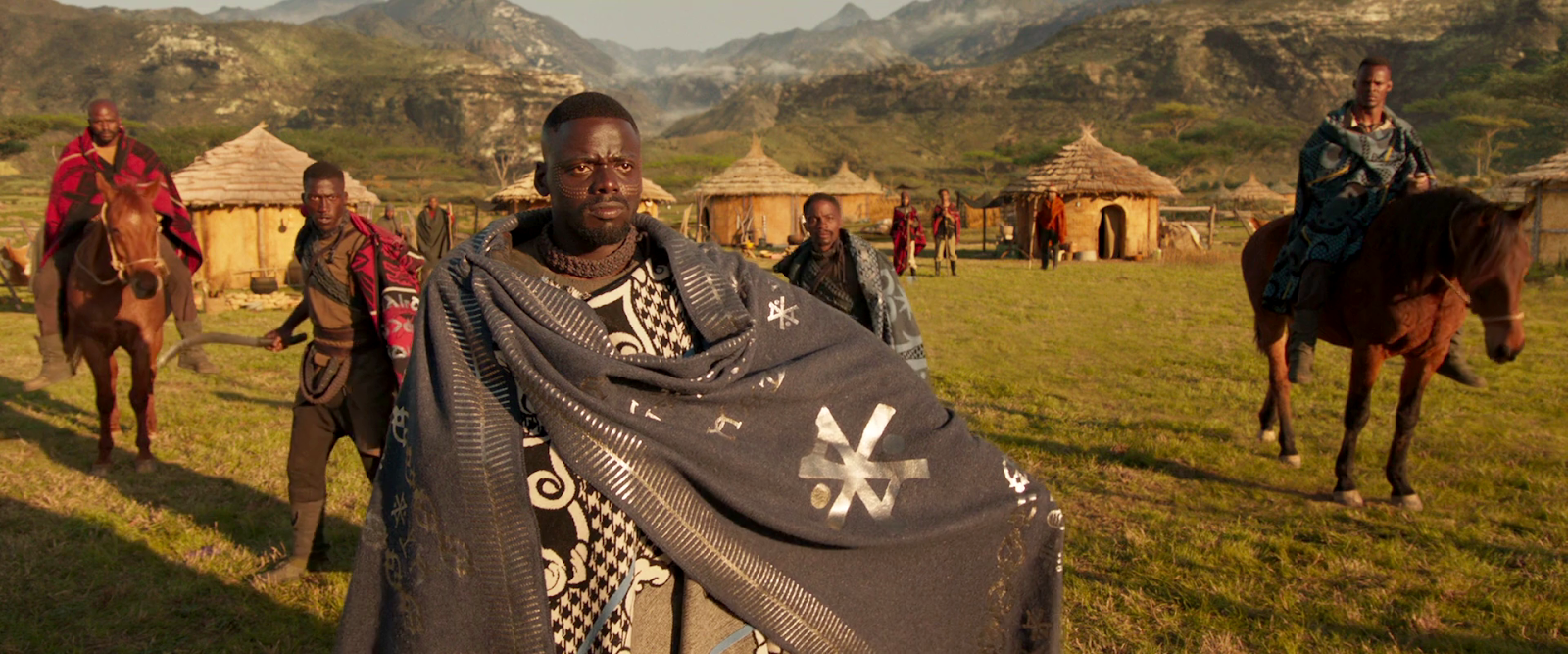
The Black Panther film represents one of the most ubiquitous statements of Afrofuturist fashion and fashionable digital wearables to celebrate the Africana and Black imagination. The wearable criteria under Director Ryan Cooglar’s lead and that of the formidable talent of costume designer Ruth E. Carter took into account African tribal symbolism. The adinkra symbol, for “cooperation,” emblazoned across W’Kabi’s (played by Daniel Kaluuya) blanket embodies the role of the Border tribe where they lived in a small village tucked into the mountainous borderlands of Wakanda, disguised as farmers and hunters.

Beautiful interaction

Chris’ blog looks at the interactions with speculative technology, and here the interactions are marvelously subtle. They do not have buttons or levers, which might give away their true nature. To activate them, a user does what would come naturally, which is to hold the fabric before them, like a shield. (There might be a mental command as well, but of course we can’t perceive that.) The shield-like gesture activates the shield technology. It’s quick. It fits the material of the technology. You barely even have to be trained to use it. We never see the use case for when a wearer is incapacitated and can’t lift the cape into position, but there’s enough evidence in the rest of the film to expect it might act like Dr. Strange’s cape and activate its shield automatically.

But, for me, the Capes are more powerful not as models of interaction, but for what they symbolize.

The Dual Role of the Capes

The role of the Border Tribe is to create the illusion of agrarian ruggedness as a deception for outsiders that only tells of a placid, developing nation rather than the secret technologically advanced splendor of Wakanda’s lands. The Border Tribe is the keeper of Wakanda’s cloaking technology that hides the vast utopian advancement of Wakandan advantage. 

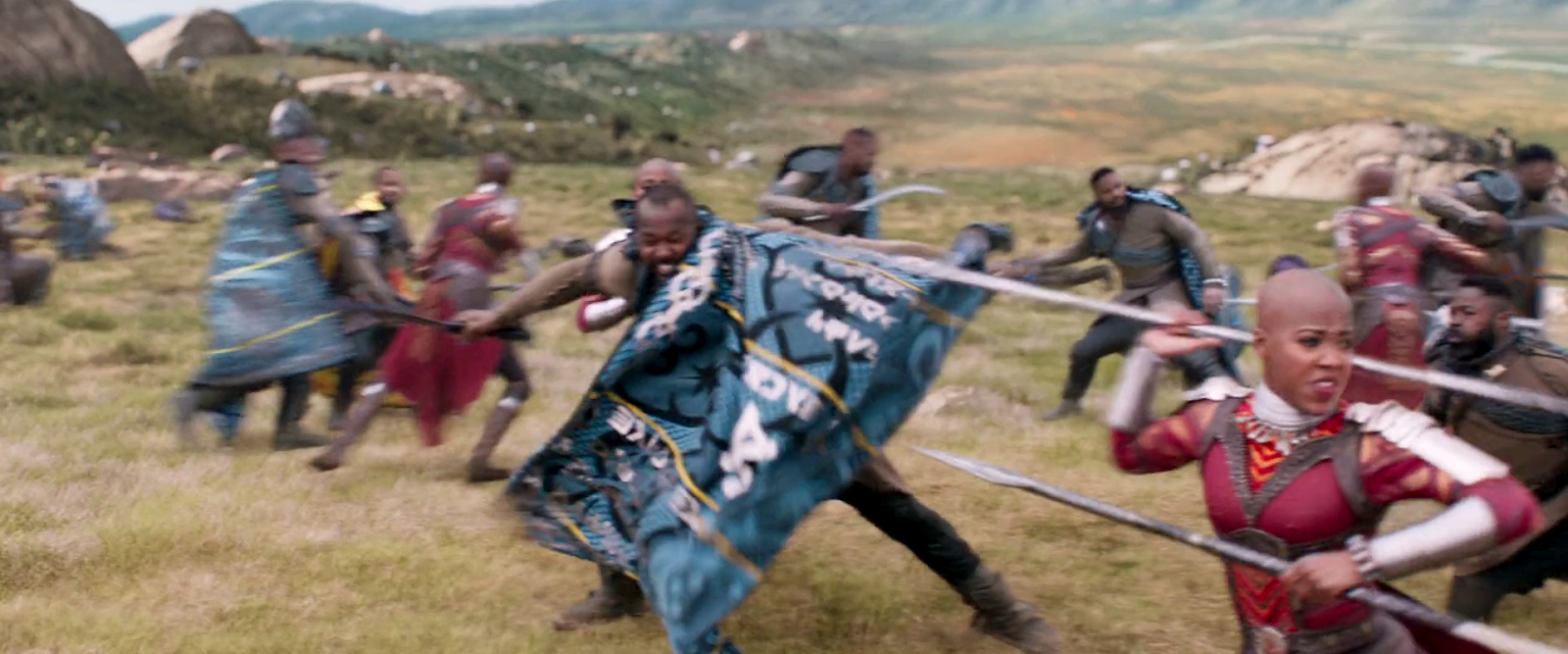
The Border Tribe’s role is built into the fabric of their illustrious and enviably fashionable capes. The adinkra symbol of cooperation embedded into the cape reveals, by the final scenes of the Black Panther film, how the Border Tribe defenders wield their capes into a force field wall of energy to repel enemies. 

Ironically we only see them at their most effective when Wakanda is undergoing a civil war between those loyal to Kilmonger who is determined to avenge his father’s murder and his own erasure from Wakandan collective memory, and those supporting King T’Challa. Whereas each Black Panther King has selected to keep Wakanda’s presence hidden literally under the cooperative shields of the Border Tribe, Kilmonger—an Oakland native and a potential heir to Wakandan monarchy—was orphaned and left in the U.S. 

If this sounds familiar, consider the film as a grand allusion to the millions of Africans kidnapped and ripped from their tribal lineages and taken across the Atlantic as slaves. Their cultural heritage was purposefully erased, languages and tribal customs, memories lost to the colonial thirst for their unpaid and forced labor. 

Kilmonger represents the Black Diaspora, former descendants of African homelands similarly deprived of their birthrights. Kilmonger wants the Black Diaspora to rise up in global rebellion with the assistance of Wakandan technical superiority. In opposition, King T’Challa aspires for a less vengeful solution. He wantsWakanda to come out to the world, and lead by example. We can empathize with both. T’Challa’s plan is fueled by virtue. Kilmonger’s is fueled by justice—redeploy these shields to protect Black people against the onslaught of ongoing police and state violence. 

W. E. B. Du Bois in 1918
(image in the public domain)

Double Consciousness and the Big Metaphor

The cape shields powered by the precious secret meteorite called Vibranium embodies what the scholar W.E.B. Dubois referred to as a double consciousness, where members of the Black Diaspora inhabit two selves.

  1. Their own identity as individuals
  2. The external perception of themselves as a members of an oppressed people incessantly facing potential erasure and brutality.

The cape shields and their cloaking technology cover the secret utopic algorithms that power Wakanda, while playing on the petty stereotypes of African nations as less-advanced collectives. 

The final battle scene symbolizes this grand debate—between Kilmonger’s claims on Wakanda and assertion of Africana power, and King T’Challa’s more cooperative and, indeed, compliant approach working with the CIA. Recall that in its subterfuge and cloaking tactics, the CIA has undermined and toppled numerous freely-elected African and Latin American governments for decades. In this final showdown, we see W’Kabi’s cloaked soldiers run down the hill towards King T’Challa and stop to raise their shields cooperatively into defensive formation to prevent King T’Challa’s advance. King T’Challa jumps over the shields and the force of his movement causes the soldier’s shields to bounce away while simultaneously revealing their potent energy. 

The flowing blue capes of the Border Tribe are deceptively enticing, while holding the key to Wakanda’s survival as metaphors for cloaking their entire civilization from being attacked, plundered, and erased. Wakanda and these capes represent an alternative history: What if African peoples had not experienced colonization or undergone the brutal Middle Passage to the Americas? What if the prosperous Black Greenwood neighborhood of Tulsa, Oklahoma had developed cape shield technology to defend themselves against a genocidal white mob in 1921? Or if the Black Panther Party had harnessed the power of invisible cloaking technology as part of their black beret ensemble? 

Gallery Images: World Building with the Afrofuturist Podcast—Afro-Rithms From The Future game, Neuehouse, Hollywood, May 22, 2019 [Co-Game Designers, Eli Kosminsky and Lonny Avi Brooks, Afro-Rithms Librarian; Co-Game Designer and Seer Ahmed Best]

In the forecasting imagination game, Afro-Rithms From The Future, and the game event we played in 2019 in Los Angeles based on the future universe we created, we generated the question:

What would be an article of fashion that would give you more Black Feminist leadership and more social justice?

One participant responded with: “I was thinking of the notion of the invisibility cloak but also to have it be reversed. It could make you invisible and also more visible, amplifying what you normally” have as strengths and recognizing their value. Or as another player, states “what about a bodysuit that protects you from any kind of harm” or as the game facilitator adds “how about a bodysuit that repels emotional damage?!” In our final analysis, the cape shields have steadfastly protected Wakanda against the emotional trauma of colonization and partial erasure.

In this way the cape shields guard against emotional damage as well. Imagine how it might feel to wear a fashionable cloak that displays images of your ancestral, ethnic, and gender memories reminding you of your inherent lovability as multi-dimensional human being—and that can technologically protect you and those you love as well.


Black Lives Matter

Chris: Each post in the Black Panther review is followed by actions that support black lives. 

To thank Lonny for his guest post, I offered to donate money in his name to the charity of his choice. He has selected Museum of Children’s Arts in Oakland. The mission of MOCHA is to ensure that the arts are a fundamental part of our community and to create opportunities for all children to experience the arts to develop creativity, promote a sense of belonging, and to realize their potential. 

And, since it’s important to show the receipts, the receipt:

Thank you, Lonny, for helping to celebrate Black Panther and your continued excellent work in speculative futures and Afrofuturism. Wakanda forever!

Panther Glove Guns

As I rule I don’t review lethal weapons on scifiinterfaces.com. The Panther Glove Guns appear to be remote-bludgeoning beams, so this kind of sneaks by. Also, I’ll confess in advance that there’s not a lot that affords critique.

We first see the glove guns in the 3D printer output with the kimoyo beads for Agent Ross and the Dora Milaje outfit for Nakia. They are thick weapons that fit over Shuri’s hands and wrists. I imagine they would be very useful to block blades and even disarm an opponent in melee combat, but we don’t see them in use this way.

The next time we see them, Shuri is activating them. (Though we don’t see how) The panther heads thrust forward, their mouths open wide, and the “neck” glows a hot blue. When the door before her opens, she immediately raises them at the guards (who are loyal to usurper Killmonger) and fires.

A light-blue beam shoots out of the mouths of the weapons, knocking the guards off the platform. Interestingly, one guard is lifted up and thrown to his 4-o-clock. The other is lifted up and thrown to his 7-o-clock. It’s not clear how Shuri instructs the weapons to have different and particular knock-down effects. But we’ve seen all over Black Panther that brain-computer interfaces (BCI) are a thing, so it’s diegetically possible she’s simply imagining where she wants them to be thrown, and then pulling a trigger or clenching her fist around a rod or just thinking “BAM!” to activate. The force-bolt strikes them right where they need to so that, like a billiard ball, they get knocked in the desired direction. As with all(?) brain-computer interfaces, there is not an interaction to critique.

After she dispatches the two guards, still wearing the gloves, she throws a control bead onto the Talon. The scene is fast and blurry, but it’s unclear how she holds and releases the bead from the glove. Was it in the panther’s jaw the whole time? Could be another BCI, of course. She just thought about where she wanted it, flung her arm, and let the AI decide when to release it for perfect targeting. The Talon is large and she doesn’t seem to need a great deal of accuracy with the bead, but for more precise operations, the AI targeting would make more sense than, say, letting the panther heads disintegrate on command so she would have freedom of her hands. 

Later, after Killmonger dispatches the Dora Milaje, Shuri and Nakia confront him by themselves. Nakia gets in a few good hits, but is thrown from the walkway. Shuri throws some more bolts his way though he doesn’t appear to even notice. I note that the panther gloves would be very difficult to aim since there’s no continuous beam providing feedback, and she doesn’t have a gun sight to help her. So, again—and I’m sorry because it feels like cheating—I have to fall back to an AI assist here. Otherwise it doesn’t make sense. 

Then Shuri switches from one blast at a time to a continuous beam. It seems to be working, as Killmonger kneels from the onslaught.

This is working! How can I eff it up?

But then for some reason she—with a projectile weapon that is actively subduing the enemy and keeping her safe at a distance—decides to close ranks, allowing Killmonger to knock the glove guns with a spear tip, thereby free himself, and destroy the gloves with a clutch of his Panther claws. I mean, I get she was furious, but I expected better tactics from the chief nerd of Wakanda. Thereafter, they spark when she tries to fire them. So ends this print of the Panther Guns.

As with all combat gear, it looks cool for it to glow, but we don’t want coolness to help an enemy target the weapon. So if it was possible to suppress the glow, that would be advisable. It might be glowing just for the intimidation factor, but for a projectile weapon that seems strange.

The panther head shapes remind an opponent that she is royalty (note no other Wakandan combatants have ranged weapons) and fighting in Bast’s name, which I suppose if you’re in the business of theocratic warfare is fine, I guess.

It’s worked so well in the past. More on this aspect later.

So, if you buy the brain-computer interface interpretation, AI targeting assist, and theocratic design, these are fine, with the cinegenic exception of the attention-drawing glow.


Black History Matters

Each post in the Black Panther review is followed by actions that you can take to support black lives.

When The Watchmen series opened with the Tulsa Race Massacre, many people were shocked to learn that this event was not fiction, reminding us just how much of black history is erased and whitewashed for the comfort of white supremacy (and fuck that). Today marks the beginning of Black History Month, and it’s a good opportunity to look back and (re)learn of the heroic figures and stories of both terror and triumph that fill black struggles to have their citizenship and lives fully recognized.

Library of Congress, American National Red Cross Photograph Collection

There are lots of events across the month. The African American History Month site is a collaboration of several government organizations (and it feels so much safer to share such a thing now that the explicitly racist administration is out of office and facing a second impeachment):

  • The Library of Congress
  • National Archives and Records Administration
  • National Endowment for the Humanities
  • National Gallery of Art
  • National Park Service
  • Smithsonian Institution and United States Holocaust Memorial Museum

The site, https://www.africanamericanhistorymonth.gov/, has a number of resources, including images, video, and calendar of events for you.

Today we can take a moment to remember and honor the Greensboro Four.

On this day, February 1, 1960: Through careful planning and enlisting the help of a local white businessman named Ralph Johns, four Black college students—Ezell A. Blair, Jr., Franklin E. McCain, Joseph A. McNeil, David L. Richmond—sat down at a segregated lunch counter at Woolworth’s in Greensboro, North Carolina, and politely asked for service. Their request was refused. When asked to leave, they remained in their seats.

Police arrived on the scene, but were unable to take action due to the lack of provocation. By that time, Ralph Johns had already alerted the local media, who had arrived in full force to cover the events on television. The Greensboro Four stayed put until the store closed, then returned the next day with more students from local colleges.

Their passive resistance and peaceful sit-down demand helped ignite a youth-led movement to challenge racial inequality throughout the South.

A last bit of amazing news to share today is that Black Lives Matter has been nominated for the Nobel Peace Prize! The movement was co-founded by Alicia Garza, Patrisse Cullors and Opal Tometi in response to the acquittal of Trayvon Martin’s murderer, got a major boost with the outrage following and has grown to a global movement working to improve the lives of the entire black diaspora. May it win!

Okoye’s grip shoes

Like so much of the tech in Black Panther, this wearable battle gear is quite subtle, but critical to the scene, and much more than it seems at first. When Okoye and Nakia are chasing Klaue through the streets of Busan, South Korea, she realizes she would be better positioned on top of their car than within it.

She holds one of her spears out of the window, stabs it into the roof, and uses it to pull herself out on top of the swerving, speeding car. Once there, she places her feet into position, and the moment the sole of her foot touches the roof, it glows cyan for a moment.

She then holds onto the stuck spear to stabilize herself, rears back with her other spear, and throws it forward through the rear-window and windshield of some minions’ car, where it sticks in the road before them. Their car strikes the spear and get crushed. It’s a kickass moment in a film of kickass moments. But by all means let’s talk about the footwear.

Now, it’s not explicit, the effect the shoe has in the world of the story. But we can guess, given the context, that we are meant to believe the shoes grip the car roof, giving her a firm enough anchor to stay on top of the car and not tumble off when it swerves.

She can’t just be stuck

I have never thrown a javelin or a hyper-technological vibranium spear. But Mike Barber, PhD scholar in Biomechanics at Victoria University and Australian Institute of Sport, wrote this article about the mechanics of javelin throwing, and it seems that achieving throwing force is not just by sheer strength of the rotator cuff. Rather, the thrower builds force across their entire body and whips the momentum around their shoulder joint.

 Ilgar Jafarov, CC BY-SA 4.0, via Wikimedia Commons

Okoye is a world-class warrior, but doesn’t have superpowers, so…while I understand she does not want the car to yank itself from underneath her with a swerve, it seems that being anchored in place, like some Wakandan air tube dancer, will not help her with her mighty spear throwing. She needs to move.

It can’t just be manual

Imagine being on a mechanical bull jerking side to side—being stuck might help you stay upright. But imagine it jerking forward suddenly, and you’d wind up on your butt. If it jerked backwards, you’d be thrown forward, and it might be much worse. All are possibilities in the car chase scenario.

If those jerking motions happened to Okoye faster than she could react and release her shoes, it could be disastrous. So it can’t be a thing she needs to manually control. Which means it needs to some blend of manual, agentive, and assistant. Autonomic, maybe, to borrow the term from physiology?

So…

To really be of help, it has to…

  • monitor the car’s motion
  • monitor her center of balance
  • monitor her intentions
  • predict the future motions of the cars
  • handle all the cybernetics math (in the Norbert Wiener sense, not the sci-fi sense)
  • know when it should just hold her feet in place, and when it should signal for her to take action
  • know what action she should ideally take, so it knows what to nudge her to do

These are no mean feats, especially in real-time. So, I don’t see any explanation except…

An A.I. did it.

AGI is in the Wakandan arsenal (c.f. Griot helping Ross), so this is credible given the diegesis, but I did not expect to find it in shoes.

An interesting design question is how it might deliver warning signals about predicted motions. Is it tangible, like vibration? Or a mild electrical buzz? Or a writing-to-the-brain urge to move? The movie gives us no clues, but if you’re up for a design challenge, give it a speculative design pass.

Wearable heuristics

As part of my 2014 series about wearable technologies in sci-fi, I identified a set of heuristics we can use to evaluate such things. A quick check against those show that they fare well. The shoes are quite sartorial, and look like shoes so are social as well. As a brain interface, it is supremely easy to access and use. Two of the heuristics raise questions though.

  1. Wearables must be designed so they are difficult to accidentally activate. It would have been very inconvenient for Okoye to find herself stuck to the surface of Wakanda while trying to chase Killmonger later in the film, for example. It would be safer to ensure deliberateness with some mode-confirming physical gesture, but there’s no evidence of it in the movie.
  2. Wearables should have apposite I/O. The soles glow. Okoye doesn’t need that information. I’d say in a combat situation it’s genuinely bad design to require her to look down to confirm any modes of the shoes. They’re worn. She will immediately feel whether her shoes are fixed in place. While I can’t name exactly how an enemy might use the knowledge about whether she is stuck in place or not, but on general principle, the less information we give to the enemy, the safer you’ll be. So if this was real-world, we would seek to eliminate the glow. That said, we know that undetectable interactions are not cinegenic in the slightest, so for the film this is a nice “throwaway” addition to the cache of amazing Wakandan technology.

Black Georgia Matters and Today is the Day

Each post in the Black Panther review is followed by actions that you can take to support black lives.

Today is the last day in the Georgia runoff elections. It’s hard to overstate how important this is. If Ossoff and Warnock win, the future of the country has a much better likelihood of taking Black Lives Matter (and lots of other issues) more seriously. Actual progress might be made. Without it, the obstructionist and increasingly-frankly-racist Republican party (and Moscow Mitch) will hold much of the Biden-Harris administration back. If you know of any Georgians, please check with them today to see if they voted in the runoff election. If not—and they’re going to vote Democrat—see what encouragement and help you can give them.

Some ideas…

  • Pay for a ride there and back remotely.
  • Buy a meal to be delivered for their family.
  • Make sure they are protected and well-masked.
  • Encourage them to check their absentee ballot, if they cast one, here. https://georgia.ballottrax.net/voter/
  • If their absentee ballot has not been registered, they can go to the polls and tell the workers there that they want to cancel their absentee ballot and vote in person. Help them know their poll at My Voter Page: https://www.mvp.sos.ga.gov/MVP/mvp.do

This vote matters, matters, matters.

Kimoyo Beads

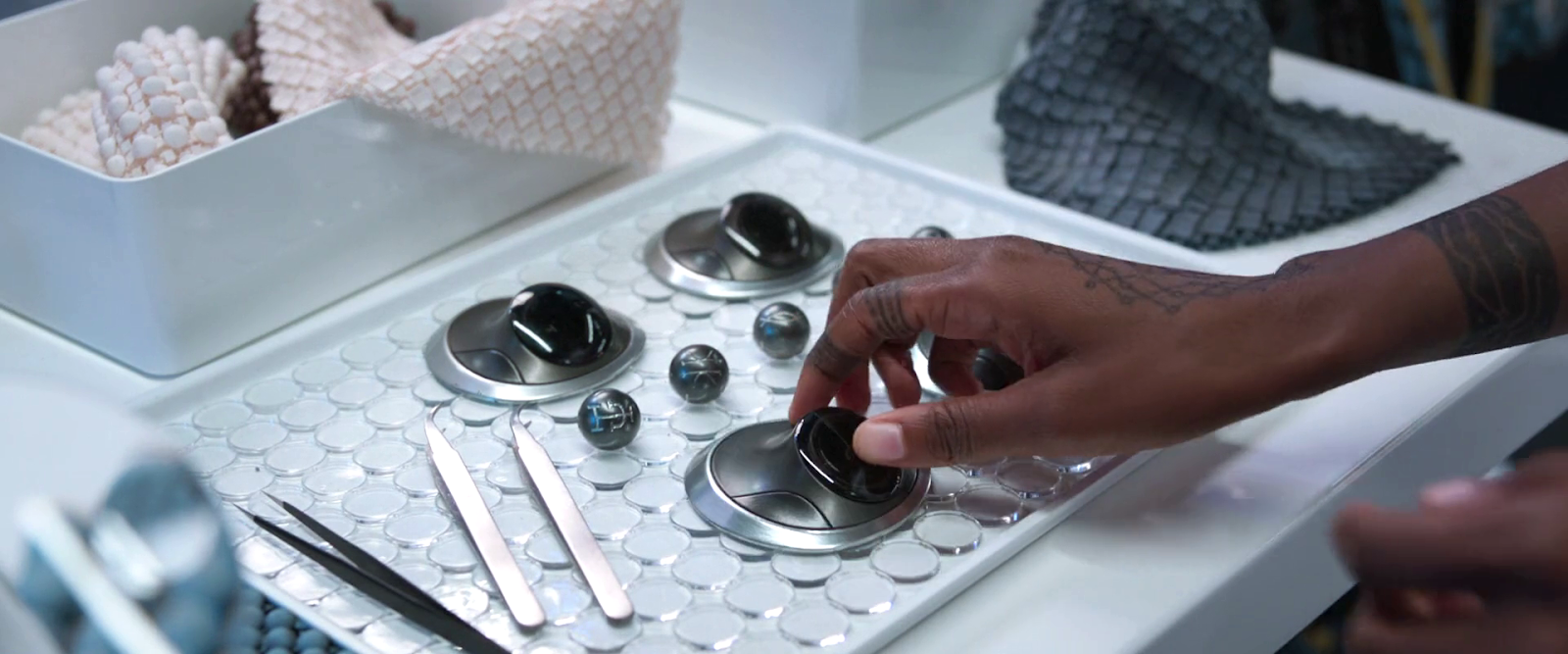
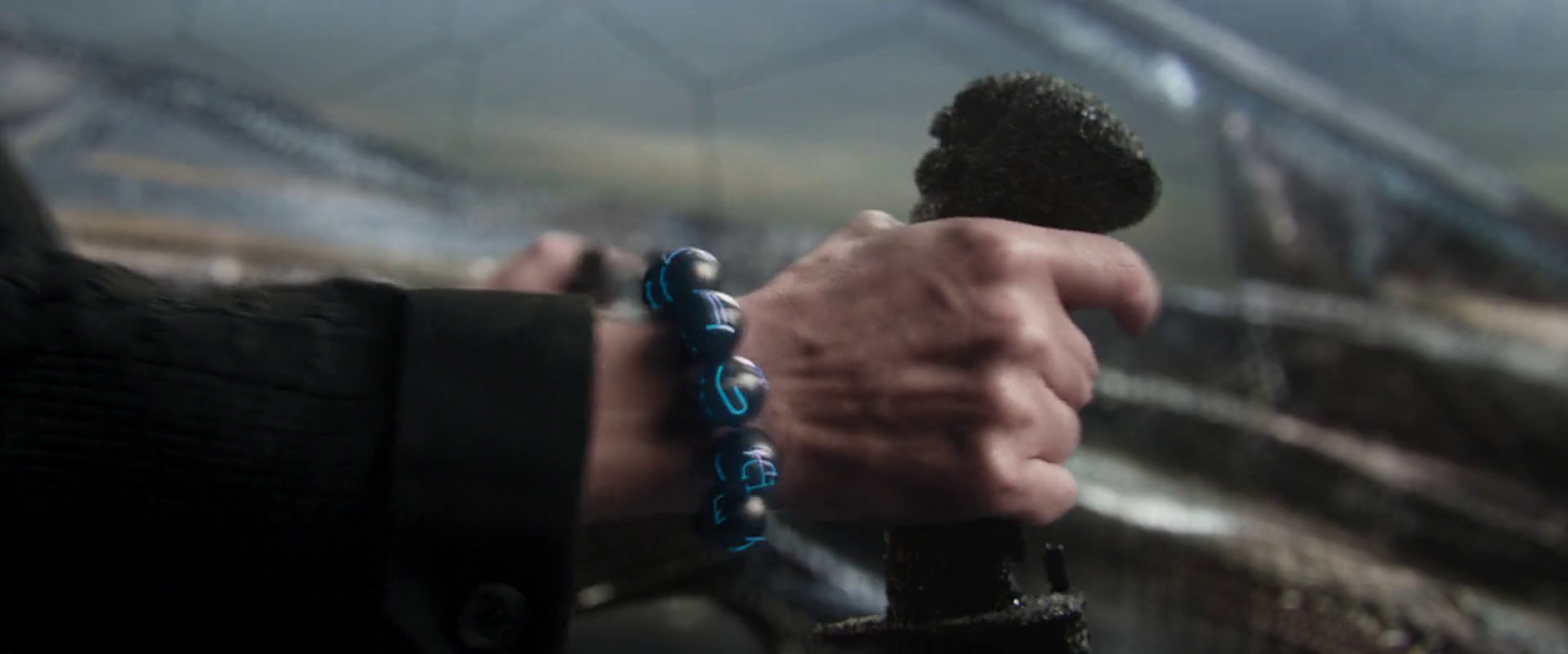
One of the ubiquitous technologies seen in Black Panther is the kimoyo bead. They’re liberally scattered all over the movie like tasty, high-tech croutons. These marble-sized beads are made of vibranium and are more core to Wakandan’s lives than cell phones are to ours. Let’s review the 6 uses seen in the film.

1. Contact-EMP bombs

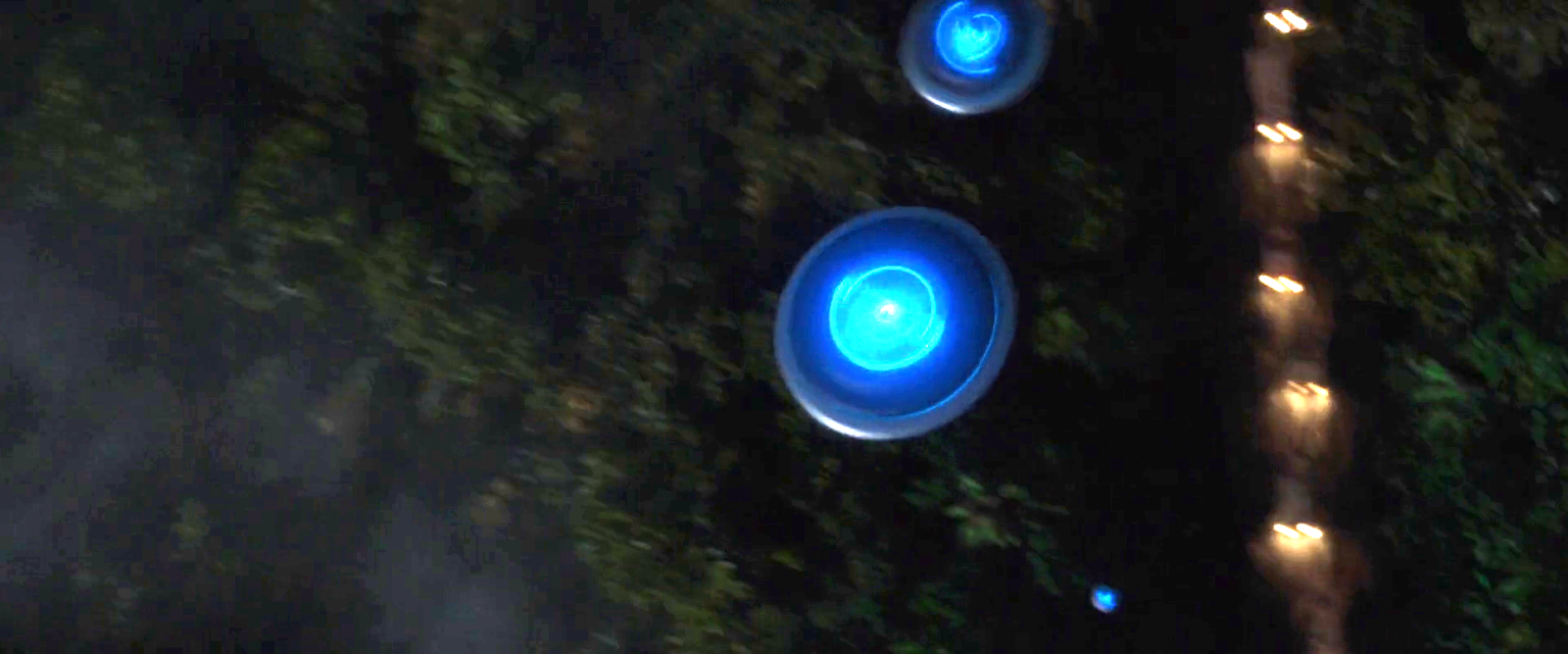
We first see kimoyo beads when Okoye equips T’Challa with a handful to drop on the kidnapper caravan in the Sambisa forest. As he leaps from the Royal Talon, he flings these, which flatten as they fall, and guide themselves to land on the hoods of the caravan. There they emit an electromagnetic pulse that stops the vehicles in their tracks. It is a nice interaction that does not require much precision or attention from T’Challa.

2. Comms

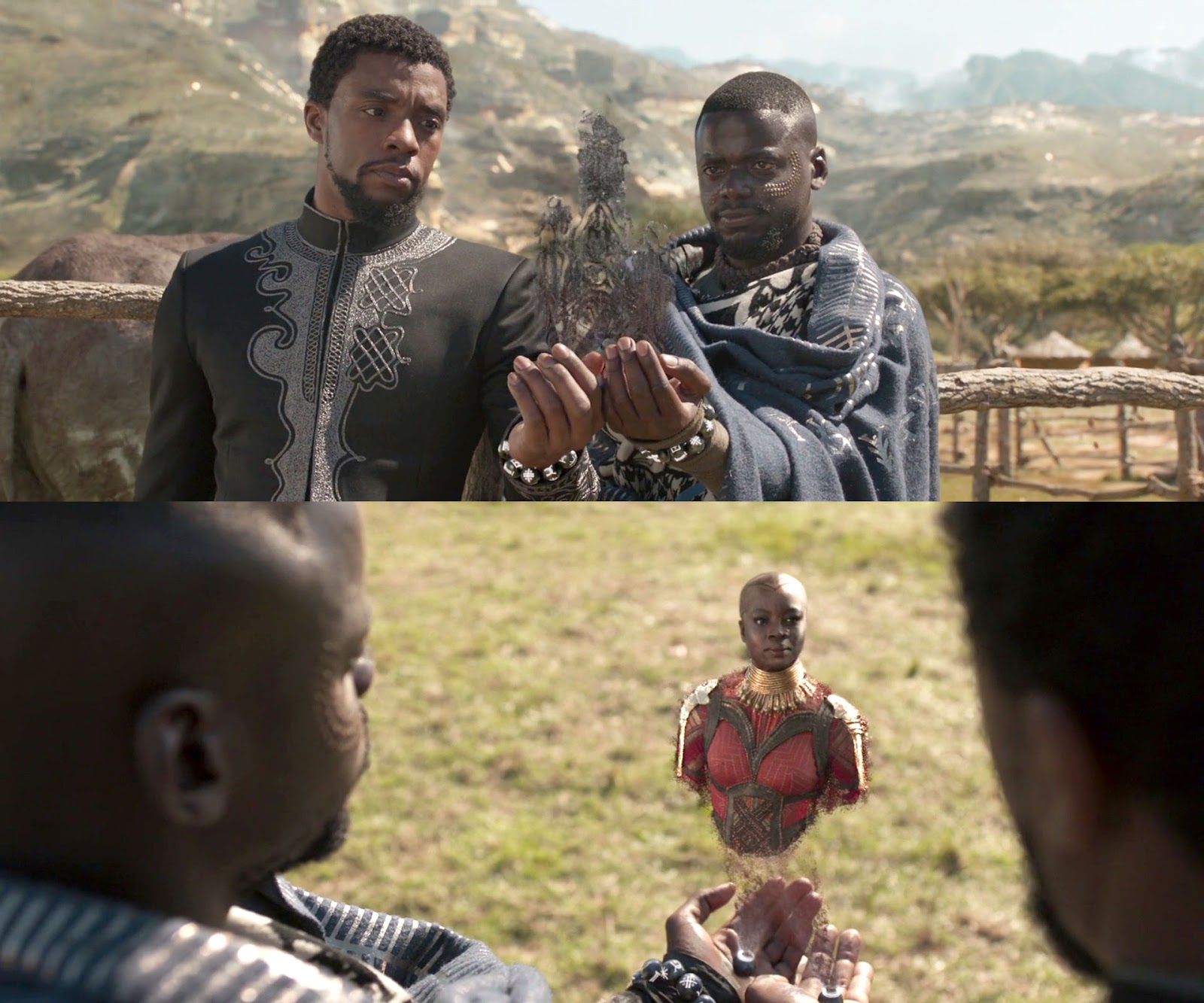
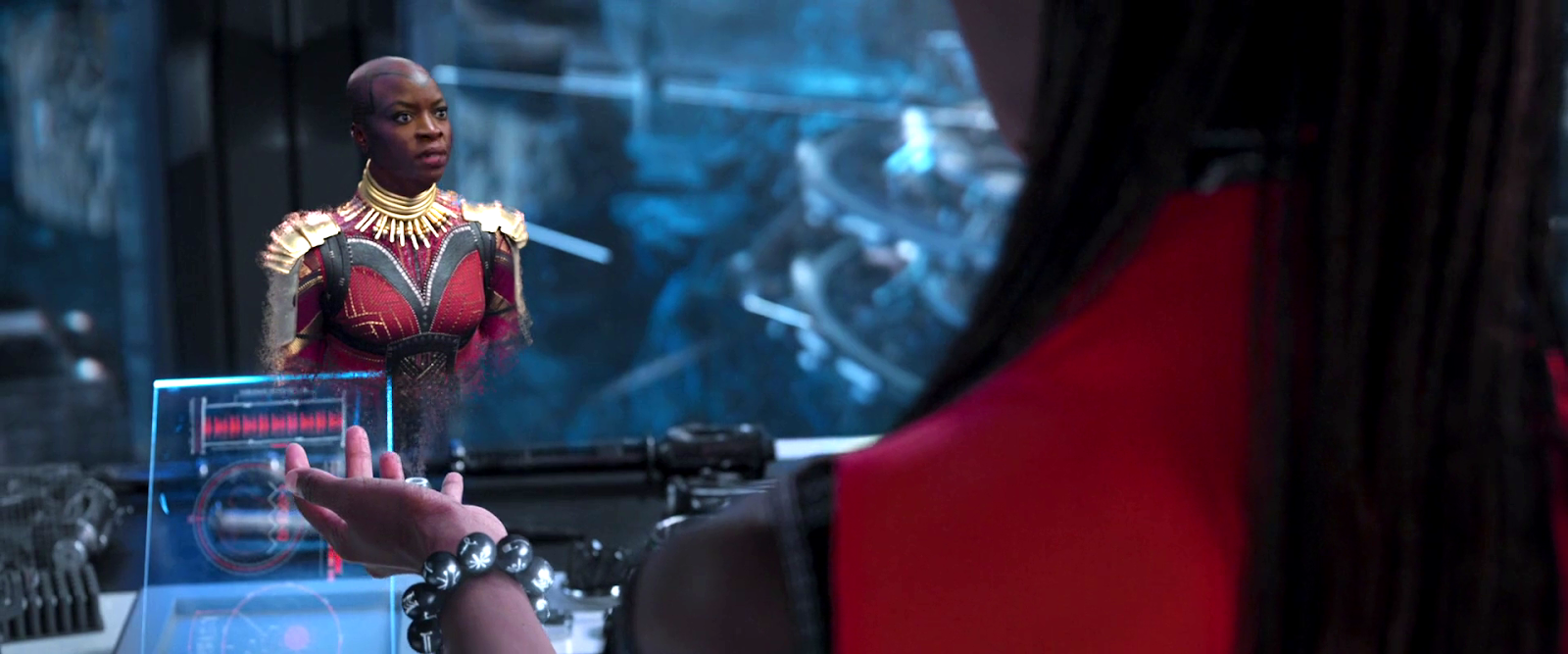
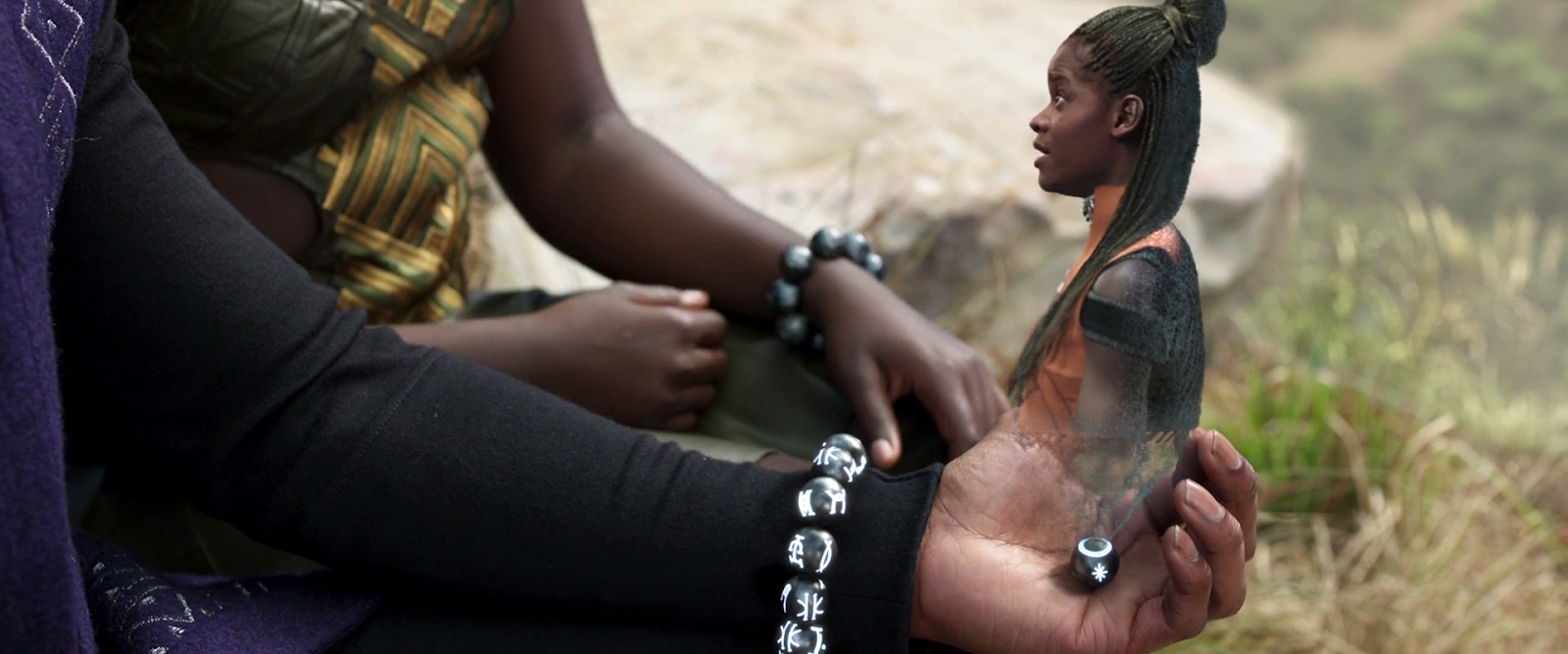
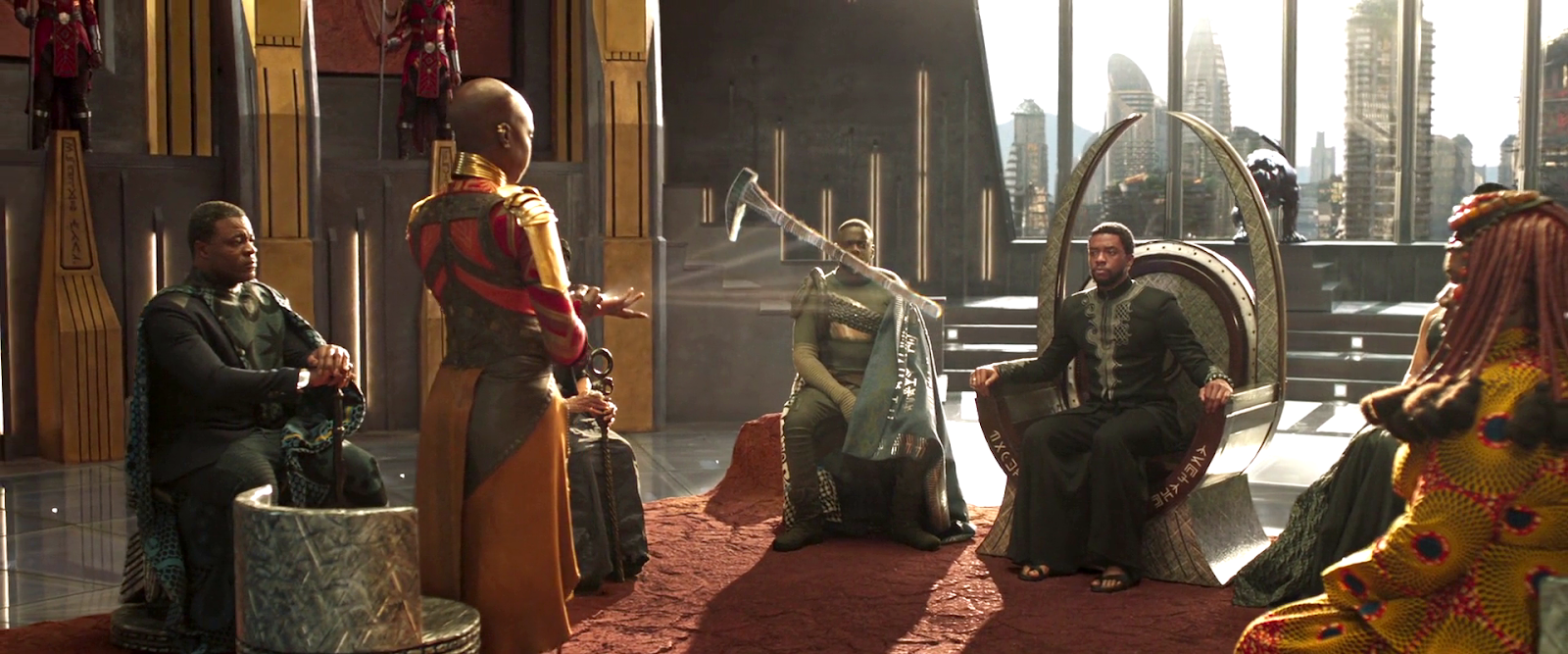
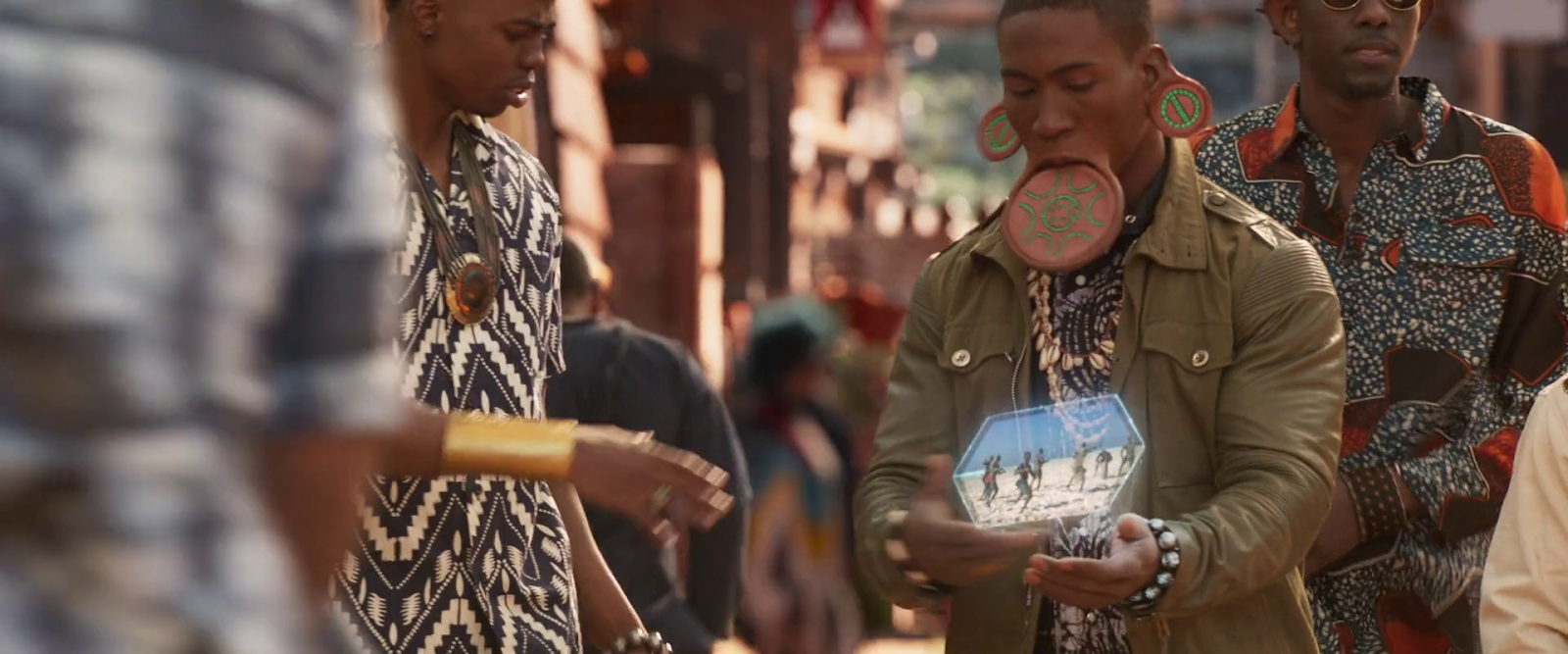
Wakandans wear bracelets made of 11 kimoyo beads around their wrists. If they pull the comms bead and place it in the palm, it can project very lifelike volumetric displays as part of realtime communication. It is unclear why the bead can’t just stay on the wrist and project at an angle to be facing the user’s line of sight, as it does when Okoye presents to tribal leaders (below.)

We see a fascinating interaction when T’Challa and W’Kabi receive a call at the same time, and put their bracelets together to create a conference call with Okoye.

The scaled-down version of the projection introduces many of the gaze matching problems identified in the book. Similarly to those scenes in Star Wars, we don’t see the conversation from the other side. Is Okoye looking up at giant heads of T’Challa and W’Kabi? Unlikely. Wakanda is advanced enough to manage gaze correction in such displays.

Let me take a moment to appreciate how clever this interaction is from a movie maker’s perspective. It’s easy to imagine each of them holding their own bead separately and talking to individual instances of Okoye’s projection. (Imagine being in a room with a friend and both of you are on a group call with a third party.) But in the scene, she turns to address both T’Challa and W’Kabi. Since the system is doing body-and-face gaze correction, the two VP displays would look slightly different, possibly confusing the audience into thinking these were two separate people on the call. Wakandans would be used to understanding these nuances, but us poor non-Wakandan’s are not.

Identical Okoyes ensures (at least) one of the displays is looking at something weird. It’s confusing.
This is confusing.
Having gaze correction so both Okoyes are looking at T’Challa when she’s talking to him makes it look like there are two different characters. It’s confusing.
This is also confusing.

The shared-display interaction helps bypass these problems and make the technology immediately understandable and seamless.

Later Shuri also speaks with Okoye via communication bead. During this conversation, Shuri removes another bead, and tosses it into a display to show an image and dossier of Killmonger. Given that she’s in her lab, it’s unclear why this gesture is necessary rather than, say, just looking toward a display and thinking, “Show me,” letting the AI Griot interpret from the context what to display.

A final communication happens immediately after as Shuri summons T’Challa to the the lab to learn about Killmonger. In this screenshot, it’s clear that the symbol for the comms bead is an asterisk or star, which mimics the projection rats of the display, and so has some nice semantics to help users learning which symbols do what.

3. Presentation

 In one scene, Okoye gives the tribe rulers a sitrep using her kimoyo beads as a projector. Here she is showing the stolen Wakandan artifact. Readers of the book will note the appearance of projection rays that are standard sci-fi signals that what is seen is a display. A lovely detail in the scene is how Okoye uses a finger on her free hand to change the “slide” to display Klawe. (It’s hard to see the exact gesture, but looks like she presses the projection bead.) We know from other scenes in the movie that the beads are operated by thought-command. But that would not prevent a user from including gestures as part of the brain pattern that triggers an event, and would make a nice second-channel confirmation as discussed in UX of Speculative Brain-Computer Inputs post.

4. Remote piloting

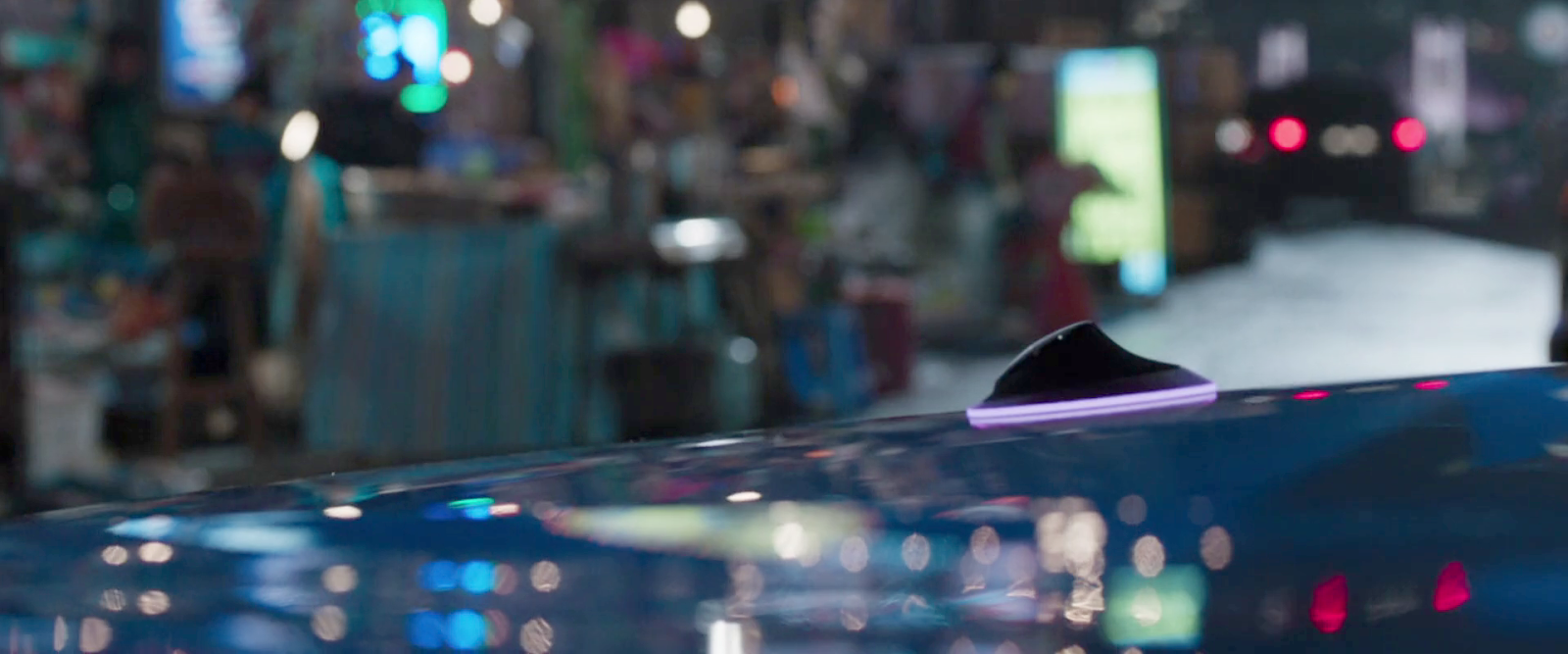
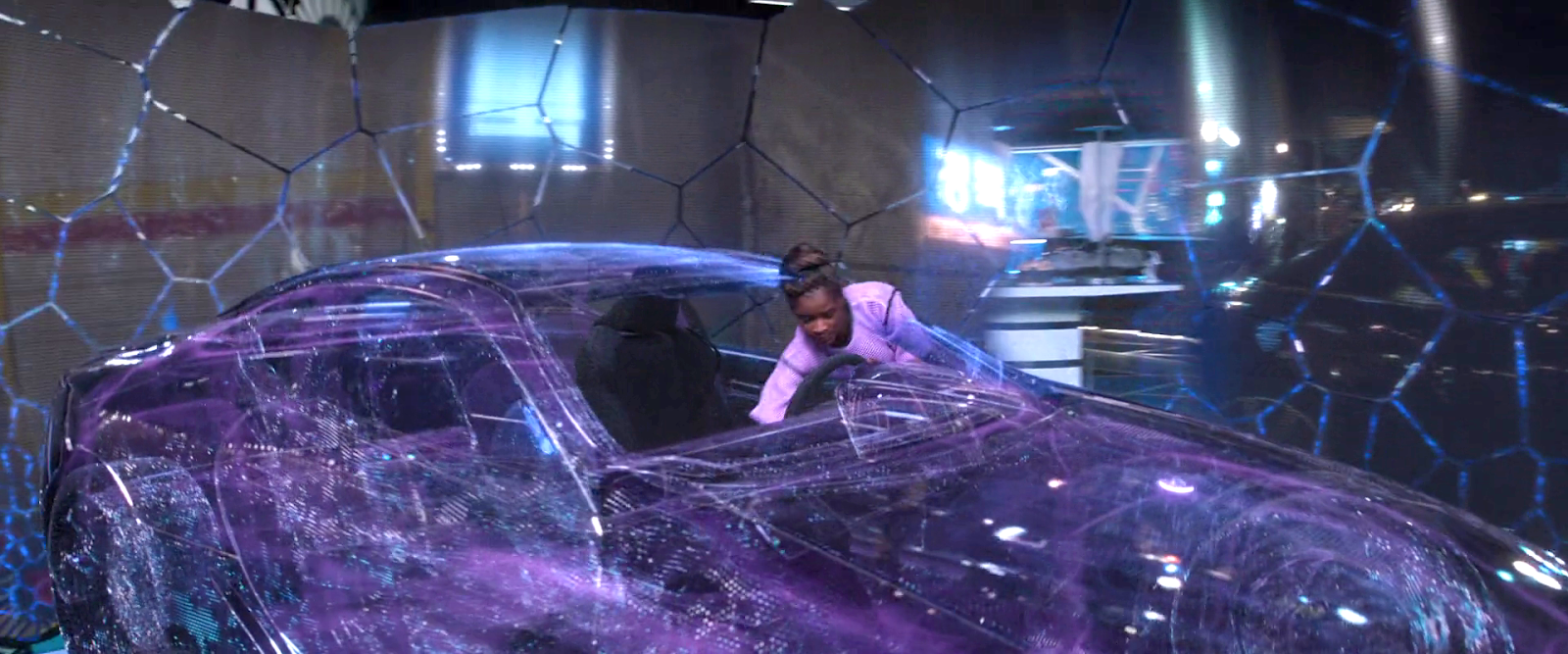
When T’Challa tours Shuri’s lab, she introduces him to remote access kimoyo beads. They are a little bigger than regular beads and have a flared, articulated base. (Why they can’t just morph mid-air like the ones we see in the kidnapper scene?) These play out in the following scene when the strike team needs to commandeer a car to chase Klawe’s Karavan. Oyoke tosses one on the hood on a parked car, its base glows purple, and thereafter Shuri hops into a vibranium-shaped simulacrum of the car in her lab, and remotely operates it.

A quick note: I know that the purple glow is there for the benefit of the audience, but it certainly draws attention to itself, which it might not want to do in the real world.

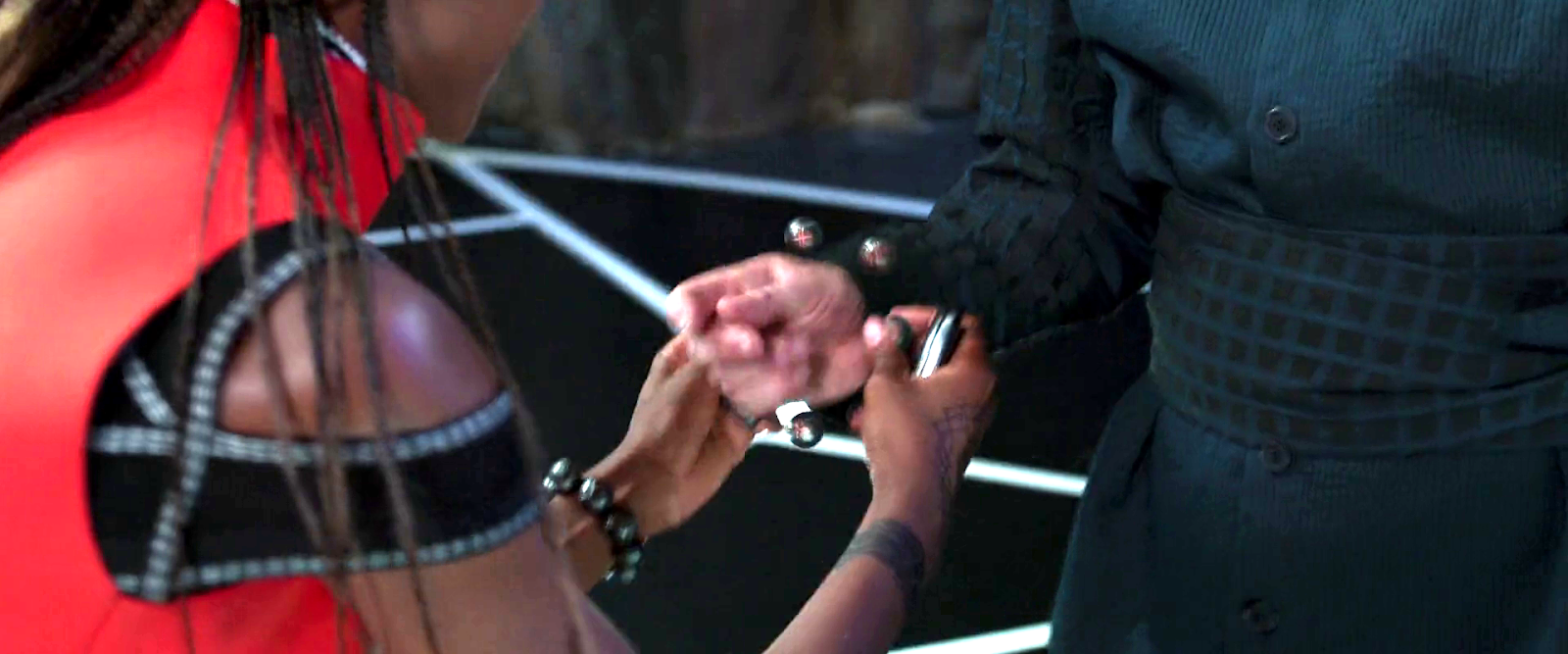
In the climactic battle of the tribes with Killmonger, Shuri prints a new bracelet and remote control bead for Agent Ross. She places the bracelet on him to enable him to remote pilot the Royal Talon. It goes by very quickly, and the scene is lit quite sparsely, but the moment she puts it on him, you can see that the beads are held together magnetically.

5. Eavesdropping

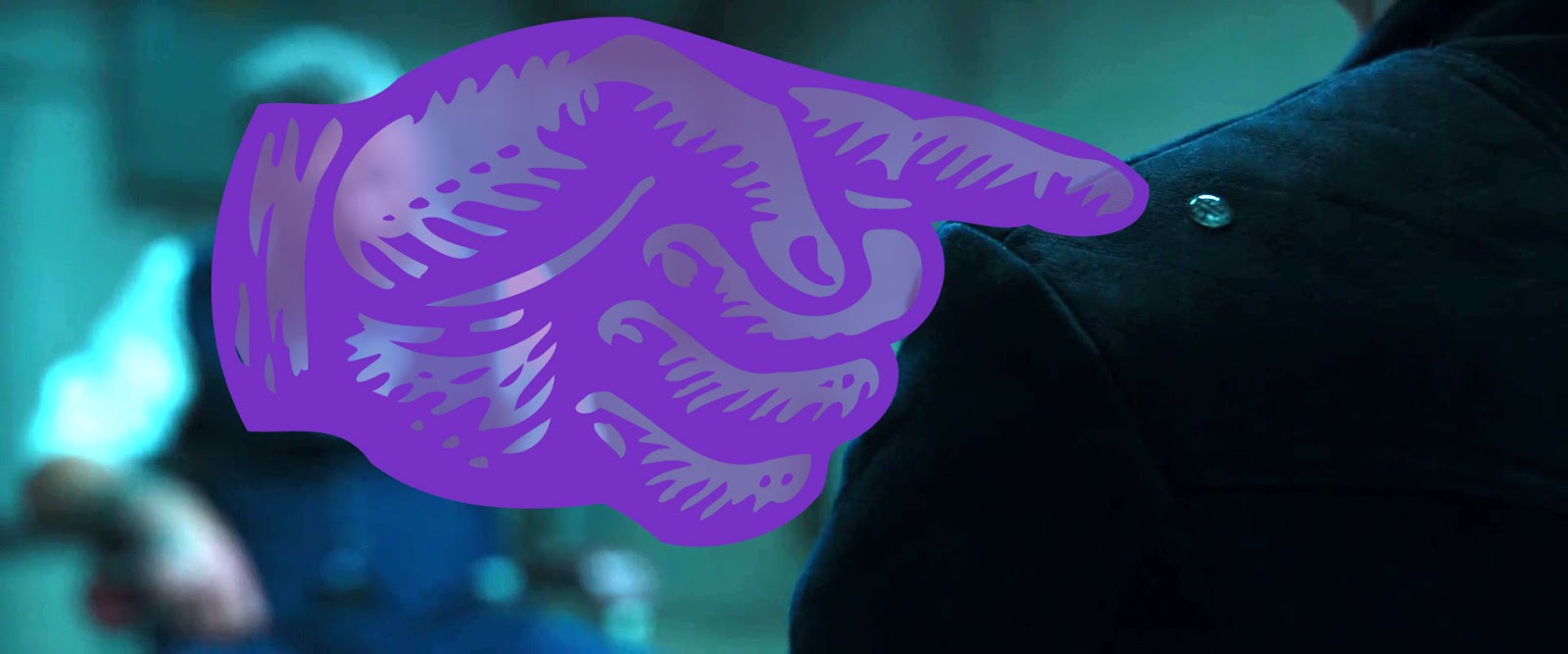
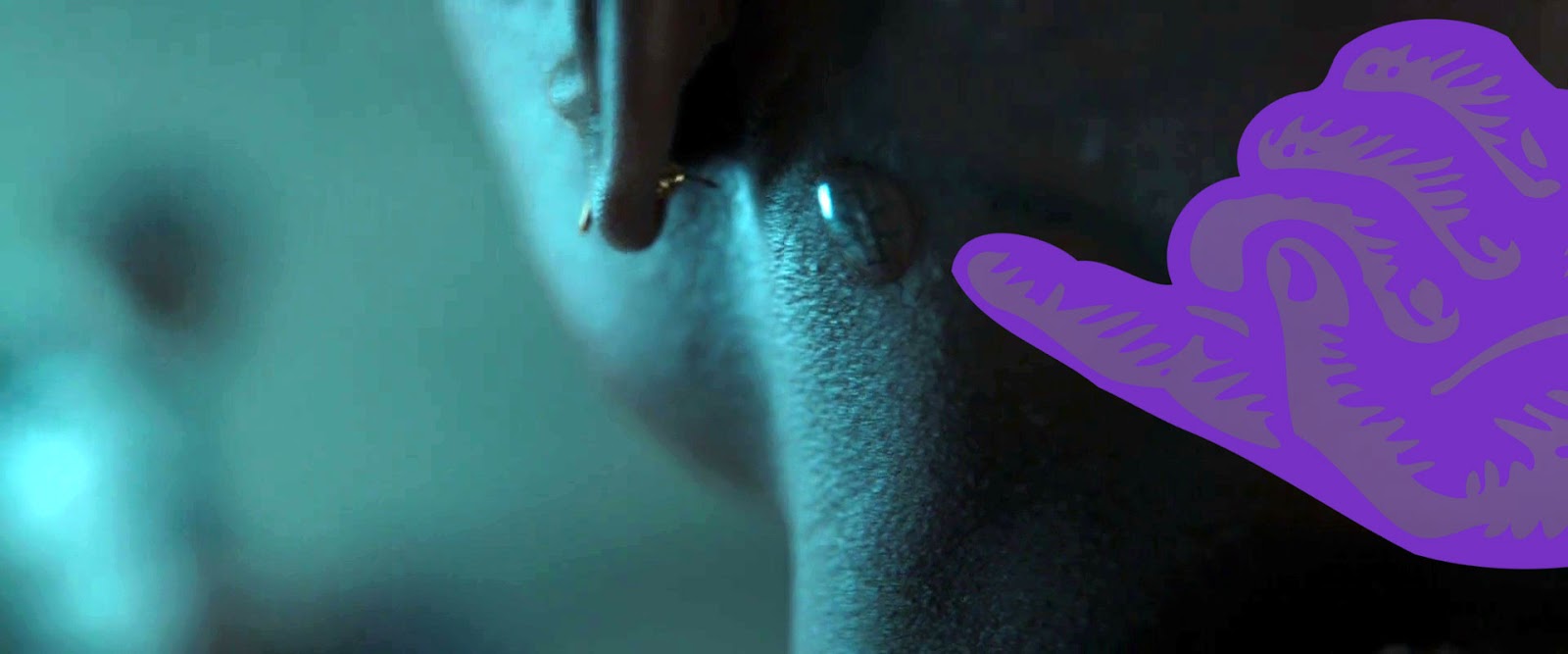
When Agent Ross is interrogating the captured Klawe, we get a half-second shot to let us know that a kimoyo bead has been placed on his shoulder, allowing T’Challa, Okoye, and Nakia to eavesdrop on the conversation. The output is deliveredby a flattened bone-conducting speaker bead behind their left hears.

6. Healing

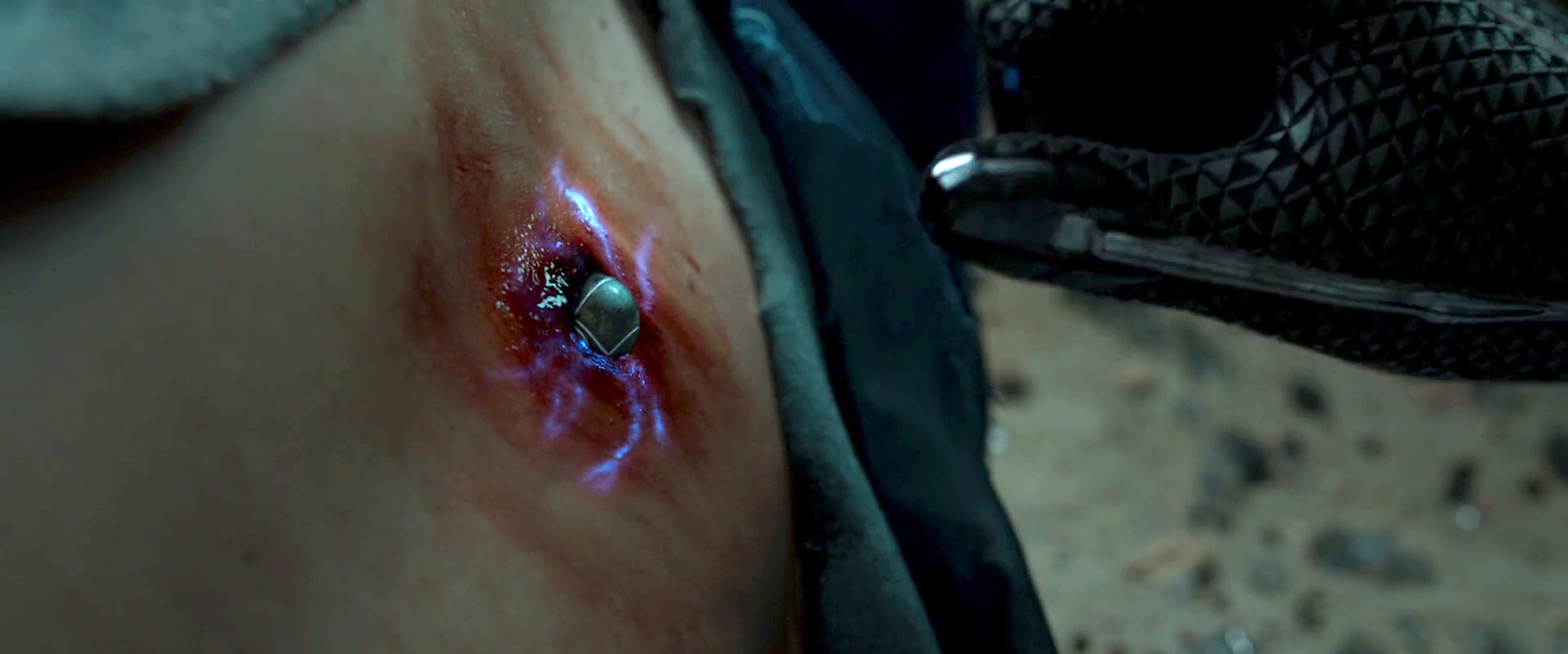
Later in the scene, when Killmonger’s bomb grievously wounds Agent Ross in his spine, T’Challa places one of Nakia’s kimoyo beads onto the wound, stabilizing Ross long enough to ferry him to Wakanda where Shuri can fully tend to him. The wound conveniently happens to be kimoyo-bead sized, but I expect that given its shape-shifting powers, it could morph to form a second-skin over larger wounds.


I wondered if kimoyo beads were just given to Wakandan royalty, but it’s made clear in the scene where T’Challa and Nakia walk through the streets of Birnin Zana that every citizen has a bracelet. There is no direct evidence in the film, but given the pro-social-ness throughout, I want to believe that all citizens have free access to the beads, equipping each of them to participate equitably in the culture.

So, most of the interaction is handled through thought-command with gestural augmentation. This means that most of our usual concerns of affordances and constraints are moot. The one thing that bears some comment is the fact that there are multiple beads on the bracelet with different capabilities. How does a user know which bead does what?

As long as the beads can do their job in place on the wrist, I don’t think it matters. As long as all of the beads are reading the user’s thoughts, only the one that can respond need respond. The others can disregard the input. In the real world you’d need to make sure that one thought isn’t interpretable as multiple things, a problem discussed on my team at IBM as disambiguation. Or if they are you must design an interaction where the user can help disambiguate the input, or tell the system which meaning they intend. We never this edge case in Black Panther. 

It seems that some of the beads have specialized functions that cannot be performed by another, each has several symbols engraved into it, the indentions of which glow white for easy identification. The glow is not persistent across all uses, so it must be either context-aware and/or a setting that users can think to change. But even when not lit, the symbols are clear, and clearly distinguishable, so once the user learns the symbols, the labeling should help.


Black Votes Matter

Today is an important day in the United States. It’s election day 2020. Among one of the most important days in U.S. politics, ever. Among Trump’s litany of outrageous lies across his presidency is this whopper: “I have done more for Black Americans than anybody, except for the possible exception of Abraham Lincoln.” (Pause for your spit take and cleaning your screen.)

As infuriating and insulting as this statement is emotionally (like, fuck you for adding “possible” in there, like it’s somehow possible that you’ve done more than freed our black citizens from slavery, you maggot-brained, racist, malignant narccicist) let’s let the Brookings institute break down why, if you believe Black Lives Matter, you need to get out there and vote blue all the way down the ticket.

https://www.cnn.com/2020/11/02/us/ocoee-massacre-100th-anniversary-trnd/index.html

You should read that whole article, but some highlights/reminders

  • Trump ended racial sensitivity training, and put a ban on trainings that utilize critical race theory
  • Hate crimes increased over 200% in places where Trump held a campaign rally in 2016
  • He dismissed the Black Lives Matters movement, said there were “fine people” among white supremacist groups, and rather than condemning the (racist, not gay) Proud Boys, told them to “stand by.”
  • Not a single one of his 53 confirmed appeals court judges circuit justices is black.
  • The criminal mishandling of the COVID-19 pandemic has killed twice as many black Americans as it has white Americans. (Don’t forget he fired the pandemic response team.)

If you are reading this on election day, and have not already done so, please go vote blue. Know that if you are in line even when the polls officially closed, they have to stay open for the entire line to vote. If you have voted, please help others in need. More information is below.

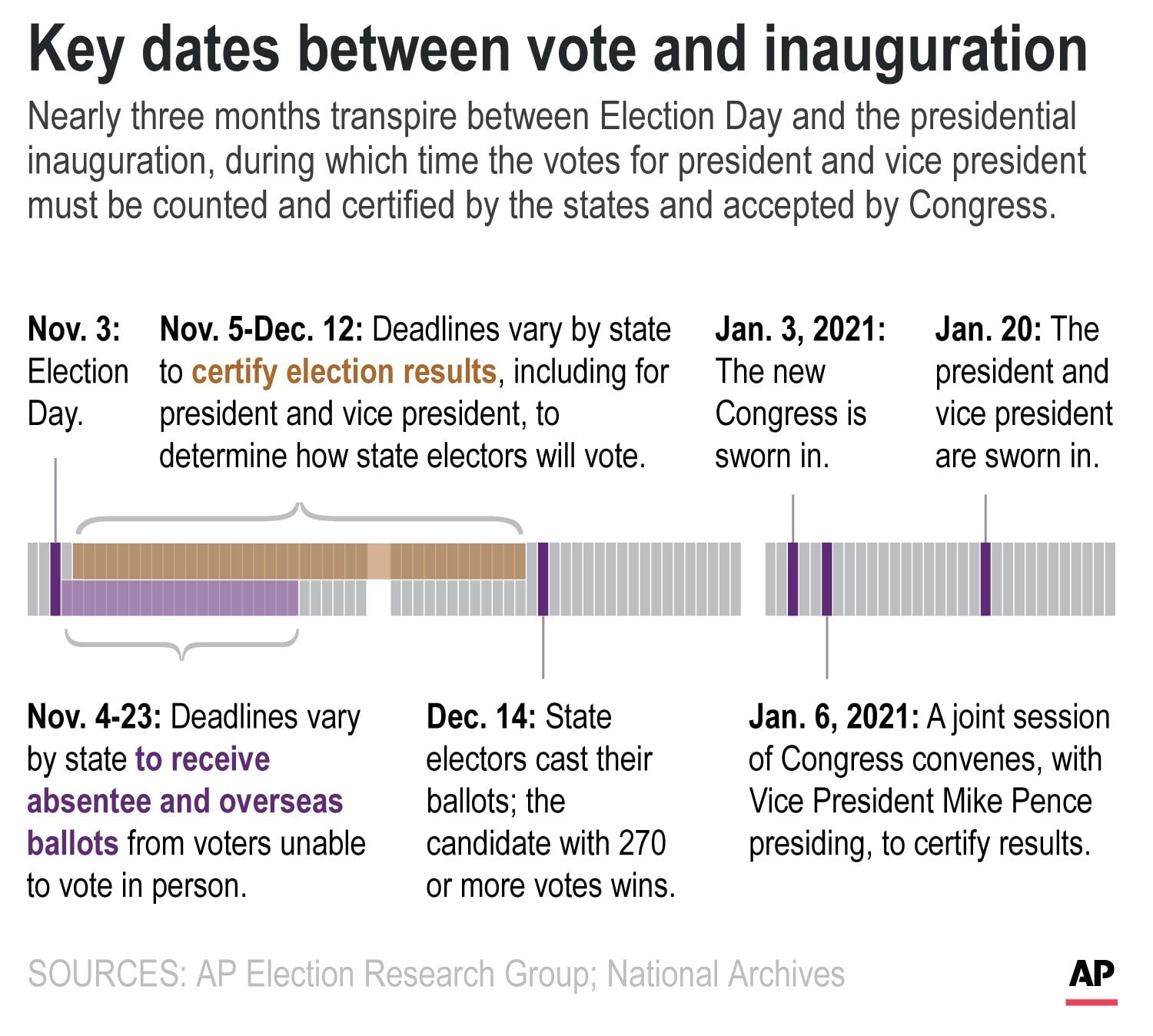
If you are reading this just after election day, we have every evidence that Trump is going to try and declare the election rigged if he loses (please, please let it be when he loses to a massive blue waver). You can help set the expectation among your circle of friends, family, and work colleagues that we won’t know the final results today. We won’t know it tomorrow. We may have a better picture at the end of the week, but it will more likely take until late November to count everyone’s vote, and possibly until mid December to certify everyone’s vote.

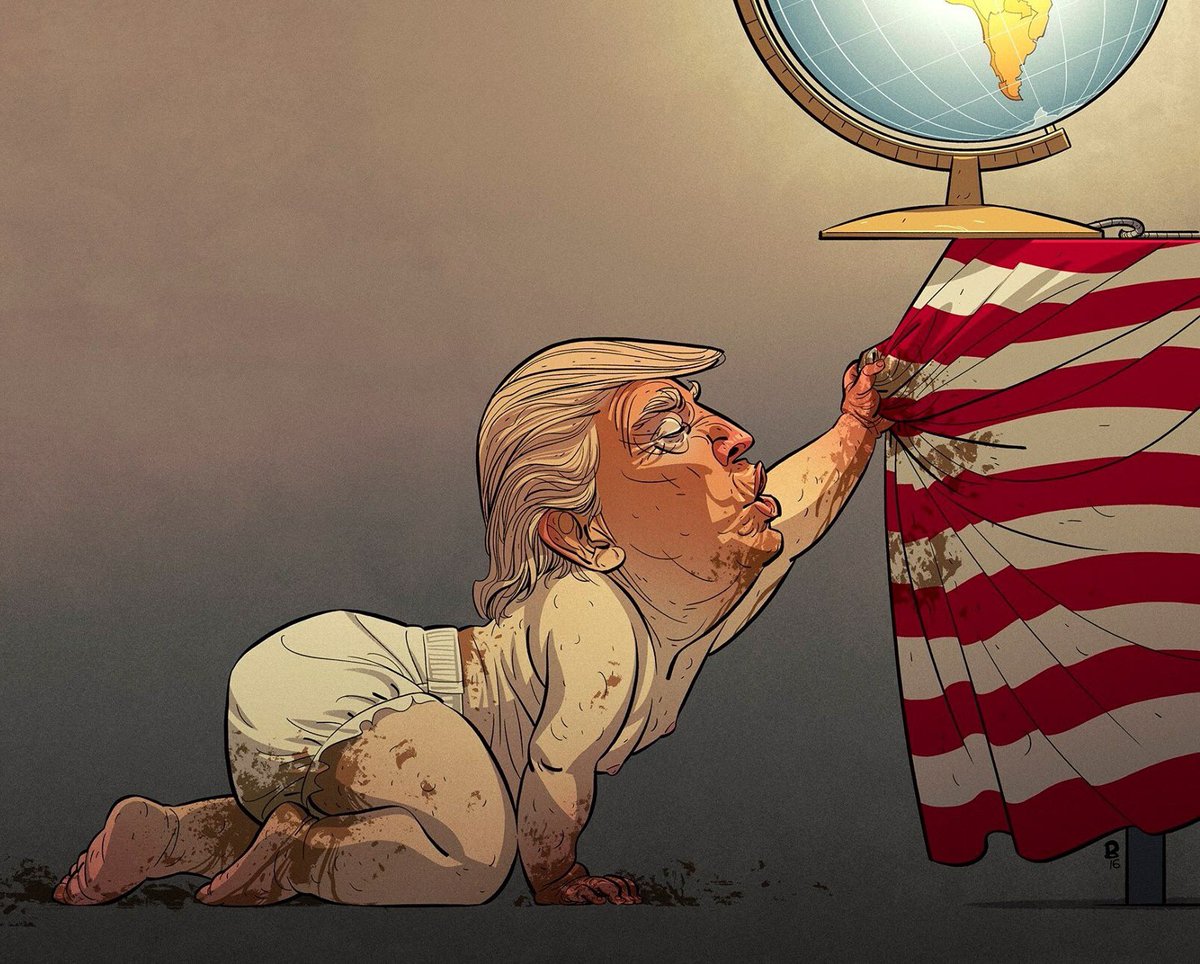
And that’s what we do in a liberal democracy. We count everyone’s vote, however long that takes. To demand it in one day during a pandemic is worse than a toddler throwing a “I want it now” tantrum. And we are so very sick of having a toddler in this position.

By Christian Bloom

The Royal Talon piloting interface

Since my last post, news broke that Chadwick Boseman has passed away after a four year battle with cancer. He kept his struggles private, so the news was sudden and hard-hitting. The fandom is still reeling. Black people, especially, have lost a powerful, inspirational figure. The world has also lost a courageous and talented young actor. Rise in Power, Mr. Boseman. Thank you for your integrity, bearing, and strength.

Photo CC BY-SA 2.0,
by Gage Skidmore.

Black Panther’s airship is a triangular vertical-takeoff-and-landing vehicle called the Royal Talon. We see its piloting interface twice in the film.

The first time is near the beginning of the movie. Okoye and T’Challa are flying at night over the Sambisa forest in Nigeria. Okoye sits in the pilot’s seat in a meditative posture, facing a large forward-facing bridge window with a heads up display. A horseshoe-shaped shelf around her is filled with unactivated vibranium sand. Around her left wrist, her kimoyo beads glow amber, projecting a volumetric display around her forearm.

She announces to T’Challa, “My prince, we are coming up on them now.” As she disengages from the interface, retracting her hands from the pose, the kimoyo projection shifts and shrinks. (See more detail in the video clip, below.)

The second time we see it is when they pick up Nakia and save the kidnapped girls. On their way back to Wakanda we see Okoye again in the pilot’s seat. No new interactions are seen in this scene though we linger on the shot from behind, with its glowing seatback looking like some high-tech spine.

Now, these brief glimpses don’t give a review a lot to go on. But for a sake of completeness, let’s talk about that volumetric projection around her wrist. I note is that it is a lovely echo of Dr. Strange’s interface for controlling the time stone Eye of Agamatto.

Wrist projections are going to be all the rage at the next Snap, I predict.

But we never really see Okoye look at this VP it or use it. Cross referencing the Wakandan alphabet, those five symbols at the top translate to 1 2 K R I, which doesn’t tell us much. (It doesn’t match the letters seen on the HUD.) It might be a visual do-not-disturb signal to onlookers, but if there’s other meaning that the letters and petals are meant to convey to Okoye, I can’t figure it out. At worst, I think having your wrist movements of one hand emphasized in your peripheral vision with a glowing display is a dangerous distraction from piloting. Her eyes should be on the “road” ahead of her.

The image has been flipped horizontally to illustrate how Okoye would see the display.

Similarly, we never get a good look at the HUD, or see Okoye interact with it, so I’ve got little to offer other than a mild critique that it looks full of pointless ornamental lines, many of which would obscure things in her peripheral vision, which is where humans need the most help detecting things other than motion. But modern sci-fi interfaces generally (and the MCU in particular) are in a baroque period, and this is partly how audiences recognize sci-fi-ness.

I also think that requiring a pilot to maintain full lotus to pilot is a little much, but certainly, if there’s anyone who can handle it, it’s the leader of the Dora Milaje.

One remarkable thing to note is that this is the first brain-input piloting interface in the survey. Okoye thinks what she wants the ship to do, and it does it. I expect, given what we know about kimoyo beads in Wakanda (more on these in a later post), what’s happening is she is sending thoughts to the bracelet, and the beads are conveying the instructions to the ship. As a way to show Okoye’s self-discipline and Wakanda’s incredible technological advancement, this is awesome.

Unfortunately, I don’t have good models for evaluating this interaction. And I have a lot of questions. As with gestural interfaces, how does she avoid a distracted thought from affecting the ship? Why does she not need a tunnel-in-the-sky assist? Is she imagining what the ship should do, or a route, or something more abstract, like her goals? How does the ship grant her its field awareness for a feedback loop? When does the vibranium dashboard get activated? How does it assist her? How does she hand things off to the autopilot? How does she take it back? Since we don’t have good models, and it all happens invisibly, we’ll have to let these questions lie. But that’s part of us, from our less-advanced viewpoint, having to marvel at this highly-advanced culture from the outside.


Black Health Matters

Each post in the Black Panther review is followed by actions that you can take to support black lives.

Thinking back to the terrible loss of Boseman: Fuck cancer. (And not to imply that his death was affected by this, but also:) Fuck the racism that leads to worse medical outcomes for black people.

One thing you can do is to be aware of the diseases that disproportionately affect black people (diabetes, asthma, lung scarring, strokes, high blood pressure, and cancer) and be aware that no small part of these poorer outcomes is racism, systemic and individual. Listen to Dorothy Roberts’ TED talk, calling for an end to race-based medicine.

If you’re the reading sort, check out the books Black Man in a White Coat by Damon Tweedy, or the infuriating history covered in Medical Apartheid by Harriet Washington.

If you are black, in Boseman’s memory, get screened for cancer as often as your doctor recommends it. If you think you cannot afford it and you are in the USA, this CDC website can help you determine your eligibility for free or low-cost screening: https://www.cdc.gov/cancer/nbccedp/screenings.htm. If you live elsewhere, you almost certainly have a better healthcare system than we do, but a quick search should tell you your options.

Cancer treatment is equally successful for all races. Yet black men have a 40% higher cancer death rate than white men and black women have a 20% higher cancer death rate than white women. Your best bet is to detect it early and get therapy started as soon as possible. We can’t always win that fight, but better to try than to find out when it’s too late to intervene. Your health matters. Your life matters.

Panther Suit 2.0

The suit that the Black Panther wears is critical to success. At the beginning of the movie, this is “just” a skintight bulletproof suit with homages to its namesake. But, after T’Challa is enthroned, Shuri takes him to her lab and outfits him with a new one with some nifty new features. This write-up is about Shuri’s 2.0 Panther Suit.

Authorizing

At the demonstration of the new suit, Shuri first takes a moment to hold up a bracelet of black Kimoyo beads (more on these in a later post) to his neck. With a bubbly computer sound, the glyphs on the beads begin to glow vibranium-purple, projecting two particular symbols on his neck. (The one that looks kind of like a reflective A, and the other that looks like a ligature of a T and a U.)

This is done without explanation, so we have to make some assumptions here, which is always shaky ground for critique.

I think she’s authorizing him to use the suit. At first I thought the interaction was her “pairing” him with the suit, but I can’t imagine that the bead would need to project something onto his skin to read his identity or DNA. So my updated guess is this is a dermal mark that, like the Wakandan tattoos, the suit will check for with a “intra-skin scan,” like the HAN/BAN concepts from the early aughts. This would enable her to authorize many people, which is, perhaps, not as secure.

This interpretation is complicated by Killmonger’s wearing one of the other Black Panther suits when he usurps T’Challa. Shuri had fled with Queen Romonda to the Jibari stronghold, so Shuri couldn’t have authorized him. Maybe some lab tech who stayed behind? If there was some hint of what’s supposed to be happening here we would have more grounds to evaluate this interaction.

There might be some hint if there was an online reference to these particular symbols, but they are not part of the Wakandan typeface, or the Andinkra symbols, or the Nsibidi symbols that are seen elsewhere in the film. (I have emails out to the creator of the above image to see if I can learn more there. Will update if I get a response.)

Activation

When she finishes whatever the bead did, she says, “Now tell it to go on.” T’Challa looks at it intensely, and the suit spreads from the “teeth” in the necklace with an insectoid computer sound, over the course of about 6 seconds.

We see him activate the suit several more times over the course of the movie, but learn nothing new about activation beyond this. How does he mentally tell it to turn it on? I presume it’s the same mental skill he’s built up across his lifetime with kimoyo beads, but it’s not made explicit in the movie.

A fun detail is that while the suit activates in 6 seconds in the lab—far too slow for action in the field considering Shuri’s sardonic critique of the old suit (“People are shooting at me! Wait! Let me put on my helmet!”)—when T’Challa uses it in Korea, it happens in under 3. Shuri must have slowed it down to be more intelligible and impressive in the lab.

Another nifty detail that is seen but not discussed is that the nanites will also shred any clothes being worn at the time of transformation, as seen at the beginning of the chase sequence outside the casino and when Killmonger is threatened by the Dora Milaje.

Hopefully they weren’t royal…oh. Oh well?

Deactivation

T’Challa thinks the helmet off a lot over the course of the movie, even in some circumstances where I am not sure it was wise. We don’t see the mechanism. I expect it’s akin to kimoyo communication, again. He thinks it, and it’s done. (n.b. “It’s mental” is about as satisfying from a designer’s critique as “a wizard did it”, because it’s almost like a free pass, but *sigh* perfectly justifiable given precedent in the movie.)

Kinetic storage & release

At the demonstration in her lab, Shuri tells T’Challa to, “Strike it.” He performs a turning kick to the mannequin’s ribcage and it goes flying. When she fetches it from across the lab, he marvels at the purple light emanating from Nsibidi symbols that fill channels in the suit where his strike made contact. She explains “The nanites have absorbed the kinetic energy. They hold it in place for redistribution.

He then strikes it again in the same spot, and the nanites release the energy, knocking him back across the lab, like all those nanites had become a million microscopic bigclaw snapping shrimp all acting in explosive concert. Cool as it is, this is my main critique of the suit.

First, the good. As a point of illustration of how cool their mastery of tech is, and how it works, this is pretty sweet. Even the choice of purple is smart because it is a hard color to match in older chemical film processes, and can only happen well in a modern, digital film. So extradiegetically, the color is new and showing off a bit.

Tactically though, I have to note that it broadcasts his threat level to his adversaries. Learning this might take a couple of beatings, but word would get around. Faithful readers will know we’ve looked at aposematic signaling before, but those kinds of markings are permanent. The suit changes as he gets technologically beefier. Wouldn’t people just avoid him when he was more glowy, or throw something heavy at him to force him to expend it, and then attack when he was weaker? More tactical I think to hold those cards close to the chest, and hide the glow.

Now it is quite useful for him to know the level of charge. Maybe some tactile feedback like a warmth or or a vibration at the medial edge of his wrists. Cinegenics win for actual movie-making of course, but designers take note. What looks cool is not always smart design.

Not really a question for me: Can he control how much he releases? If he’s trying to just knock someone out, it would be crappy if he accidentally killed them, or expected to knock out the big bad with a punch, only to find it just tickled him like a joy buzzer. But if he already knows how to mentally activate the suit, I’m sure he has the skill down to mentally clench a bit to control the output. Wizards.

Regarding Shuri’s description, I think she’s dumbing things down for her brother. If the suit actually absorbed the kinetic energy, the suit would not have moved when he kicked it. (Right?) But let’s presume if she were talking to someone with more science background, she would have been more specific to say, “absorbed some of the kinetic energy.”

Explosive release

When the suit has absorbed enough kinetic energy, T’Challa can release it all at once as a concussive blast. He punches the ground to trigger it, but it’s not clear how he signals to the suit that he wants to blast everyone around him back rather than, say, create a crater, but again, I think we can assume it’s another mental command. Wizards.

Claws

To activate the suit’s claws, T’Challa quickly extends curved fingers and holds them there, and they pop out.

This gesture is awesome, and completely fit for purpose. Shaping the fingers like claws make claws. It’s also when fingers are best positioned to withstand the raking motion. The second of hold ensures it’s not accidental activation. Easy to convey, easy to remember, easy to intuit. Kids playing Black Panther on the sidewalk would probably do the same without even seeing the movie.

We have an unanswered question about how those claws retract. Certainly the suit is smart enough to retract automatically so he doesn’t damage himself. Probably more mental commands, but whatever. I wouldn’t change a thing here.


Black Lives Matter

Each post in the Black Panther review is followed by actions that you can take to support black lives. I had something else planned for this post, but just before publication another infuriating incident has happened.

While the GOP rallies to the cause of the racist-in-chief in Charlotte, right thinking people are taking to the streets in Kenosha, Wisconsin, to protest the unjust shooting of a black man, Jacob Blake. The video is hard to watch. Watch it. It’s especially tragic, especially infuriating, because Kenosha had gone through “police reform” initiatives in 2014 meant to prevent exactly this sort of thing. It didn’t prevent this sort of thing. As a friend of mine says, it’s almost enough to make you an abolitionist.

Raysean White via TMX.news

Information is still coming in as to what happened, but here’s the narrative we understand right now: It seems that Blake had pulled over his car to stop a fight in progress. When the police arrived, he figured they had control of the situation, and he walked back to his car to leave. That’s when officers shot him in the back multiple times, while his family—who were still waiting for him in the car—watched. He’s out of surgery and stable, but rather than some big-picture to-do tonight, please donate to support his family. They have witnessed unconscionable trauma.

Blake and kids, in happier times

Several fundraisers posted to support Blake’s family have been taken down by GoFundMe for being fake, but “Justice for Jacob Blake” remains active as of Monday evening. Please donate.

8 Reasons The Voight-Kampff Machine is shit (and a redesign to fix it)

Distinguishing replicants from humans is a tricky business. Since they are indistinguishable biologically, it requires an empathy test, during which the subject hears empathy-eliciting scenarios and watched carefully for telltale signs such as, “capillary dilation—the so-called blush response…fluctuation of the pupil…involuntary dilation of the iris.” To aid the blade runner in this examination, they use a portable machine called the Voight-Kampff machine, named, presumably, for its inventors.

The device is the size of a thick laptop computer, and rests flat on the table between the blade runner and subject. When the blade runner prepares the machine for the test, they turn it on, and a small adjustable armature rises from the machine, the end of which is an intricate piece of hardware, housing a powerful camera, glowing red.

The blade runner trains this camera on one of the subject’s eyes. Then, while reading from the playbook book of scenarios, they keep watch on a large monitor, which shows an magnified image of the subject’s eye. (Ostensibly, anyway. More on this below.) A small bellows on the subject’s side of the machine raises and lowers. On the blade runner’s side of the machine, a row of lights reflect the volume of the subject’s speech. Three square, white buttons sit to the right of the main monitor. In Leon’s test we see Holden press the leftmost of the three, and the iris in the monitor becomes brighter, illuminated from some unseen light source. The purpose of the other two square buttons is unknown. Two smaller monochrome monitors sit to the left of the main monitor, showing moving but otherwise inscrutable forms of information.

In theory, the system allows the blade runner to more easily watch for the minute telltale changes in the eye and blush response, while keeping a comfortable social distance from the subject. Substandard responses reveal a lack of empathy and thereby a high probability that the subject is a replicant. Simple! But on review, it’s shit. I know this is going to upset fans, so let me enumerate the reasons, and then propose a better solution.

-2. Wouldn’t a genetic test make more sense?

If the replicants are genetically engineered for short lives, wouldn’t a genetic test make more sense? Take a drop of blood and look for markers of incredibly short telomeres or something.

-1. Wouldn’t an fMRI make more sense?

An fMRI would reveal empathic responses in the inferior frontal gyrus, or cognitive responses in the ventromedial prefrontal gyrus. (The brain structures responsible for these responses.) Certinaly more expensive, but more certain.

0. Wouldn’t a metal detector make more sense?

If you are testing employees to detect which ones are the murdery ones and which ones aren’t, you might want to test whether they are bringing a tool of murder with them. Because once they’re found out, they might want to murder you. This scene should be rewritten such that Leon leaps across the desk and strangles Holden, IMHO. It would make him, and other blade runners, seem much more feral and unpredictable.

(OK, those aren’t interface issues but seriously wtf. Onward.)

1. Labels, people

Controls needs labels. Especially when the buttons have no natural affordance and the costs of experimentation to discover the function are high. Remembering the functions of unlabeled controls adds to the cognitive load for a user who should be focusing on the person across the table. At least an illuminated button helps signal the state, so that, at least, is something.

 2. It should be less intimidating

The physical design is quite intimidating: The way it puts a barrier in between the blade runner and subject. The fact that all the displays point away from the subject. The weird intricacy of the camera, its ominous HAL-like red glow. Regular readers may note that the eyepiece is red-on-black and pointy. That is to say, it is aposematic. That is to say, it looks evil. That is to say, intimidating.

I’m no emotion-scientist, but I’m pretty sure that if you’re testing for empathy, you don’t want to complicate things by introducing intimidation into the equation. Yes, yes, yes, the machine works by making the subject feel like they have to defend themselves from the accusations in the ethical dilemmas, but that stress should come from the content, not the machine.

2a. Holden should be less intimidating and not tip his hand

While we’re on this point, let me add that Holden should be less intimidating, too. When Holden tells Leon that a tortoise and a turtle are the same thing, (Narrator: They aren’t) he happens to glance down at the machine. At that moment, Leon says, “I’ve never seen a turtle,” a light shines on the pupil and the iris contracts. Holden sees this and then gets all “ok, replicant” and becomes hostile toward Leon.

In case it needs saying: If you are trying to tell whether the person across from you is a murderous replicant, and you suddenly think the answer is yes, you do not tip your hand and let them know what you know. Because they will no longer have a reason to hide their murderyness. Because they will murder you, and then escape, to murder again. That’s like, blade runner 101, HOLDEN.

3. It should display history 

The glance moment points out another flaw in the interface. Holden happens to be looking down at the machine at that moment. If he wasn’t paying attention, he would have missed the signal. The machine needs to display the interview over time, and draw his attention to troublesome moments. That way, when his attention returns to the machine, he can see that something important happened, even if it’s not happening now, and tell at a glance what the thing was.

4. It should track the subject’s eyes

Holden asks Leon to stay very still. But people are bound to involuntarily move as their attention drifts to the content of the empathy dilemmas. Are we going to add noncompliance-guilt to the list of emotional complications? Use visual recognition algorithms and high-resolution cameras to just track the subject’s eyes no matter how they shift in their seat.

5. Really? A bellows?

The bellows doesn’t make much sense either. I don’t believe it could, at the distance it sits from the subject, help detect “capillary dilation” or “ophthalmological measurements”. But it’s certainly creepy and Terry Gilliam-esque. It adds to the pointless intimidation.

6. It should show the actual subject’s eye

The eye color that appears on the monitor (hazel) matches neither Leon’s (a striking blue) or Rachel’s (a rich brown). Hat tip to Typeset in the Future for this observation. His is a great review.

7. It should visualize things in ways that make it easy to detect differences in key measurements

Even if the inky, dancing black blob is meant to convey some sort of information, the shape is too organic for anyone to make meaningful readings from it. Like seriously, what is this meant to convey?

The spectrograph to the left looks a little more convincing, but it still requires the blade runner to do all the work of recognizing when things are out of expected ranges.

8. The machine should, you know, help them

The machine asks its blade runner to do a lot of work to use it. This is visual work and memory work and even work estimating when things are out of norms. But this is all something the machine could help them with. Fortunately, this is a tractable problem, using the mighty powers of logic and design.

Pupillary diameter

People are notoriously bad at estimating the sizes of things by sight. Computers, however, are good at it. Help the blade runner by providing a measurement of the thing they are watching for: pupillary diameter. (n.b. The script speaks of both iris constriction and pupillary diameter, but these are the same thing.) Keep it convincing and looking cool by having this be an overlay on the live video of the subject’s eye.

So now there’s some precision to work with. But as noted above, we don’t want to burden the user’s memory with having to remember stuff, and we don’t want them to just be glued to the screen, hoping they don’t miss something important. People are terrible at vigilance tasks. Computers are great at them. The machine should track and display the information from the whole session.

Note that the display illustrates radius, but displays diameter. That buys some efficiencies in the final interface.

Now, with the data-over-time, the user can glance to see what’s been happening and a precise comparison of that measurement over time. But, tracking in detail, we quickly run out of screen real estate. So let’s break the display into increments with differing scales.

There may be more useful increments, but microseconds and seconds feel pretty convincing, with the leftmost column compressing gradually over time to show everything from the beginning of the interview. Now the user has a whole picture to look at. But this still burdens them into noticing when these measurements are out of normal human ranges. So, let’s plot the threshold, and note when measurements fall outside of that. In this case, it feels right that replicants display less that normal pupillary dilation, so it’s a lower-boundary threshold. The interface should highlight when the measurement dips below this.

Blush

I think that covers everything for the pupillary diameter. The other measurement mentioned in the dialogue is capillary dilation of the face, or the “so-called blush response.” As we did for pupillary diameter, let’s also show a measurement of the subject’s skin temperature over time as a line chart. (You might think skin color is a more natural measurement, but for replicants with a darker skin tone than our two pasty examples Leon and Rachel, temperature via infrared is a more reliable metric.) For visual interest, let’s show thumbnails from the video. We can augment the image with degree-of-blush. Reduce the image to high contrast grayscale, use visual recognition to isolate the face, and then provide an overlay to the face that illustrates the degree of blush.

But again, we’re not just looking for blush changes. No, we’re looking for blush compared to human norms for the test. It would look different if we were looking for more blushing in our subject than humans, but since the replicants are less empathetic than humans, we would want to compare and highlight measurements below a threshold. In the thumbnails, the background can be colored to show the median for expected norms, to make comparisons to the face easy. (Shown in the drawing to the right, below.) If the face looks too pale compared to the norm, that’s an indication that we might be looking at a replicant. Or a psychopath.

So now we have solid displays that help the blade runner detect pupillary diameter and blush over time. But it’s not that any diameter changes or blushing is bad. The idea is to detect whether the subject has less of a reaction than norms to what the blade runner is saying. The display should be annotating what the blade runner has said at each moment in time. And since human psychology is a complex thing, it should also track video of the blade runner’s expressions as well, since, as we see above, not all blade runners are able to maintain a poker face. HOLDEN.

Anyway, we can use the same thumbnail display of the face, without augmentation. Below that we can display the waveform (because they look cool), and speech-to-text the words that are being spoken. To ensure that the blade runner’s administration of the text is not unduly influencing the results, let’s add an overlay to the ideal intonation targets. Despite evidence in the film, let’s presume Holden is a trained professional, and he does not stray from those targets, so let’s skip designing the highlight and recourse-for-infraction for now.

Finally, since they’re working from a structured script, we can provide a “chapter” marker at the bottom for easy reference later.

Now we can put it all together, and it looks like this. One last thing we can do to help the blade runner is to highlight when all the signals indicate replicant-ness at once. This signal can’t be too much, or replicants being tested would know from the light on the blade runner’s face when their jig is up, and try to flee. Or murder. HOLDEN.

For this comp, I added a gray overlay to the column where pupillary and blush responses both indicated trouble. A visual designer would find some more elegant treatment.

If we were redesigning this from scratch, we could specify a wide display to accomodate this width. But if we are trying to squeeze this display into the existing prop from the movie, here’s how we could do it.

Note the added labels for the white squares. I picked some labels that would make sense in the context. “Calibrate” and “record” should be obvious. The idea behind “mark” is an easy button for the blade runner to press when they see something that looks weird, like when doctors manually annotate cardiograph output.

Lying to Leon

There’s one more thing we can add to the machine that would help out, and that’s a display for the subject. Recall the machine is meant to test for replicant-ness, which happens to equate to murdery-ness. A positive result from the machine needs to be handled carefully so what happens to Holden in the movie doesn’t happen. I mentioned making the positive-overlay subtle above, but we can also make a placebo display on the subject’s side of the interface.

The visual hierarchy of this should make the subject feel like its purpose is to help them, but the real purpose is to make them think that everything’s fine. Given the script, I’d say a teleprompt of the empathy dilemma should take up the majority of this display. Oh, they think, this is to help me understand what’s being said, like a closed caption. Below the teleprompt, at a much smaller scale, a bar at the bottom is the real point.

On the left of this bar, a live waveform of the audio in the room helps the subject know that the machine is testing things live. In the middle, we can put one of those bouncy fuiget displays that clutters so many sci-fi interfaces. It’s there to be inscrutable, but convince the subject that the machine is really sophisticated. (Hey, a diegetic fuiget!) Lastly—and this is the important part—An area shows that everything is “within range.” This tells the subject that they can be at ease. This is good for the human subject, because they know they’re innocent. And if it’s a replicant subject, this false comfort protects the blade runner from sudden murder. This test might flicker or change occasionally to something ambiguous like “at range,” to convey that it is responding to real world input, but it would never change to something incriminating.

This way, once the blade runner has the data to confirm that the subject is a replicant, they can continue to the end of the module as if everything was normal, thank the replicant for their time, and let them leave the room believing they passed the test. Then the results can be sent to the precinct and authorizations returned so retirement can be planned with the added benefit of the element of surprise.

OK

Look, I’m sad about this, too. The Voight-Kampff machine is cool. It fits very well within the art direction of the Blade Runner universe. This coolness burned the machine into my memory when I saw this film the first dozen times, but despite that, it just doesn’t stand up to inspection. It’s not hopeless, but does need a lot of thinkwork and design to make it really fit to task, and convincing to us in the audience.