Report Card: Las Luchadoras vs. El Robot Asesino

Read all the Las Luchadoras vs. El Robot Asesino posts in chronological order.

By any short description of its plot, this film should be amazing and meta. Like Kung Fury or Galaxy Lords, but, let’s be frank, it is so not that. Someone at Netflix should produce a reboot and it would probably be amazing. No, instead, this film has an actor in a robotic Truman Capote getup smashing through dozens of cardboard sets and flailing vaguely in the direction of characters who dutifully scream and drop from the non-contact karate chop.

And hugs. Robot assassins need hugs, too.

It is a pathetic paean to its source material, the much more well-done Cybernauts from The Avengers, (the British one with younger Olenna, not the Marvel one with the cosmic purple snap crackle and pop.)

Sci: F (0 of 4) How believable are the interfaces?

The mission slot has some nice affordances, but deep strategic flaws. The mission card is a copy by someone who didn’t quite understand what they were looking at. The trivium bracelet and remote just break all believability, earning the film a flat zero.

Fi: B (3 of 4) How well do the interfaces inform the narrative of the story?

ID card goes in slot, evil robot finds that person. Bracelet roboticizes people, remote controls them. As dumb (and derivative) as the technologies are, the interfaces help you understand the kindergarten-minded rules for technology in this diegesis.

Interfaces: F (0 of 4) How well do the interfaces equip the characters to achieve their goals?

Recall that these interfaces all serve the bad guy. The mission slot interface is actually quite nice for its simplicity, but loses any credit since it ultimately becomes a paper trail of evidence against him, all in one convenient robot just waiting for authorities to uncover. The bracelet might get props for being easy to get on, if it wasn’t also as easy to get off again and need tailoring for each new victim. The remotes are also quite nice for their simplicity and even visual hierarchy, but only by virtue of apologetics and thinking of it as a prototype. All knobs and modes needed labeling, anyway. So, a goose egg.

FIN

Final Grade F (3 of 12), Dreck.

Don’t bother. Or do bother, but only to get a schadenfreude chuckle out of the ordeal. Or maybe some tripping material from the janky transfer.

So, loyal readers may rightly ask themselves why on earth I reviewed this pile of metallic crap, which is unknown, uninfluential, and rightly condemned to the trash bin of cinematic B-movie history. One glance at the Youtube transfer (or perhaps the directors oeuvre) should have made all this clear, yes. Well, here are three reasons.

  1. It’s the film’s 50th anniversary, which is adorable.
  2. I try not to judge a book by its cover, and delight in trying to find truffles in oubliettes.
  3. It was a very lightweight way (only four interfaces!) to begin a year dedicated to AI in sci-fi.

In case that last bit didn’t land, let me reiterate outside a bullet list: All posts in 2019 on this blog will focus on the topic of AI in sci-fi. And this film belongs in a category of one of our oldest kinds of fictional AIs, the Judaic story of the Golem.

Hit Points: 178(17d10+ 85)
Special attack: Unreasonable interpretation

It’s been told time and again in different ways, but in most tellings, the golem is a construct that mindlessly obeys whatever instruction it is given, and in its mindless interpretation, does grave damage, even turning back on its maker. Other shows utilizing this trope include Metropolis, Battlestar Galactica, the Alien franchise, The Sorceror’s Apprentice, and 2001: A Space Odyssey. I even think that Arabic stories of djinn fulfill the same purpose. Each illustrates how agents that ruthlessly pursue goals—with neither the human sense of reasonableness or the ethical concern for human wellbeing—can go devastatingly awry.

Golem stories illustrate how agents that ruthlessly pursue goals—with neither the human sense of reasonableness or the ethical concern for human wellbeing—can go devastatingly awry.

—This article, like, just now

They are conservative tales in the apolitical sense that they imply we should be very very cautious when engaging these kinds of machines. Don’t start until you’re absolutely sure. This is a key concern for AI. How do we ensure that the intelligences we build do what we want them to, reasonably? How can we encode a concern for humanity?

Aw, hell, no.

Luchadores doesn’t provide any answers, just a warning, some awesome masks, and an occasional piledriver. But we’ll be on the lookout as we continue looking at other examples of sci-fi AI.


Given that the last review I completed was the Star Wars Holiday Special, which was also Dreck, maybe it’s high time I complete a good movie. OK, then. That means back to Idiocracy. And yes, in that tale of stupidity, there is a surprising tale of super intelligence.
IMDB: https://www.imdb.com/title/tt0134797/

Trivium remotes

Once a victim is wearing a Trivium Bracelet, any of Orlak’s henchmen can control the wearer’s actions. The victim’s expression is blank, suggesting that their consciousness is either comatose, twilit, or in some sort of locked in state. Their actions are controlled via a handheld remote control.

We see the remote control in use in four places in Las Luchadoras vs El Robot Asesino.

  1. One gets clapped on Dr. Chavez to test it.
  2. One goes on Gemma to demonstrate it.
  3. One is removed from the robot.
  4. One goes on Berthe to transform her to Black Electra.

In these examples we see victims are able to be made to walk around, raise their arms, and drop their arms in a karate chop. There is one other function worth mentioning: When Orlak turns one knob really hard, it overloads Dr. Chavez somehow and kills him.

Death at 11?

So this bears an aside. This device is pure fiction of course, and wretched in concept for all the consent and bodily autonomy reasons, but, just to make sure I’m covering my bases here, I should note that “death” should just not be possible by turning a knob up to 11. First off, any moral person wouldn’t want that to happen, and so would engineer the damned thing to avoid it.

But even if you’re Orlak-eque, and want a kill function on your device, “kill” is a categorically different thing than “control.” It shouldn’t just be one end of a dial. It’s too easy to accidentally invoke, and especially for an irrevocable act. There is no “undo” or even “sorry” that works in that circumstance.

If only.

Even if Orlak was just hedging against of the possibility of his winding up in a bracelet, he wouldn’t want his own death to be the result of an oopsie. No, if you’re going to have a function like that, it should require authorization, or at least something like two-hand trip mechanisms, to make sure that this horribleness is, seriously, truly and for real, what the person wants to have happen. OK. Yes? Yes.

But I digress.

Doing the Potentiometer Dance

So the effects that we see are:

  • Walk around
  • Raise arms
  • Karate chop
  • Perform in a wrestling match.

Is it believable that the device can do what the movie shows it doing? Short answer: Maybe, but it’s a stretch.

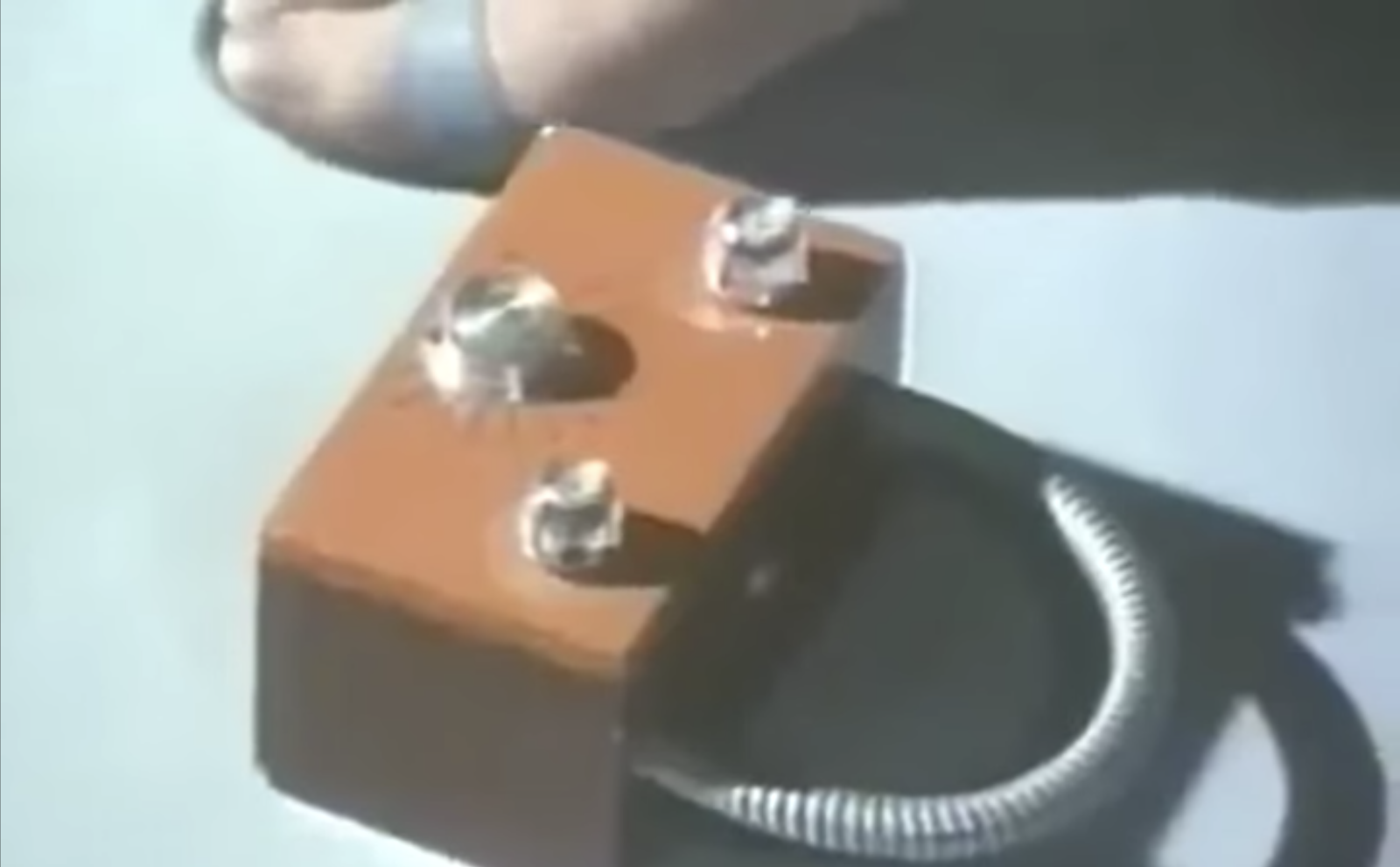
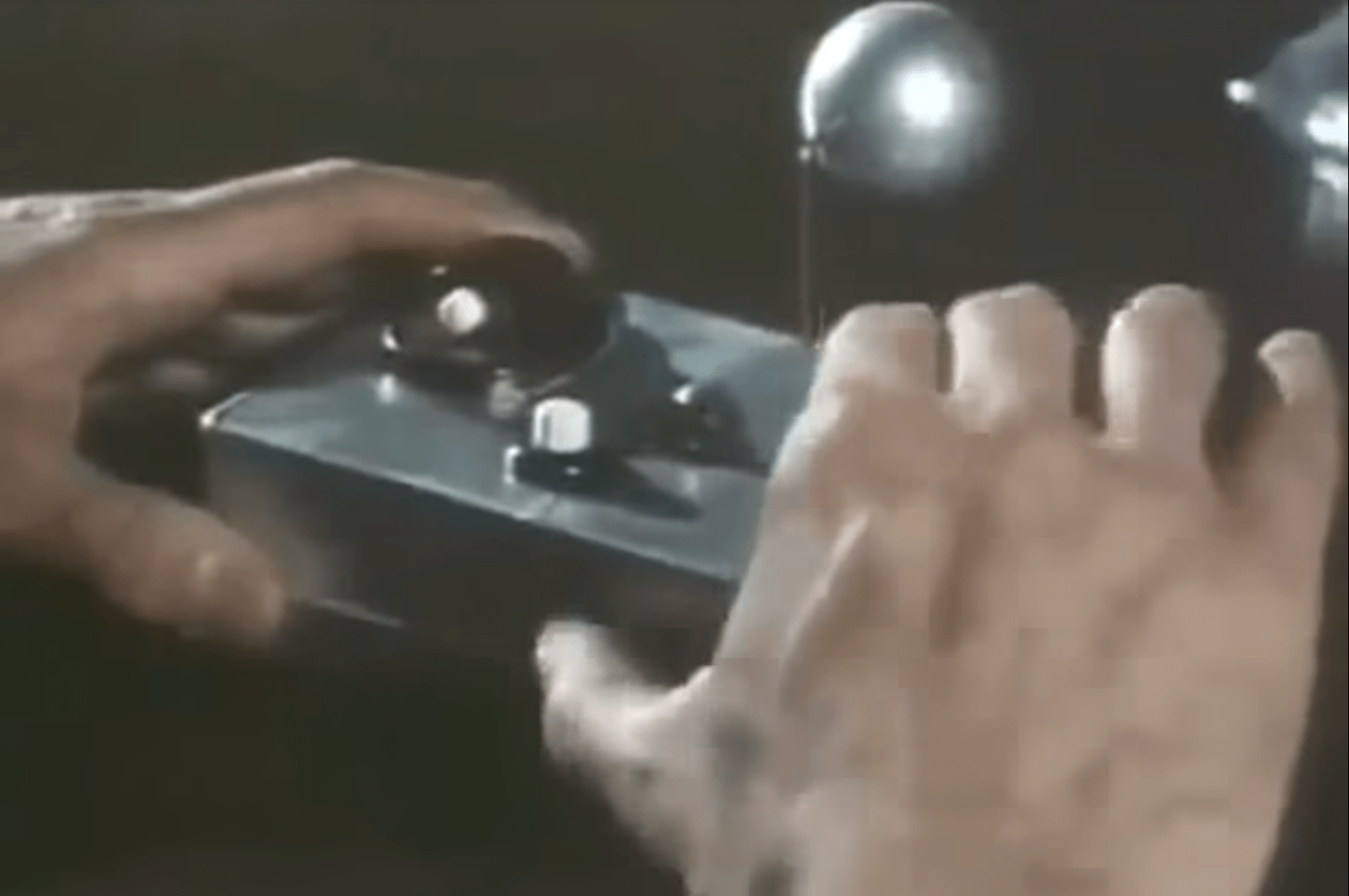
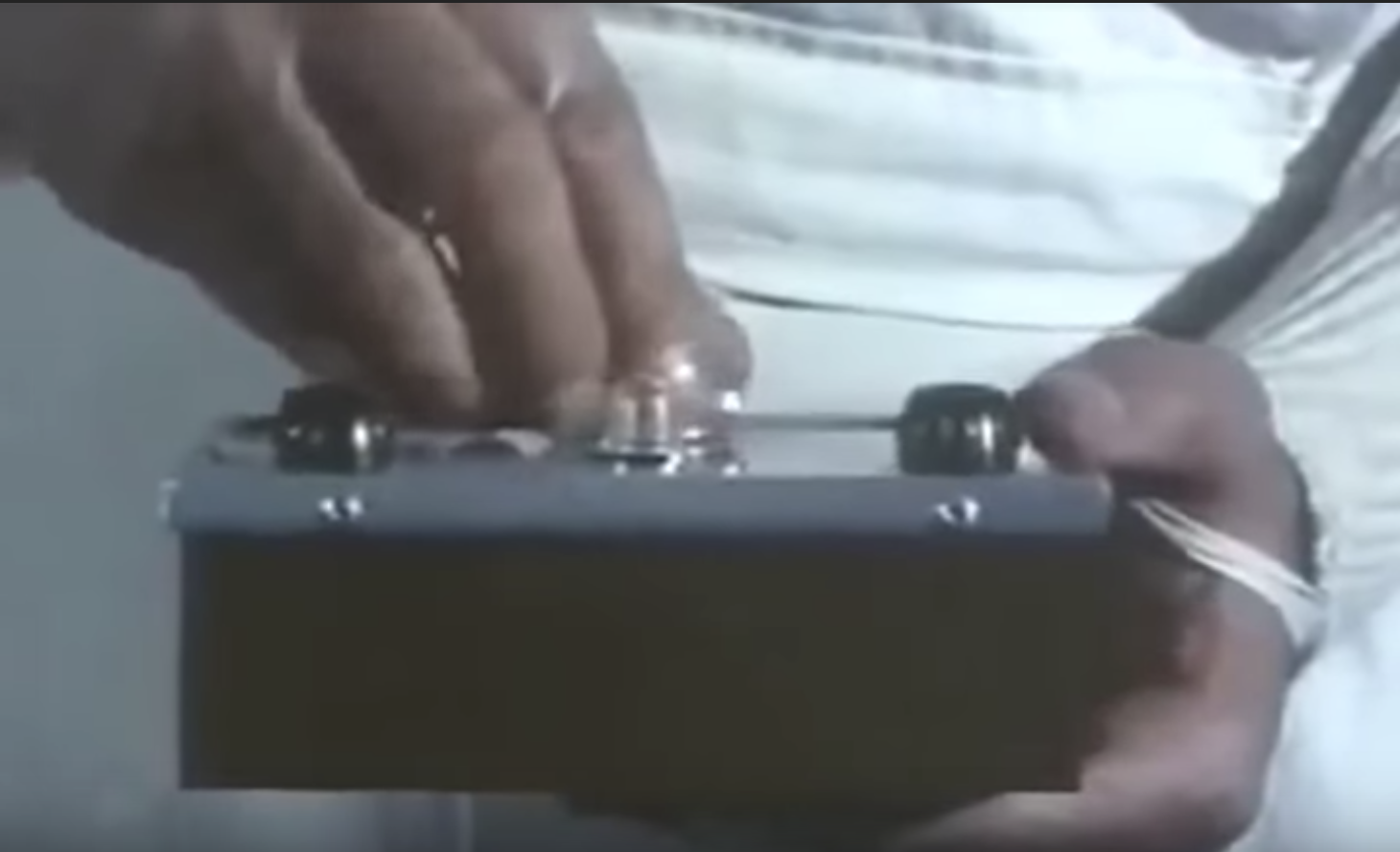
Here is the beta version used on Dr. Chavez and Gemma, on the floor of the laboratory before Gaby kicks it and everything explodes. This is the clearest view we get of either device.

Come on, I know it’s in beta, but no labels?

Both remotes have a rotary switch on the bottom edge and two click-stop potentiometers on the top edge. At first glance, it seems that these controls aren’t enough to manage all the variables that could apply to the actions taken by the victims. Lift arm? OK sure, but which one? Where’s the elbow? What’s the hand position?

But if the victims are in a perfectly-suggestible state—rather than complete automotons—then maybe all he has to specify with the remote is some goal and the degrees of two important variables, leaving everything else up to the human intelligence to interpret and decide to the best of his or her ability.

  • Mode: variable 1 | variable 2
  • Arm lift: left hand height | right hand height
  • Walk around: speed | clockwiseness (even though this befits a toggle switch, it could work here)
  • Karate chop: Force | Palm angle
  • Wrestle: Face | Heel
  • &c

Since it’s custom-coded, Orlak might even have multiple stops on the rotary switch for different inflections of the same mode. For instance, “Try to win match” and “Throw match” allowing different variables that suit each mode applicable within a given match.

Pictured: Botched move mode.

This design strategy leaves a lot up to the intelligence of the victim that isn’t specified by one of the mode/variable combinations, e.g. Which wrestling move should I try next? How do I escape this oncoming chokeslam? But we’re working with a subjugated human intelligence here, and we are used to working to achieve goals under difficult constraints. That’s, like, literally, life. So, if you can accept the speculative technology that controls a victim and passes interpretable instructions to them via a bracelet, then yeah, this remote control passes believability, even if it looks like a high school theater prop.

The prop could be made better by having the modes hand-written along the stops of the rotary switch. And if it was a real product, knowing what the potentiometers controlled in the current mode would save the user from not having to memorize it, or trial-and-error it. But please, let’s not make this thing a real world anything.

The generalizable lesson is that when you are working with an agent of a certain sophistication, your users don’t have to specify everything, just the most important things. The agent can do the rest of the interpretation. (And if not, design a recovery mode.)

Again, not a robot

Note that this bit of apologetics only applies to Orlak’s human victims with their general intelligence. Orlak also has a remote control for the Robot Asesino, but it’s much harder to see how it could not have language, but enough general intelligence to do what it must do with those meager instructions.

No dials needed

A last note is that the script could have made it so that a remote control was not necessary. If the film had explained that the bracelet puts the subject into a state of passive suggestibility, then Orlak could just rely on his subject’s (and audience’s) familiarity with language, issuing spoken instructions for his automatons to follow, and bypassing the ridiculousness of this interface. But. You know. Then the writers would have to have Gaby save the day through some other means than kicking the remote. And this is not that movie.

Trivium Bracelet

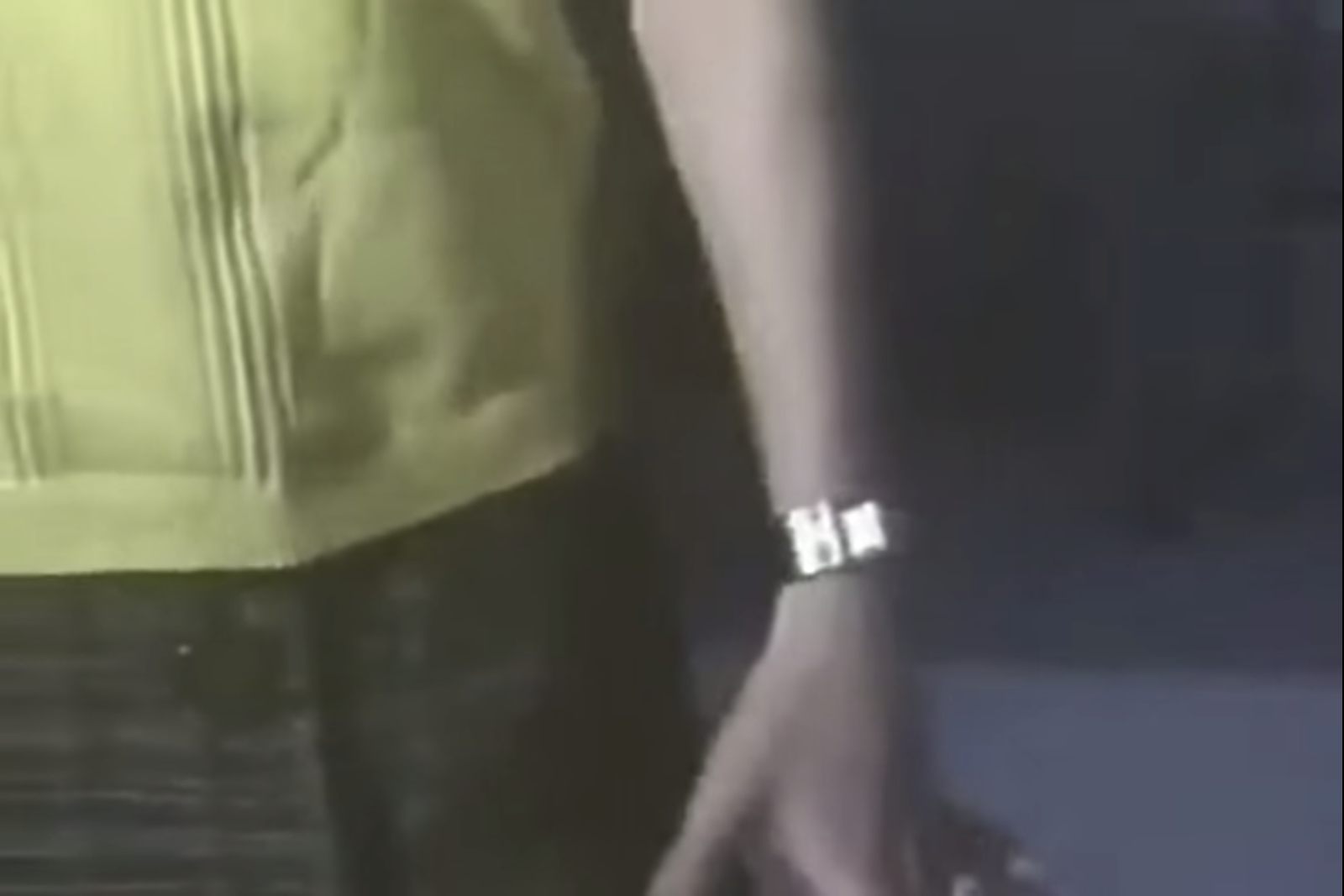
The control token in Las Luchadras is a bracelet that slaps on and instantly renders its wearer an automaton, subject to the remote control.

Here’s something to note about this speculative technology. Orlak could have sold this, just this, to law enforcement around the world and made himself a very rich and powerful person. But the movie makes clear he is a mad engineer, not a mad businessperson, so we have to move on.

From Orlak’s point of view, getting the bracelet on its victim should be very easy. Fortunately, it does just that. Orlak can slap it on in a flick. But it’s also trivially easy for a bystander to remove, which seems like…a design oversight. It should work more like a handcuff, that requires a key to remove. It can’t look like a handcuff, of course, since Orlak wants it to go unnoticed. But in addition to the security, the handcuff function would enable the device to fit wrists of many sizes. As it is, it appears to be tailor-made to an individual.

As the diagram illustrates, not all wrists are made the same, and it would not help Orlak to have to carry around a sizing set when he hasn’t had time to secretly get the victim’s measurements.

Lastly, the audience might have benefited from seeing some visual connection between the bracelet and the remote, like a shared material that had an unusual color or glow, but Orlak would not want this connection since it could help someone identify him as the controller.

Mission slot

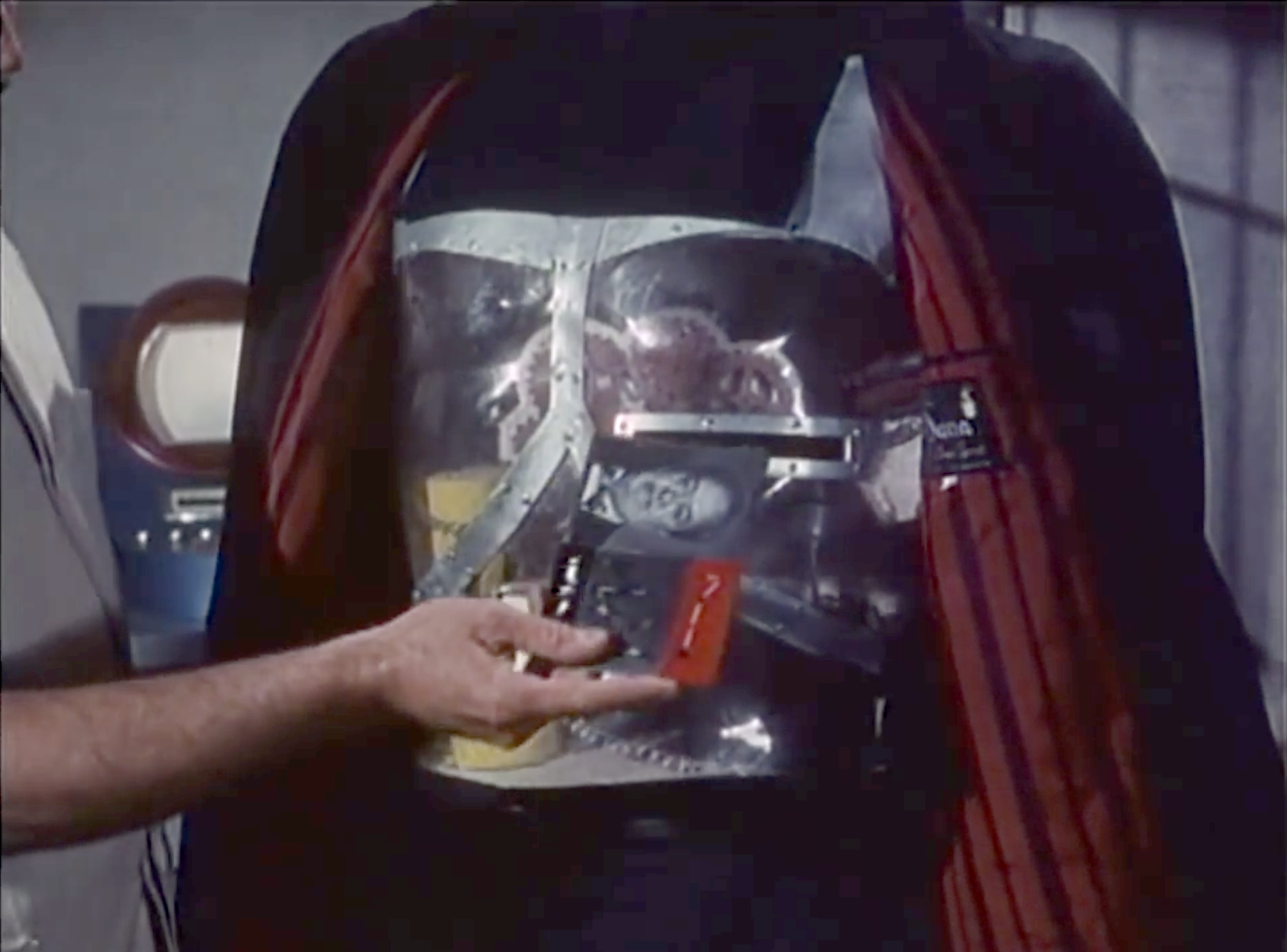
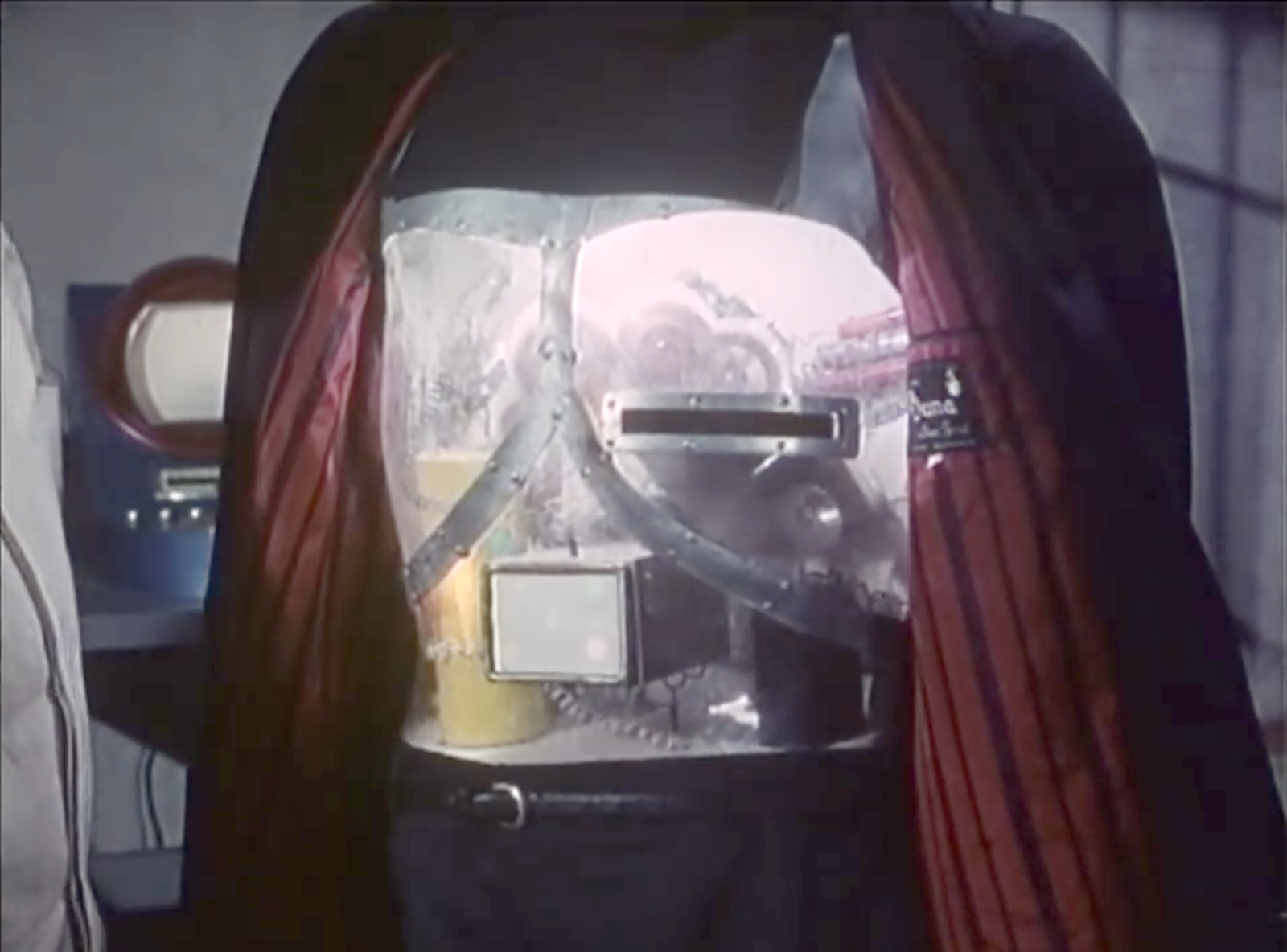
To provide the Victim Cards to the Robot Asesino, Orlak inserts it into an open slot in the robot’s chest, which then illuminates, confirming that the instructions have been received.

There is, I must admit, a sort of lovely, morbid poetry to a cardiogram being inserted into a slot where the robot heart would be to give the robot instructions to end the beating of the human heart described in the cardiogram. And we don’t see a lot of poetry in sci-fi interface designs. So, props for that.

The illumination is a nice bit of feedback, but I think it could convey the information in more useful and cinegenic ways.

In this new scenario…

  • Orlak has the robot pull back its coat
  • The chamfered slot is illuminated, signaling “card goes here.”
  • As Orlak inserts the target card, the slot light dims as the chest-cavity light brightens, signaling “I have the card.”
  • After a moment, the chest-cavity light turns blood red, signaling confirmation of the victim and the new dastardly mission.

When the robot returns to Orlak after completing a mission, the red light would dim as the slot light illuminates again, signaling that it is ready for its next mission.

These changes improve the interface by first drawing the user’s locus of attention exactly where it needs to go, and then distinguishing the internal system states as they happen. It would also work for the audience, who understands by association that red means danger.

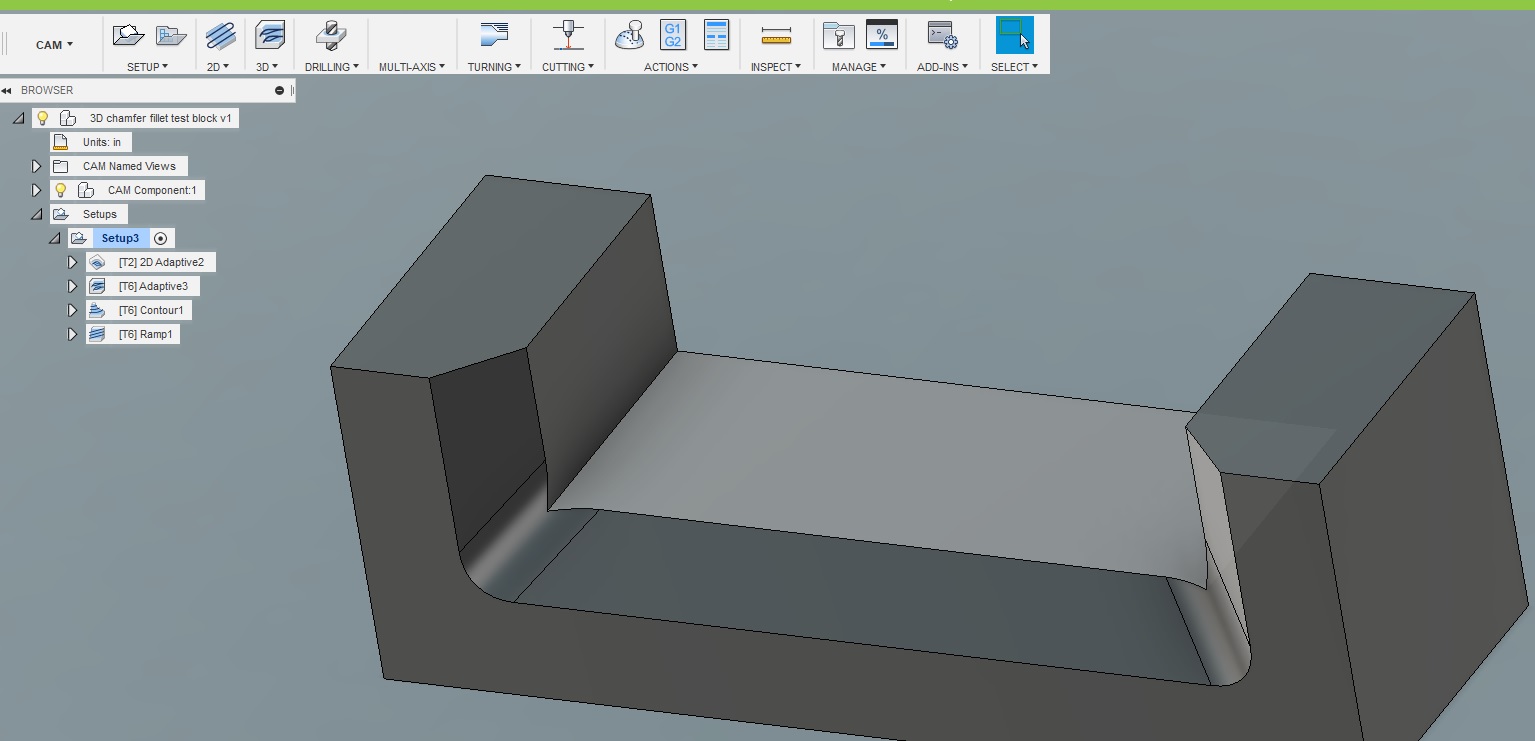
The shape of the slot is pretty good for its base usability. It has clear affordances with its placement, orientation, and metallic lining. There’s plenty of room to insert the target card. It might benefit from a fillet or chamfer for the slot, to help avoid accidentally crumpling the paper cards when they are aimed poorly.

In addition to the tactical questions of illumination and shape of the slot, I have a few strategic questions.

  • There is no authorization in evidence. Can just anyone specify a target? Why doesn’t Gaby use her luchadora powers to Spin-A-Roonie a target card with Orlak’s face on it and let the robot save the day? Maybe the robot has a whitelist of heartbeats, and would fight to resist anyone else, but that’s just me making stuff up.
  • Also I’m not sure why the card stays in the robot. That leaves a discoverable paper trail of its crimes, perfect for a Scooby to hand over to the federales. Maybe the robot has some incinerator or shredder inside? If not, it would be better from Orlak’s perspective to design it as an insert-and-hold slot, which would in turn require a redesign of the card to have some obvious spot to hold it, and a bump-in on the slot to make way for fingers. Then he could remove the incriminating evidence and destroy it himself and not worry whether the robot’s paper shredder was working or not.
  • Another problem is that, since the robot doesn’t talk, it would be difficult to find out who its current target is at any given time. Since anyone can supply a target, Orlak can’t just rely on his memory to be certain. If the card was going to stay inside, it would be better to have it displayed so it’s easy to check.
  • How would Orlak cancel a target?
  • It is unclear how Orlak specifies whether the target is to be kidnapped or killed even though some are kidnapped and some are killed.
  • It’s also unclear about how Orlak might rescind or change an order once given.
  • It is also unclear how the assassin finds its target. Does it have internal maps with addresses? Or does it have unbelievably good hearing that can listen to every sound nearby, isolate the particular heartbeat in question, and just head in that direction, destroying any walls it encounters? Or can it reasonably navigate human cities and interiors to maintain its disguise? Because that would be some amazing technology for 1969. This last is admittedly not an interface question, but a backworlding question for believability.

So there’s a lot missing from the interface.

It’s the robot assassin designer’s job to not just tick a box to tell themselves that they have provided feedback, but to push through the scenarios of use to understand in detail how to convey to the evil scientist what’s happening with his murderous intent.

Who did it better? Victim card edition.

Let’s cut to the chase. Las Luchadoras is a wholesale rip-off of Cybernauts, from the 1961–1969 British TV series The Avengers, specifically the episode “Return of the Cybernauts” from 1967. Thanks to readers Xavier Mouton-Dubosc @dascritch and Roger Long @evil_potato for drawing my attention to the complete ripoffery.

Dust off your stereoscopes for this one.

Compare freely…

  • Bad robot is silver-faced, wears a black trench coat, does not speak, wears black sunglasses, and a black hat.
  • Bad robot is given instructions via a graphically-designed card inserted into a machine slot.
  • Bad robot smashes through walls to gain access to victims who stand there in horror rather than, say, running from the slow-walking golem.
  • When bad robot kills, it does so with karate chops.
  • Bad human captures scientists and forces them to provide engineering specs to fulfill his evil ambitions.
  • Bad human forces scientists to build a wrist-wearable mind-control device, for use on Team Good. (One’s a bracelet. The other is a watch.) The main target for mind-control is a woman.
  • Bad human has plans to use the mind-controlled person to fight the rest of Team Good.
  • The day is saved (spoiler? I guess?) by pulling the mind-control device from the victim and putting it on the robot, which instead of granting the bad human more control of the robot, causes it to go berserk.

It’s like René Cardona saw “Return of the Cybernauts” on TV, loved it, and thought there is only one thing that could make this better: Lady. Wrestlers. So he added luchadoras and hoped BBC Four wouldn’t notice. He just wanted to make the world better, y’all.

If you think I’m exaggerating, here are a few side by side shots.

I guess we can give credit to Cardona’s selection of a Bolero hat instead of that tired Fedora thing? SciFiFashionChoices.com
A split image featuring two scenes: on the left, characters from 'The Avengers' (1967) in a futuristic setting, with a woman in a red outfit and a man in a suit; on the right, characters from 'Luchadoras...' (1969) dressed in silver and white, in a laboratory environment.
I like the implication in Luchadoras that audiences wouldn’t trust that these men were engineers unless they were in medical scrubs. (?) Way to trust your audience, Cardona.

The main differences from the technology point of view is that in “The Cybernauts” (the first episode from The Avengers to feature the robots, when the series was still shot in black and white), the robots didn’t track their victims by heartbeat. The robots followed a radio signal emitted from a pen that was gifted to the victim. In “The Return of the Cybernauts,” they’d gotten an upgrade, and did their tracking via sensors that were all on board.

A man in a black coat and hat sits in a chair, wearing sunglasses and gloves, against a plain background.
10 FOLLOW PEN / 20 GOTO 10

Additionally, in The Avengers, the victim card is inserted into an angled control panel attached to a wall-sized computer. In Luchadoras, the card is inserted into a slot built into the Robot Asesino. (The next post.) Otherwise, the steps of interaction are the same.

A display card showing a black and white photo of a man in a suit, with identifying information and a graphical representation of data, including a heartbeat line and braille.

Which brings us to the Victim Cards

Behold them, side-by-side.

A split image featuring a portrait of a man from 'The Avengers' (1967) on the left and a man holding a photo from 'Luchadoras...' (1969) on the right, both accompanied by abstract graphics and data.

It’s easier to tally the differences than the similarities, because they are quite alike.

  • Avengers’ cards are affixed to transparent plastic. Luchadoras’ cards are a thick paper.
  • Avengers’ has its elements separated by light blue rule lines. Luchadoras’ has no borders.
  • Avengers’ has a numeric unique identifier in the lower left.
  • Avengers’ top graphic looks like black computer-readable shapes on a white background. (Though it was almost certainly graphic tape.) Luchadoras’ looks like a white star chart on a red background.
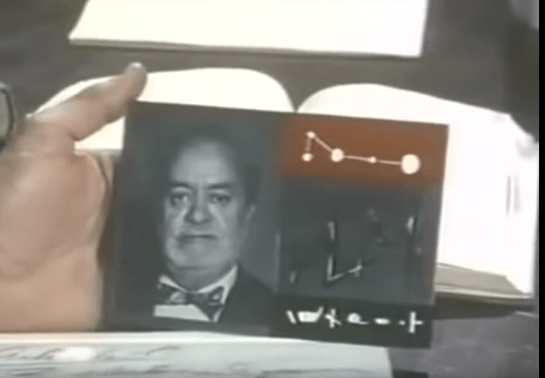
  • Avengers’ middle graphic is clearly a cardiogram (even if cardiograms are continuous not plotted points). Luchadoras’ is hard to read because of the crappy transfer, but nothing like a cardiogram.
  • Avengers’ lower graphic looks something like white braille pips on a red background. Luchadoras’ is weird white glyphs on a black background.

So…Who did it better?

Let’s not use the low resolution of this transfer against Luchadores. And we won’t use the lack of trippy face-stabilizing algorithms in the transfer of The Avengers against it.

Production

The bits on The Avengers’ card are clearly pasted there. The corners are curling up! But the plastic card feels solid and monumental. Luchadoras’ card seems like it was printed the way we see it! Using a color printer today, this would be a no big deal. But back in 1969 this was quite an achievement. Luchadoras wins.

A profile image of a man in a bow tie displayed alongside a graph and numerical data, suggesting a medical or identification context.

Graphics

Avengers top graphic is perfect. Like an early version of OCR. It’s very convincingly an instruction for a computer: precise and high contrast. Sadly the cardiogram is a little off, since even if it was plotted points, those points would be evenly spaced, and having the irregular plots on graph paper only highlights the unevenness. The braille-like bits at the bottom are, again, very convincingly an instruction for a 1960s computer to easily read.

Luchadores’ is just…nonsensical. A star chart? Hieroglyphs? “Cardiogram” lines that go backwards and cross back over themselves?

Avengers wins, leaving us with a need for a tie-breaker.

Diegetic usability

This is the main measure, and I’m just being coy for leaving it to the last. The purpose of the card is for henchmen and bad guys to provide programs for a robot assassin.Luchadoras’ space-filling layout and production quality make it look more in-line with modern design sensibilities on the surface, the actual content of those graphics are just 4th-wall-destroyingly awful.

Plus, since, the Avengers’ has the unique ID that makes it easy to for the humans to talk about with each other,…

“Get me the Peel card!”
“Uh, which is that?”
“The only person presenting as a woman?”
“Wut?”
“1252.”
“Oh, Hahaha. Got it.

A close-up of a card featuring a black and white photo of a woman with long hair, alongside various graphs and printed patterns.

…it wins.

If you’re going to copy, Luchadoras, seek to deeply understand the thing you’re copying first.


For more Who Did it Better, see the tag. Right now there’s only the fingernail-o-matics from The Fifth Element and Total Recall, but I’ll tag future things with that same tag.

Playing the Victim Card

To specify a target for assassination or kidnapping, Orlak (or a henchman) inserts a specially designed card into a slot built into the robot’s chest, right at its heart. One of those cards is below.

The layout of the card puts the victim’s picture on the left; a node-graph diagram that looks like a constellation diagram, and some inscrutable symbols on the right. The characters discuss that this card contains a cardiogram of the victim, but it’s unclear which part of the card has this information, because they usually look something like this:

1896 Copyrighted work available under Creative Commons Attribution
only license CC BY 4.0 http://creativecommons.org/licenses/by/4.0/

Oh, it’s probably worth mentioning that one of the movie’s givens is that a cardiogram can uniquely identify a person, like a thumbprint (which isn’t as provably unique as popular culture would have us believe). But to use a cardiogram to locate a person without a ubiquitous sensing network (unthinkable in 1969) would require a very high resolution cardiogram, a wall-piercing sensors, and some shockingly advanced pattern matching on the part of the robot, and I’m not sure I’m willing to give this film that much credit.

Presuming that there are lots of technical reasons for the stuff on the right, and the robot needs the profile for visual recognition, I imagine the only thing missing is a human-readable name so these are easy for the henchmen and scientists to discuss amongst themselves. I mean, they might happen to know every single scientist in town by sight, but having the name would avoid possible misidentifications. The design of artifacts have to take into account all common scenarios of use, including production, maintenance, and storage.

Speaking of which, it’s unclear how these cards are produced. They seem like they take a lot of expert effort to produce and fabricate. Let’s give the film credit to say that this is a deliberate attempt by the enslaved scientists to…

  • Make something as irrevocable as a death sentence very difficult to order.
  • Ensure an order to the murderous robot takes time, and thereby give time to let passions subside and orders to be rescinded.
  • Serve as a bailiwick of sorts, being too difficult for a layperson to do, and thereby difficult to turn on its masters.
  • Secure their jobs.

LATE BREAKING UPDATE: Turns out these cards are a copy of cards from The Avengers (1961–1969). Check out the comparison.

Overview: Las Luchadoras vs el Robot Asesino

This week marks the otherwise unsung 50th anniversary of the absolutely terrible film Las luchadoras vs el robot asesino, or Wrestling Women versus the Robot Assassin. I know I have to finish Idiocracy, but I wanted to pause to share this with you here on its anniversary. It’s a Mexican B-movie from 1969, it has an AI of sorts, and it is brain-explodingly bad with a handful of simple, evil interfaces to review.

Release Date: 9 January 1969 (USA)

Overview

The mad scientist Dr. Orlak has created a robot assassin, which he programs to punch through cheaply constructed set walls and capture scientists to enact his nefarious world domination plan.

massive-spoilers_sign_color

Gaby, a popular luchadora, is visiting her scientist uncle when the assassin breaks into his home and knocks the two of them out and kidnaps the uncle.

In his laboratory, Dr. Orlak demands that the kidnapped scientists help him build the “trivium bracelet,” which turns the wearer into a mindless, obedient automaton, that can be controlled by a handheld wireless device. (Note that “trivium” is YouTube’s auto-translation of the spoken Spanish to English, so may completely wrong. If you know the correct term, please comment.)

Orlak’s plan is apparently to manufacture these at scale to enslave the world, which is stupid for all the reasons that it is stupid. Still, Gaby’s uncle refuses to help, and is killed as an example to the others. The body is found on the outskirts of town. Distraught, Gaby, along with her detective boyfriend Arturo, her luchadora friend Gemma, and Arturo’s assistant Chava, follows clues and tracks the assassin down.

The scoobies find Orlak’s lab, where a henchman slaps a bracelet on Gemma and Orlak demonstrates its power to the others. Then, in a plodding burst of action, Gaby…

  • Karate chops a henchman
  • Snatches the bracelet off of the robot
  • Pulls Gemma from out of the path of a henchman’s gun (undeterred, he fires anyway, scaring one of the kidnapped scientists into a prop that explodes and kills him)
  • Removes Gemma’s bracelet

The robot, whose impulses were…held in check by the bracelet (? maybe?…) bear hugs the nearest available scientist. (Wait. What? Didn’t the robot kidnap the scientists to make the bracelet? What was controlling it before? Was this plot randomly generated?)

A nearby henchman tries to…save the scientist? Kill the scientist? Punch around the scientist at the robot? Something. It’s hard to tell and exhausting trying to figure it out.

Next, Arturo punches Orlak, Chava punches a henchman, and the robot hugs the scientist to death. Gaby kicks the remote control, and this causes the robot (who had not been controlled by this device for the entirety of the movie and is pointedly no longer wearing the bracelet that the remote control affects) to explode in a shower of sparks. The various explosions cause the laboratory to, in turn, explode.

In robot: What a world. What a world.

The next day, in the somehow-rebuilt laboratory, Orlak frees a strange feral “zombie” creature named Carfax (I am not kidding) from his basement and instructs him to kidnap Bethe, another luchadora we had not heard about until now. Carfax enters her home, and, because she is either a very deep sleeper or conked out on valium and booze, he is able to roughly hoist her out of there without disturbing her sleep one. little. bit.

Back at the lab, Orlak uses science! to transfer Carfax’ strength to Berthe’s body and snap a trivium bracelet on her. He has a (…new? rebuilt? not really destroyed in the exploring laboratory?) remote control. He renames Berthe to Black Electra and somehow arranges for her to fight Gaby in the ring.

Orlak sits in the audience in a disguise that would make Clark Kent proud, and controls Black Electra with his remote. She nearly defeats Gaby, but then Gemma jumps in the ring to help. While in a headlock, Gemma shouts a warning to Arturo and Chava, who identify Orlak in the audience and chase him. Gaby rouses and rejoins the fight with Electra, but Electra overcomes them and runs to join Orlak. Arturo chases them up into a catwalk high above the ring. There’s a catwalk fight with an angry, angry extradiegetic trumpet blaring throughout, so you know it’s tense. Chava shoots the remote out of Orlak’s hands, and Electra falls to her death on the ring. Orlak throws himself—or maybe just trips, it’s hard to say for sure—behind her, to his death.

FIN

Where to watch this masterpiece

Nobody bothered to reinstate the copyright on this thing, so it’s public domain and you can watch it on YouTube. Even if you don’t speak Spanish, you can use the auto-translated closed captions. These translations are awful, but don’t worry. I’m not certain that, if they were perfect, this movie would make much more sense.

IMDB: https://www.imdb.com/title/tt0134797/

Note that the conversion has some very weird transfer (?) and stabilization (?) artifacting, and the background wobbles around a lot, especially during fast action scenes, and the effect is like that stamp you licked was not for postage, and just now kicking in. Someone should figure out how to replicate this effect in modern film because it is tripping balls intense.

But we have interfaces to discuss and miles to go before we sleep, so microdose yourselves and let’s continue.