Ford Explorers

image01

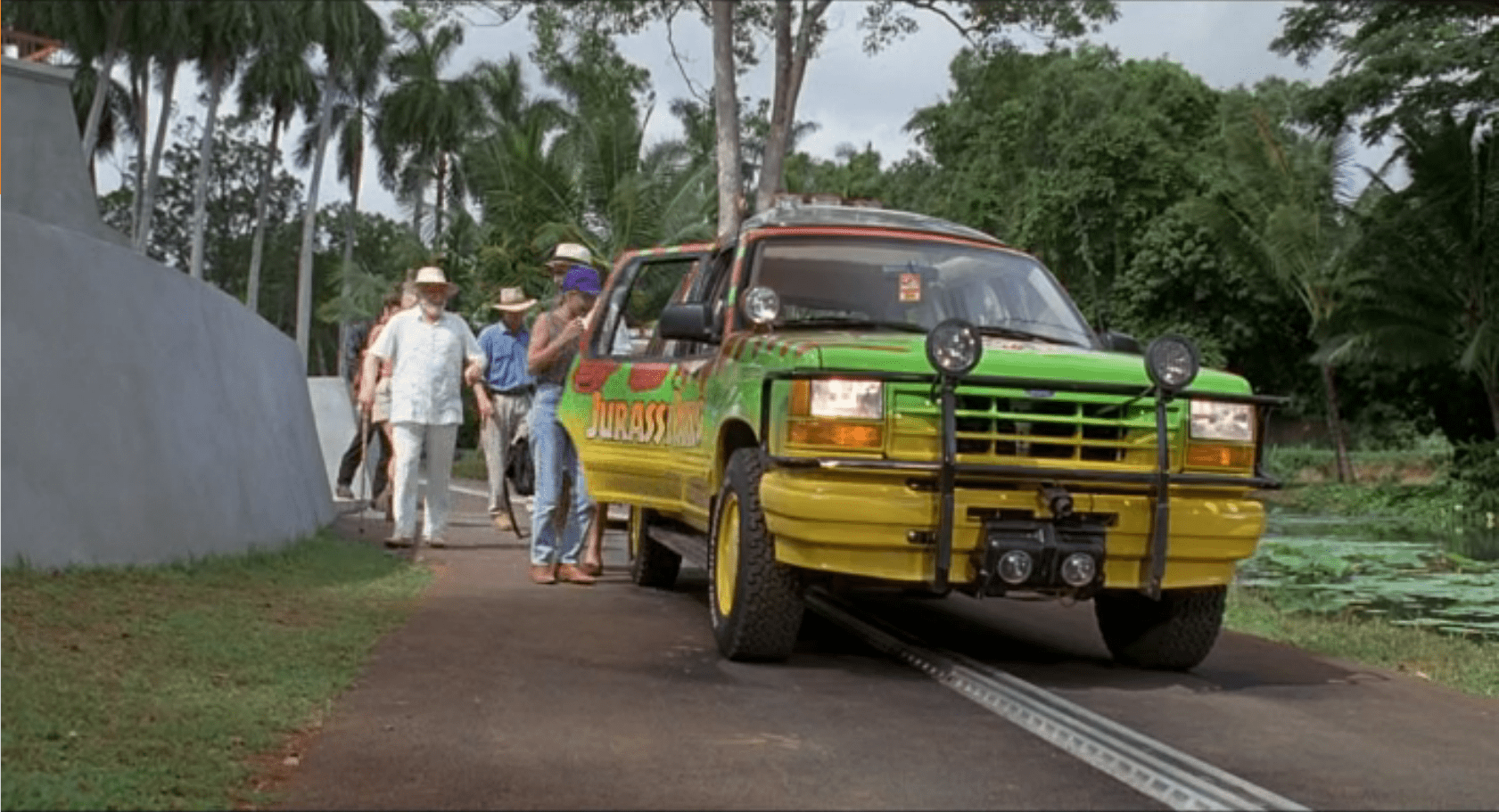
The Ford Explorer is an automated vehicle driven on an electrified track through a set route in the park.  It has protective covers over its steering wheel, and a set of cameras throughout the car:

  • Twin cameras at the steering wheel looking out the windshield to give a remote chauffeur or computer system stereoscopic vision
  • A small camera on the front bumper looking down at the track right in front of the vehicle
  • Several cameras facing into the cab, giving park operators an opportunity to observe and interact with visitors. (See the subsequent SUV Surveillance post.)

Presumably, there are protective covers over the gas/brake pedal as well, but we never see that area of the interior; evidence comes from when Dr. Grant and Dr. Saddler want to stop and look at the triceratops they don’t even bother to try and reach for the brake pedal, but merely hop out of the SUV.
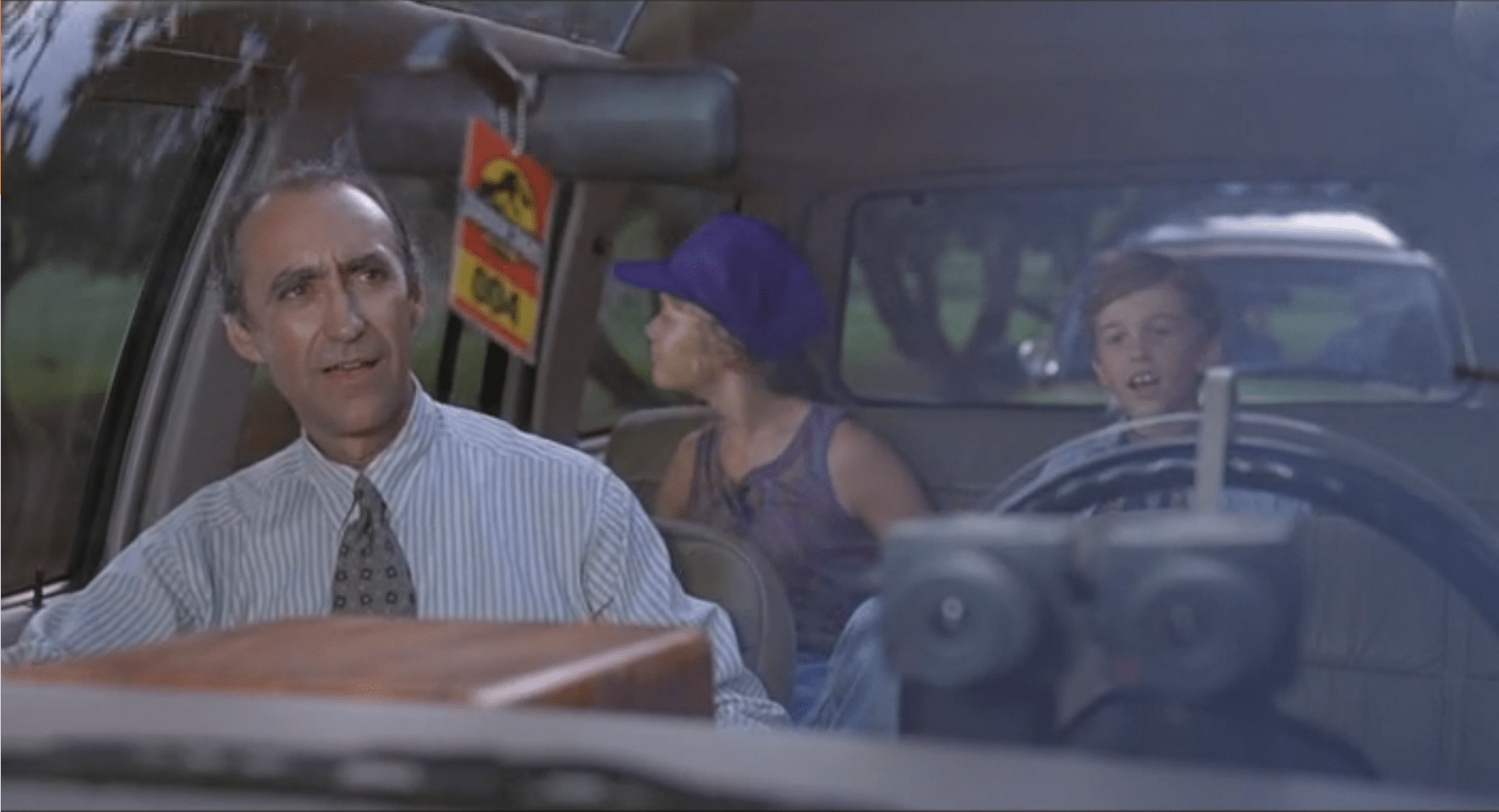
image02

The SUVs also have an interactive CD-ROM player in the center console with a touchscreen.  The CD-ROM has narrated, basic information about the park and exhibits, and has set points during the tour that it plays information about specific areas or dinosaurs.

image00

The Single, Central Screen

For what should be a focal point and value add for everyone in the car is poorly placed and in-optimally set up.  This would be the perfect situation for a second screen in the second console, at least.  If we look to more modern technology, we could start to include HUD overlays on all the windows of the Ford Explorer to track dinosaurs (so passengers would know where to look).  This could integrate with the need for better Night Vision Goggles.

A second concern is the hand-controlled interface.  Suddenly, everyone in the SUV is subservient to the two people who are within touch distance of the screen. Jurassic Park has enough location data and content in the presentation to be able to customize the play order to the tour.  This would keep an overactive kid from taking control of the screen and ruining the tour for everyone else in the car.

Steering Controls

The Ford Explorers maintain the steering wheel and gear selectors from their off-the-shelf compatriots.  This has two detriments on the passengers:

  • Cramps the person in the driver’s seat
  • Gives a false impression of control

The space is the most detrimental to the tour experience.  While the passenger has legroom, arm room, and plenty of space to turn around; the driver is forced to deal with the space hogging controls that are unusable.

By keeping the steering wheel, the SUV also implies that the driver could take control of the car.  We see no evidence of that, and Dr. Grant even climbs into the back of the Explorer instead of staying in the driver’s position.

The SUV drives itself, and shouldn’t give a false affordance that people are used to.

Comfort
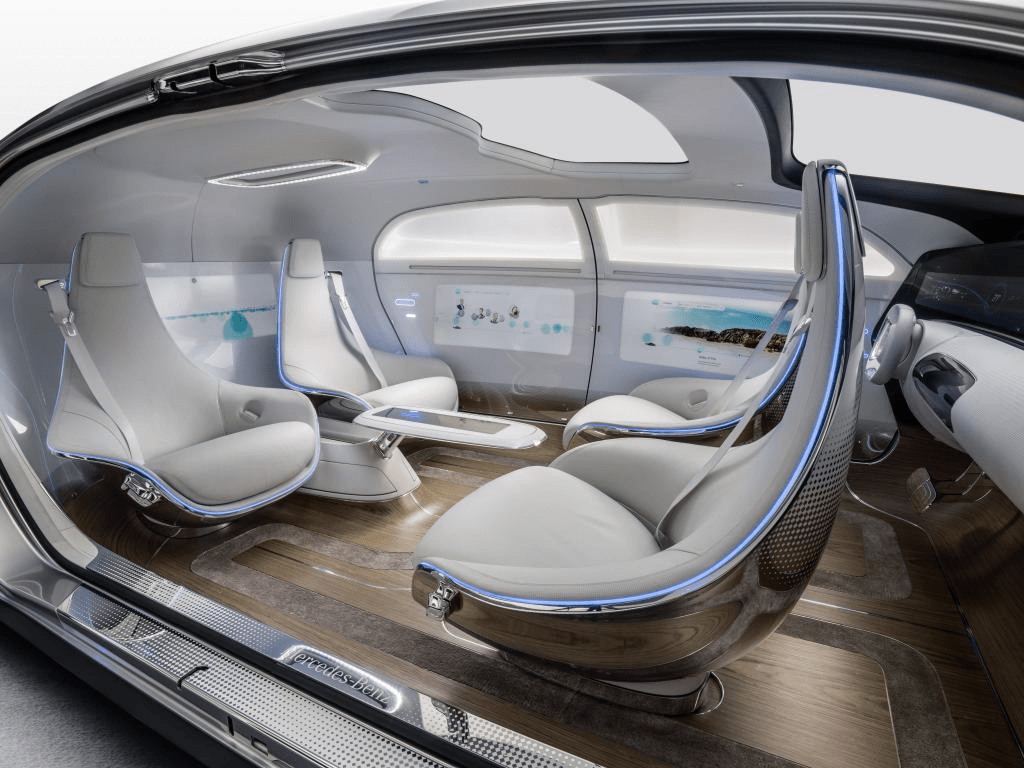
image03
The Mercedes F015 Self Driving Concept Car

A more radical concept would be completely custom vehicles.  Mercedes recently revealed a concept car focused around a lounge feel.  Other carmakers have done the same (Ford, Chevy, ect…).  It’s advantages are the increased social focus of the interior, and the easier access to all the windows.

Would this be more expensive? Yes, but as Hammond mentions frequently, they “spared no expense” to improve the experience for the guests.

The original article referenced these as Jeep Grand Cherokees… which they definitely are not.  As pointed out by Cary (http://smokeythejeep.wordpress.com/), the only Jeeps on the island are the gas powered models that the park rangers and staff use to get around the island.  These, as the article now states, are Ford Explorers ca. 1992.

Paddock Design

A number of the interfaces in Jurassic Park show a plan view map of the paddocks on the island. Some of them are quite unusual (take a look that that wraparound one in the center) and we wondered if the paddock shapes made any sense. It’s a little outside the site’s focus on interaction design, but that didn’t matter. Once we had the question, it kept tugging on our gastralia.

JurassicPark_Security_Alert03

But, we’re not zoo architects, so we reached out to one of the premier such agencies, CLR Design in Philadelphia. They specialize in designing zoo environments and have an impressive portfolio with plans and exhibits all over the United States and around the world.

Don’t see any unarmed dinosaur paddocks HERE, now do you?

“They,” we thought, “They’ll be able to give us an informed opinion.” So we shot them an email, explained the odd request, and to our nerdy delight Dan Gregory gave us the following awesome thoughts.

“In a real world zoo outdoor exhibit for large animals there are typically…

  • indoor holding facilities
  • off-exhibit yards to give the animals outdoor space away from visitors
  • the exhibit habitat (outdoor space visible to visitors)
  • visitor paths to optimal viewing vantage points
  • service paths for staff access to the holding facility and yards.

If the holding/yards are not directly adjacent to the exhibit, sometimes there are transfer chutes. Also, if multiple species share habitat space either simultaneously or in a time-share arrangement (“Hey! Round up the Apatosaurs ‘cause it’s time to let the T-Rex out!”), then the holding and chutes would surround the exhibit like spokes to a wheel hub (in concept, the reality depends a lot on the existing/desired terrain and existing exhibits). You can find some examples of our and other designers using these concepts by doing a Google search of zoo exhibit design pdf of Google Image search of zoo exhibit design.

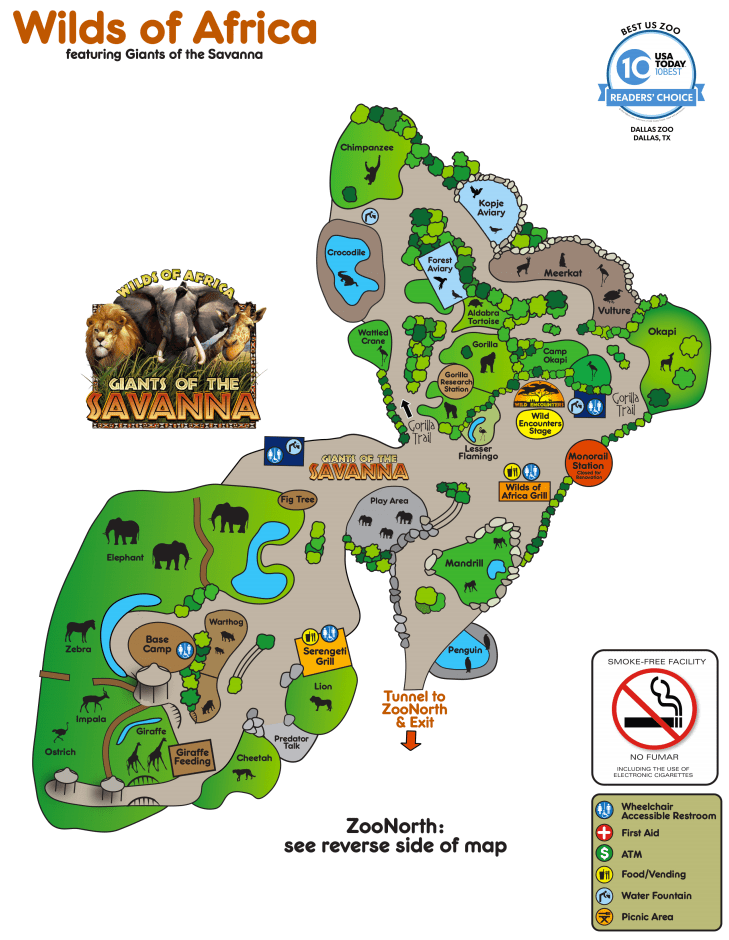
“A good example is the Giants of the Savanna area of the Dallas Zoo.

WildsofAfrica
Zoom in to more detail if you like in this PDF.

“See how in the lower left the elephants share space with zebra, impala, and ostrich, but are separated from the giraffe and distinctly separated from the lion and cheetah?

JurassicPark_Security_Alert03
Yes, this is the same image from above. We here at scifiinterfaces.com CARE.

“In at least a few scenes of Jurassic Park you saw plenty of herbivores sharing land. The small faux island exhibit map in your screen grab illustrates a potential shared habitat to the right, with visitor/service roads, and a thin perimeter buffer zone around the entire park. The ‘unarmed’ zone in the lower portion could represent an area that is allows visitor viewing but only under strict stay on the path conditions.

“So all in all it is, or at least could be, a fairly credible representation of a potential dino park.”

 Woot! So…Way to go, Jurassitechts. A passing grade. Thanks, Dan!

Weather Monitor

Jurassic Park’s weather prediction software sits on a dedicated computer. It pulls updates from some large government weather forecast (likely NOAA).  The screen is split into three sections (clockwise from top left):

  1. 3D representation of the island and surrounding ocean with cloud layers shown
  2. plan view of the island showing cloud cover
  3. A standard climate metrics along the bottom with data like wind direction (labeled Horizontal Direction), barometric pressure, etc.

We also see a section labeled “Sectors”, with “Island 1” currently selected (other options include “USA” and “Island 2”…which is suitably mysterious).

JurassicPark_weather01

Using the software, they are able to pan the views to the area of ocean with an incoming tropical storm.  The map does not show rainfall, wind direction, wind speed, or distance; but the control room seems to have another source of information for that.  They discuss the projected path of the storm while looking at the map.

JurassicPark_weather03

Missing Information

The park staff relies on the data from weather services of America and Costa Rica, but doesn’t trust their conclusions (Muldoon asks if this storm will swing out of the way at the last second despite projections, “like the last one”).  But the team at Jurassic Park doesn’t have any information on what’s actually happening with the storm.

Unlike local weather stations here in the U.S., or sites like NOAA weather maps, there is in this interface a lack of basic forecasting information like, say, precipitation amount, precipitation type, individual wind speeds inside the storm, direction, etc… Given the deadly, deadly risks inherent in the park, this seems like a significant oversight.

The software has spent a great deal of time rendering a realistic-ish cloud (which, we should note looks foreshadowingly like a human skull), but neglects to give information that is taken for granted by common weather information systems.

Prediction

When the park meteorologist isn’t on duty, or isn’t awake, or has his attention on the Utahraptor trying to smash its way into the control room, the software should provide some basic information to everyone on staff:

  • What does the weather forecast look like over the next few hours and days?

When the weather is likely to be severe, there’s more information, and it needs to urgently get the attention of the park staff.

  • What’s the prediction?
  • Which parts of the park will be hit hardest?
  • Which tours and staff are in the most dangerous areas?
  • How long will the storm be over the island?

If this information tied into mobile apps or Jurassic Park’s wider systems, it could provide alerts to individual staff, tourists, and tours about where they could take shelter.

JurassicPark_weather02

Make the Information Usable

Reorienting information that is stuck on the bottom bar and shifting it into the 3d visual would lower the cognitive load required to understand everything that’s going on.  Adding in visuals for other weather data (taken for granted in weather systems now) would bring it at least up to standard.

Finally, putting it up on the big monitor either on demand or when it is urgent would make it available to everyone in the control room, instead of just whoever happened to be at the weather monitor. Modern systems would push the information information out to staff and visitors on their mobile devices as well.

With those changes, everyone could see weather in real time to adjust their behavior appropriately (like, say, delaying the tour when there’s a tropical storm an hour south), the programmer could check the systems and paddocks that are going to get hit, and the inactive consoles could do whatever they needed to do.

Ground Penetrating Radar Gun

The ground penetrating radar gun is a cutting edge piece of technology used by Dr. Grant and Dr. Sattler for their field paleontology work. After firing a blank round into the ground, a second piece of equipment picks up the returning sound waves.

JurassicPark_RadarGun02

Those results are then displayed on a small CRT TV, to which they have taped a makeshift glare. A technician sits at the equipment stack with a keyboard, but no recognizable computer screen. Several buttons, dials, and a waveform monitor complement the setup.

JurassicPark_RadarGun01

After twiddling some dials, and punching a few keys, the technician makes the sonogram appear on the monitor, revealing a utahraptor velociraptor skeleton. Dr. Grant then tries to point out to eager onlookers some of the interesting features of the fossil on the screen. When he touches it, the screen fuzzes for a moment. It appears to be a very delicate piece of equipment in a very harsh part of the desert.

After Grant explains how the gun shows the fossils still in the ground, Sattler comments—foreshadowingly—that “Soon enough, we won’t even have to dig any more…” Enter Hammond and the ironic fulfillment narrative.

Iterate through the Prototype Phase

It looks like this is a very early version of the device, and still very much a prototype. This means it has a lot of issues: very delicate, obfuscated controls, and requires a small team dedicated to just making it work. It doesn’t look fully ready for the field yet…

…And that’s awesome.

This is the perfect example of a usability test: we now know that crotchety archeologists (the primary customer for this product) are going to want to poke it, prod it, and see a lot of detail.  Those are things that, at this stage, can probably still be fixed and improved.

The controls, if that’s what they really are, still have time to be iterated into a usable format.  We know they aren’t usable because even the archeology team struggles with it.

All vital information for getting back to the next iteration for making it better for actual field paleontologists. Until they’re rendered extinct, anyway.

Barbasol Can

JurassicPark_Barbasol02

The Barbasol can is a camouflaged container that Nedry uses to smuggle genetic information, i.e. dinosaur embryos, off the island to an unnamed group that is willing to pay him a lot of money for this act of industrial espionage.

JurassicPark_Barbasol03

The exterior case looks identical to an off-the-shelf can of Barbasol shaving cream, and hides a metal cradle for the DNA vials. With a twist, the cradle pops up.  When twisted back, the cradle locks into place.  Dennis uses this under tight time constraints to steal the DNA samples and carry them.

JurassicPark_Barbasol01
Wait. The movie never mentioned Proceratosaurus.

Near the end of the movie, he falls and loses the can.  It rolls away into a pile of silting mud where it will be impossible to find (though Nedry doesn’t live long enough to look for it). Greed gets its comeuppance.

Would you want one of these today?

This device would prove really problematic today.  First, it would never make it past modern security at an airport. It’s too big. Given the acceptable travel-sized can, that’s like five crummy embryos at the most. That eliminates a big backup plan for Nedry and the MysteryCo if the getaway plan involves anything other than privately chartered transportation. Which, given the need for secrecy, we can presume.

Barbasol travel size

Second, the large, round shape is too big to comfortably grip and its cylindrical shape basically guarantees that it’s going to get lost if it gets dropped. You know, which is exactly what ends up happening. What was the original plan, a moistened bar of soap?

Third, anyone can open the can. There is no key. Given that Barbasol cans are actually a commonly-available diversion safe, you might want to lock that thing down with a magnetic key that’s still undetectable, but won’t let the baggage handler walk off with your millions.

Barbasol Can Diversion Safe
Admittedly, this might be a real world thing because of the movie. It’s hard to say.

Finally, since to the casual observer it has to look and function identically to a Barbasol can, it runs the grave risk of being swapped for one, accidentally or in some gritty-reboot Spy Vs. Spy fan fiction. Including a passive RFID call-and-response API would enable identification, status indication, and triangulation for, say, if the thing ever gets lost in the silt of a tropical island in the Caribbean Sea.

So, if there’s going to be any dinosaur embryo smuggling in the future, and I’m looking at you, Dodgson, it should pass modern security. So maybe a travel sized can of Barbasol and I don’t know, mousse? Does anyone still use mousse? This size will be easier to zip into a pocket. Make sure Nedry has zipping pockets. Give the can a hidden lock to deter casual unscrewers, and be able to wirelessly query for identification or loss. And maybe someone as bumbling as Nedry can fetch you the goods without getting himself turned into raptor chow.

JurassicPark_Barbasol04
Ha HA…raptor chow…classic.

Velociraptor Lock

The velociraptor pen is a concrete pit, topped with high-powered electric fences.  There are two ways into the pen: a hole at the top of the pen for feeding, and a large armored door at ground level for moving ‘raptors in and out. This armored door has the first interface seen in the film, the velociraptor lock.

JurassicPark_velociraptorlock03

 Velociraptors are brought from breeding grounds within the park to a secure facility in a large, heavily armored crate. Large, colored-light indicators beside the door indicate whether the armored cages are properly aligned with the door.  The light itself goes from red when the cage is being moved, to yellow when the cage is properly aligned and getting close to the door, to green when the cage is properly aligned and snug against the concrete walls of the velociraptor pen.  There is also a loud ‘clang’ as the light turns to green.  It isn’t clear if this is an audio indicator from the pen itself, the cage hitting the concrete wall, or locks slamming into place; but if that audio cue wasn’t there, you’d want something like it since the price for getting that wrong is quite high.

The complete interface consists of four parts (kind of, read on): The lights, the door, the lock, and the safety. More on each below.

1. The Deceiving Lights

The lights are the most obvious part of the system (aside from the cage and pen).  Everyone who is watching the cage also has a clear view of the lights – there is an identical set on the other side of the cage for the other half of the safety/moving crew.

sidelights

2. The Door

The Velociraptor pen’s door is perfectly shaped to accept the heavily armored cage, and is equipped with a rail system to keep the cage aligned properly with the door.  Though it takes eight workers to move the cage, they appear to be able to push the cage reasonably easily. When the light turns green, the workers move back to allow the gate to be manually raised on the cage, letting the caged velociraptor escape into the pen.

3. The “Lock”

JurassicPark_velociraptorlock01
Or, lack thereof…

Every indication (the lineup of the cage, the green lights, and the heavy metallic ‘clang’) gives the feeling of a secure mating between the cage and the pen.  All of the workers relax, as if they’re sure they’re as safe as they can be. But you can be certain, this is a false sense of security.

As soon as the velociraptor decides to test the lock, it is able to push the cage away from the pen wall.  The light near the door instantly changes from green back to red.

Narratively, this underscores some of the risks of the park, i.e. that it’s cheaply engineered despite appearances, and extra-diegetically sets the audience on edge since it’s not sure what it can trust. But, for us in the real world, given the many indications that the system was safe, it should have actually been safe.

4. The Safety

When the clever velociraptor knocks the cage back, a worker falls in and becomes an unscheduled snack. Attendant workers try to help using…

The Cattle Prods

When the gate master falls and gets snatched by the velociraptor in the cage, workers immediately rush in and start hitting her with cattle prods.  There are at least six prods being used, possibly more.

Since this is the first line of backup defense, the cattleprods should have been iterated until they actually deterred the ‘raptors.  Clearly, effort went into making the perimeter defenses secure against the larger dinosaurs. The same effort should have gone into making the cattle prods effective against velociraptors.

Design for Success

The Velociraptor pen door seems custom-designed for serious failure: No hard locks to keep the cage in place, horrible sight-lines, and manual controls in places that make it dangerous for workers. Even the solid feedback system only adds to the danger. It lulls the workers into thinking the system is safe.

Most, if not all, of these issues would be solved by a simple physical locking device on the cage. Something to hold the cage in place while the doors are open would maintain a secure pen and keep everyone outside safe. It would also eliminate the need for most of the support crew, who only end up getting in each other’s way.

To add to the safety, the park designers should have paid more attention to where people would be standing during the transfer process.  The armed guards (theoretically there to be a second line of defense), are placed in such a way that only a few of them are able to effectively fire.  Other guards on scene would have to fire past their fellow guards.

Presumably, this is why the armed guards don’t actually fire at the ‘raptor when Muldoon shouts to “Shoot her! Shooooooot her!!”

JurassicPark_velociraptorlock4

Keep the feedback…

The feedback systems of the cage are remarkably successful, for a placebo. The lights, sounds, and placement keep the workers and audience calm right up until things go horribly wrong.  With the addition of Muldoon’s organizational skill and animal handling skills, the feedback system is worth taking notes on.

…but make it mean something

The velociraptor pen was designed to tell the workers what state it was in, but not to actually keep them safe.  Muldoon’s precautions try to make up for the system’s failures, but only add to the problems as the workers trip over each other.

Jurassic Park (1993): Overview

Release date: 11 June 1993, United States

JurassicPark_title

As with all overviews, ALL THE SPOILERS ahead.

Venture Capitalist John Hammond hires paleontologist Dr. Alan Grant, paleobotanist Dr. Ellie Sattler, and chaos theoretician Dr. Ian Malcolm to visit and approve a novel safari park, named Jurassic Park, he has built on a small island near Costa Rica. He has populated the island with dinosaurs, which are cloned from dinosaur blood harvested from mosquitoes trapped in prehistoric amber. Joining the doctors on their remote-controlled Jeep tour of the park-in-progress are two of Hammond’s grandchildren, Tim and Lex, as well as lawyer Donald Gennaro.

JurassicPark_brachiosaur

Though the tour is troubled with production problems, real trouble starts when a massive storm blows in just as the park’s key developer Dennis Nedry enacts a plan to steal dinosaur embryos—a plan which involves his shutting off the security system to hide his actions. To reboot the security systems, Hammond must shut off the power to the whole park. Without the threat of the electrified fences holding them in, the carnivorous dinosaurs break free and begin hunting everything on the island, including the people. Nedry, Gennaro, game warden Muldoon, and chief technology officer Arnold are each killed. Eventually the remaining survivors take refuge in the visitors center. They manage to restore power to the island and thereby the security system, but not before the vicious utahraptors velociraptors figure out how to *gulp* open doors, and flank everyone to the heart of the visitor’s center. All seems lost until the massive tyrannosaurus rex bursts in, hunting the velociraptors, and as the dinosaurs fight, the human survivors escape in a helicopter to the mainland.

JurassicPark_intothesunset

IMDB: https://www.imdb.com/title/tt0107290/Currently streaming on:

Welcome…to Jurassic Park

So…guess what opens up this week? That’s right, it’s Jurassic World, the fourth in the series of epic action dinoflicks that all began with the one that shares the name of the original novel by Michael Crichton: Jurassic Park. Well, since I haven’t yet figured out how to get my hands on screeners of the new pics, we’re going to review the original movie and all of it’s Dawn-of-the-Internet glory. And yes, even that interface.

JPSFI

And looking at the trailer for Jurassic World, it looks like there will be plenty of interfaces to review when it finally comes out to be reviewed.

JurassicWorld_bigboard

And Marvel fans can relax, I’ll still be publishing the ongoing reviews of The Avengers. It’s going to be a busy week here on the blog, but at least it culminates with giant dinosaurs and deadly, deadly museum kiosk interfaces. See you in the cinema.

jurassic-world-JSW_Mose1Sht2_RGB_0416_3_rgb