Fritzes 2026 Best Believable

The Fritzes award honors the best interfaces in a full-length motion picture in the past year. Interfaces play a special role in our movie-going experience, and are a craft all their own that does not otherwise receive focused recognition.

Today we’ll be covering Best Believable. These movies’ interfaces adhere to solid computer-human-interaction principles and believable interactions. They engage us in the story world by being convincing.

The 2026 Award goes to: The Running Man

This second adaptation of Stephen King’s novel knocks it out of the park for the plot-central interfaces: The runner cuff and R-Cam box, the hideous sousveillance phone app for “fans”, the service design of the “free-v” show, and the in-home snitch interfaces. They lean towards narrative (missing a few things real-world counterparts would need), but all help articulate this dystopian world and the circumstances that drive the action. Moreover, I feel quite certain not making good real-world models of these horrible things is the right thing to do, especially given *gestures vaguely at the kakistocracy*.

On top of that it also has lots of awesome everyday interfaces, and it takes a level of commitment on the part of the filmmakers to go that deep in the worldbuilding. There’s a videophone interface with shades of Blade Runner. There’s a mailbox that signals its readiness and lifts off immediately after receiving a letter. (Though I would have flipped those red and green colors, so red meant “don’t put mail in here” and green meant “ready to receive”, but my invitation was lost in the mail.) The fare interfaces in the taxi. The self-driving interface of the citizen car. The piloting interfaces aboard the network plane. It’s all uncluttered, straightforward, and believable. Really well done, really well presented, and that’s hard to do in intense-action movies.

Also check out: War of the Worlds (2025) 

It got universally panned. Fair enough, neither ubiquitous government surveillance nor the current DHS bears valorization. (Also the virus-but-its-digital twist was already done), but I am impressed that this take on the classic Wells story is told almost entirely through interfaces, and each of them is detailed and mostly-realistic. The editing around the interface can be dizzying, and I wondered why William Radford had to do so much digital hunting at the beginning when an assistant should have been guiding his attention. But it’s impressive to bring that tale to life mostly through this unsung medium.

Also check out: Companion

With soft echoes of the interfaces in Westworld (2016), the interfaces in Companion control android and gynoid companions. (Yes, that term is deliberately coy.) They are clean and simple, which underscores the robots’ horror that they are under that much control by their owners.

My hackles are raised from “Intelligence” being a single slider. Intelligence is much more complicated than that, and this notion that it’s a single scalar variable has done a lot of damage over time. Even if they’d had a little expando control, it would have pointed at the idea that we’re looking at a simplification. Also I wish they’d provided a live preview of the eye color, because even with its intended use—of an owner controlling their companion’s eye color—this control has them glancing up to see the effect and then back down again to adjust, which is not a satisfying feedback loop. I use this very control as an example of a “plan” assistant in my new book. Hey, all of Hollywood: Buy it!
Next up: The Best Narrative interfaces from 2025

Ford Explorers

image01

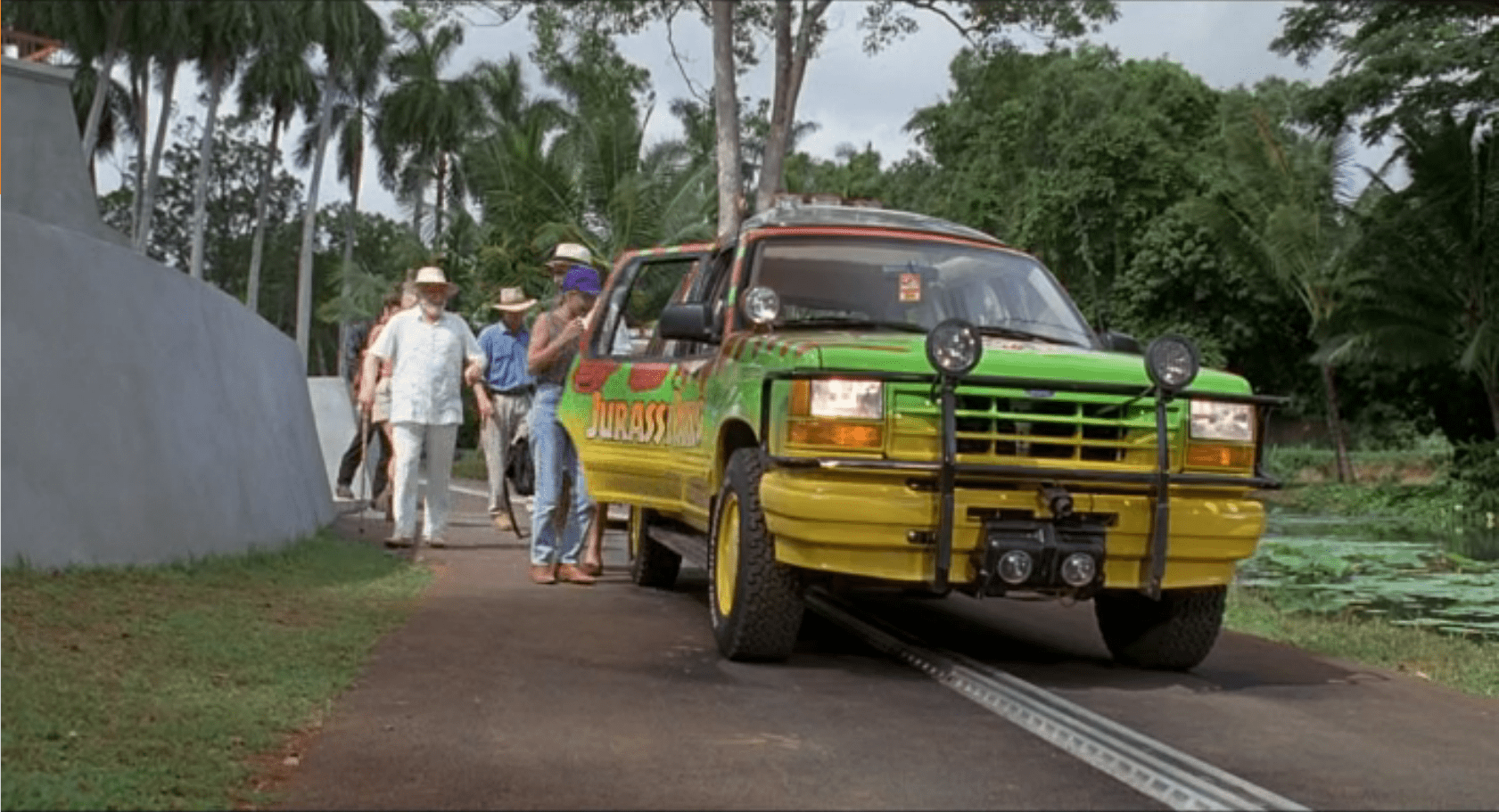
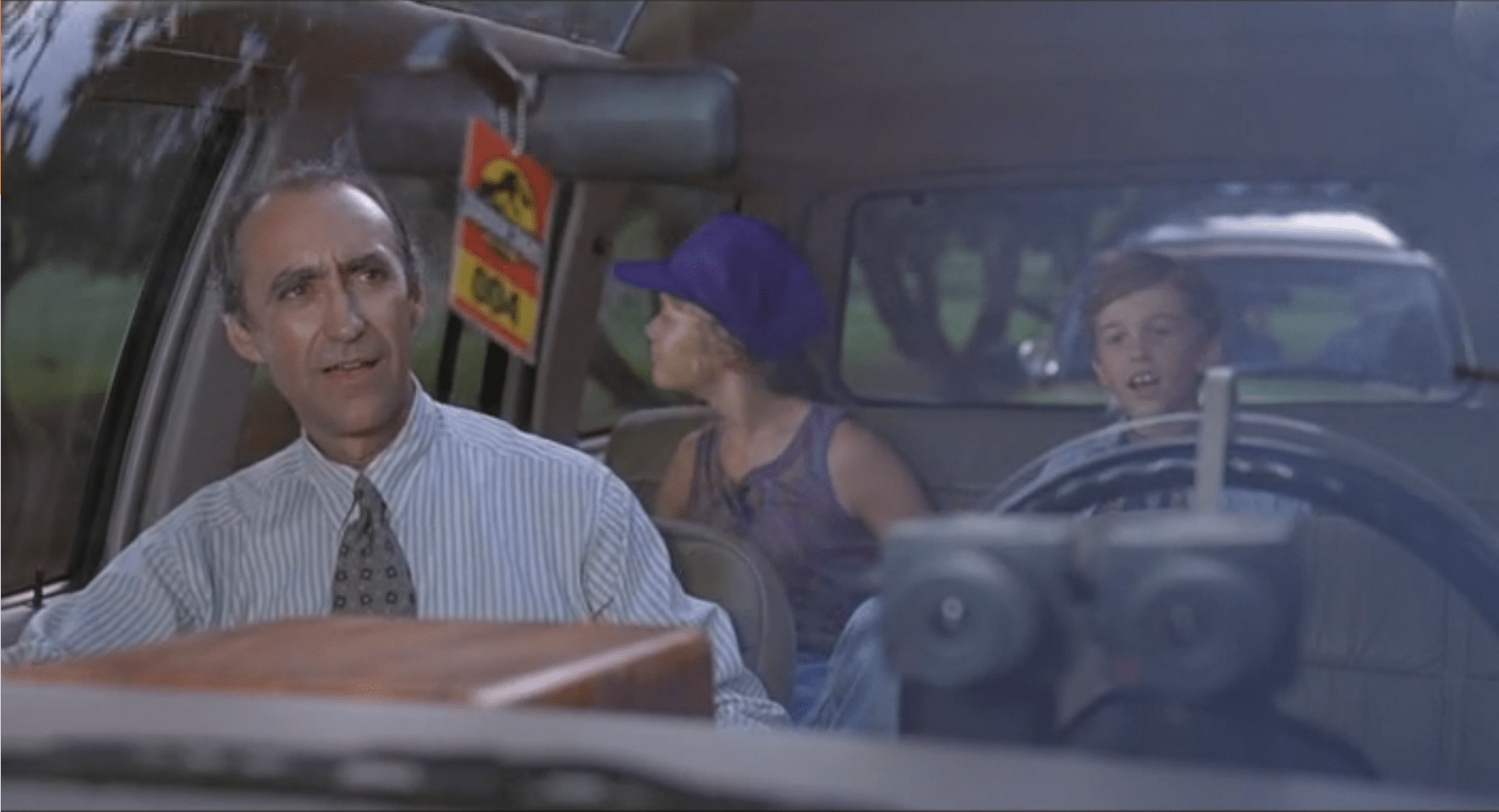
The Ford Explorer is an automated vehicle driven on an electrified track through a set route in the park.  It has protective covers over its steering wheel, and a set of cameras throughout the car:

  • Twin cameras at the steering wheel looking out the windshield to give a remote chauffeur or computer system stereoscopic vision
  • A small camera on the front bumper looking down at the track right in front of the vehicle
  • Several cameras facing into the cab, giving park operators an opportunity to observe and interact with visitors. (See the subsequent SUV Surveillance post.)

Presumably, there are protective covers over the gas/brake pedal as well, but we never see that area of the interior; evidence comes from when Dr. Grant and Dr. Saddler want to stop and look at the triceratops they don’t even bother to try and reach for the brake pedal, but merely hop out of the SUV.

image02

The SUVs also have an interactive CD-ROM player in the center console with a touchscreen.  The CD-ROM has narrated, basic information about the park and exhibits, and has set points during the tour that it plays information about specific areas or dinosaurs.

image00

The Single, Central Screen

For what should be a focal point and value add for everyone in the car is poorly placed and in-optimally set up.  This would be the perfect situation for a second screen in the second console, at least.  If we look to more modern technology, we could start to include HUD overlays on all the windows of the Ford Explorer to track dinosaurs (so passengers would know where to look).  This could integrate with the need for better Night Vision Goggles.

A second concern is the hand-controlled interface.  Suddenly, everyone in the SUV is subservient to the two people who are within touch distance of the screen. Jurassic Park has enough location data and content in the presentation to be able to customize the play order to the tour.  This would keep an overactive kid from taking control of the screen and ruining the tour for everyone else in the car.

Steering Controls

The Ford Explorers maintain the steering wheel and gear selectors from their off-the-shelf compatriots.  This has two detriments on the passengers:

  • Cramps the person in the driver’s seat
  • Gives a false impression of control

The space is the most detrimental to the tour experience.  While the passenger has legroom, arm room, and plenty of space to turn around; the driver is forced to deal with the space hogging controls that are unusable.

By keeping the steering wheel, the SUV also implies that the driver could take control of the car.  We see no evidence of that, and Dr. Grant even climbs into the back of the Explorer instead of staying in the driver’s position.

The SUV drives itself, and shouldn’t give a false affordance that people are used to.

Comfort

image03
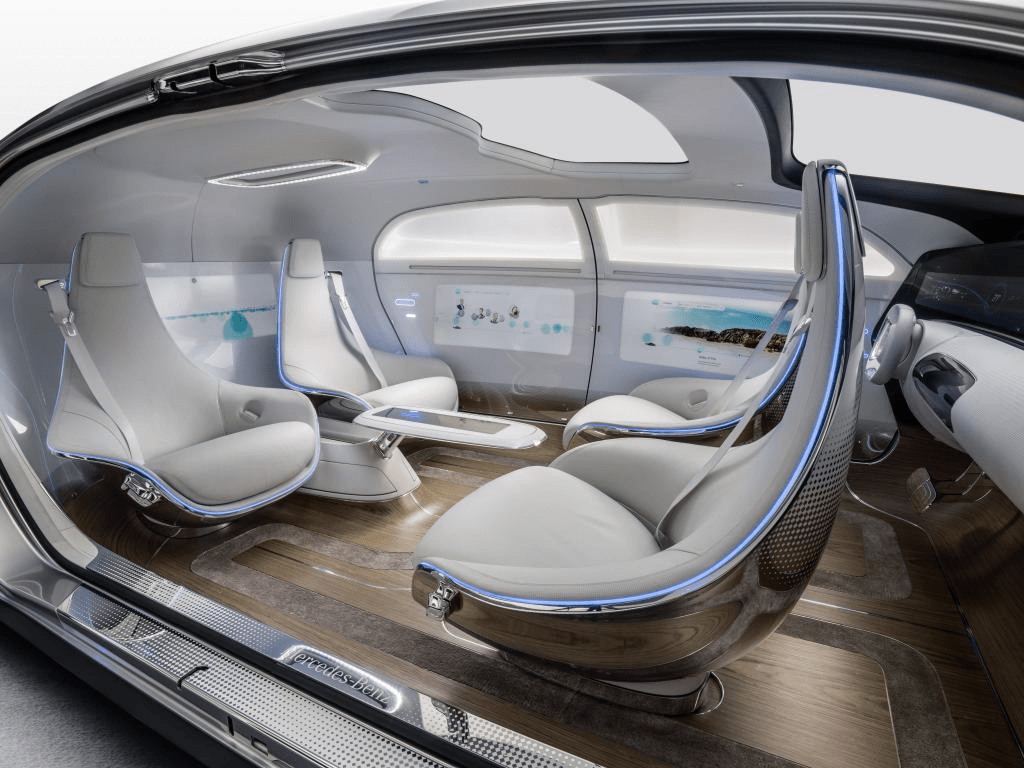
The Mercedes F015 Self Driving Concept Car

A more radical concept would be completely custom vehicles.  Mercedes recently revealed a concept car focused around a lounge feel.  Other carmakers have done the same (Ford, Chevy, ect…).  It’s advantages are the increased social focus of the interior, and the easier access to all the windows.

Would this be more expensive? Yes, but as Hammond mentions frequently, they “spared no expense” to improve the experience for the guests.

The original article referenced these as Jeep Grand Cherokees… which they definitely are not.  As pointed out by Cary (http://smokeythejeep.wordpress.com/), the only Jeeps on the island are the gas powered models that the park rangers and staff use to get around the island.  These, as the article now states, are Ford Explorers ca. 1992.