Jack’s main vehicle in the post-war Earth is the Bubbleship craft. It is a two seat combination of helicopter and light jet. The center joystick controls most flight controls, while a left-hand throttle takes the place of a helicopter’s thrust selector. A series of switches above Jack’s seat provide basic power and start-up commands to the Bubbleship’s systems.

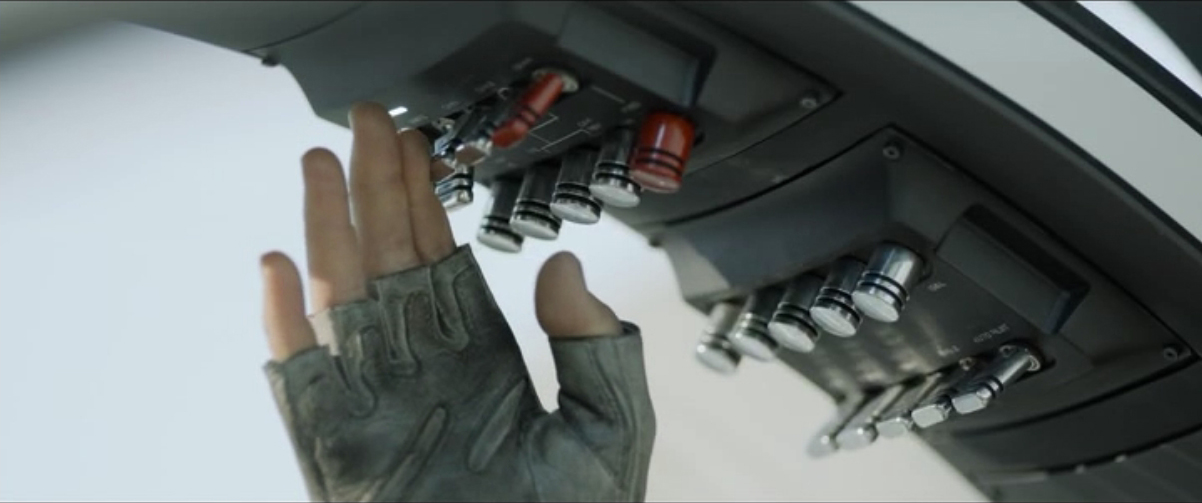
Jack first provides voice authentication to the Bubbleship (the same code used to confirm his identity to the Drones), then he moves to activate the switches above his head.

The switches are large, all move the same direction for startup, and are labeled. Two of the controls are color coded red, and Jack switches the red control last. We never see the round knobs in use. They could be circuit breakers for the major systems. All are positioned nicely to prevent accidental use. Overall, it is setup almost exactly like a modern-day helicopter, with two distinct additions: Cockpit-wide HUD, and Swivel Controls. While not technical, the cockpit also has a little Elvis bobblehead—whose name is Bob—that keeps Jack company.

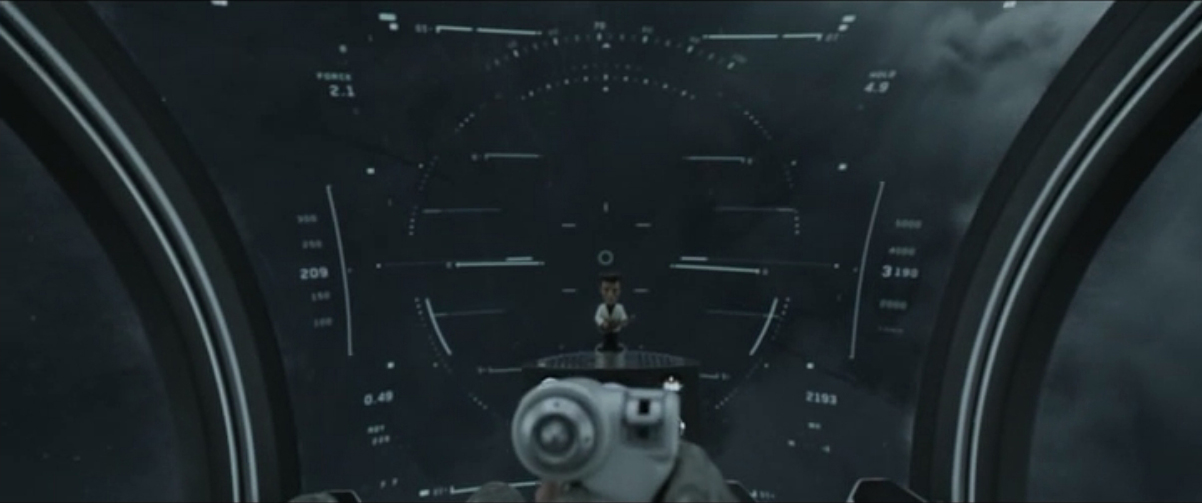
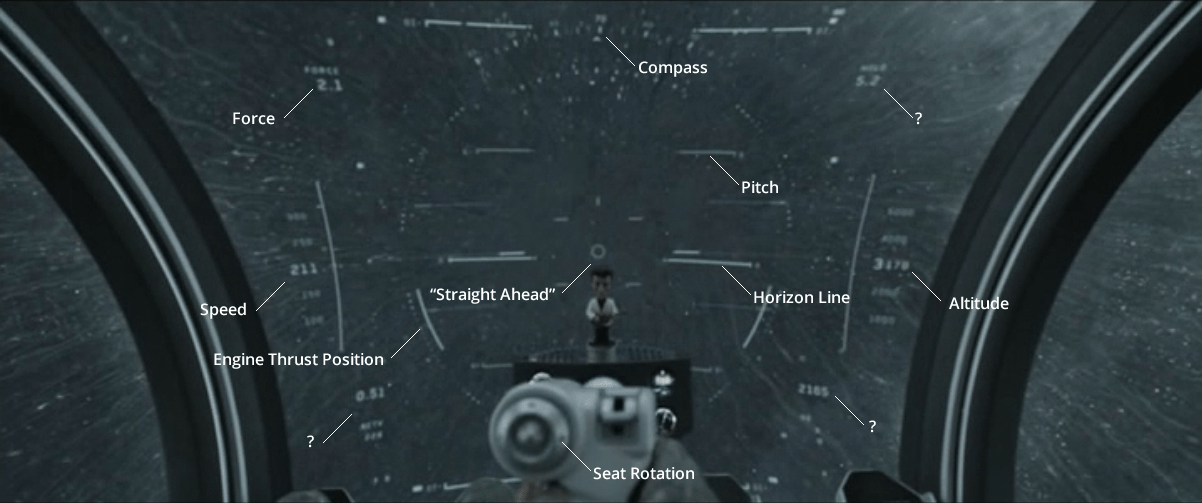
The main HUD provides standard information that Jack needs to pilot, even in zero visibility. It displays thrust output of his engines, an artificial horizon, altitude, and other indicators (shown in the above image and labeled in the image below).

The HUD is displayed on the front glass, and is tied to the Bubbleship’s main power. When the power goes out, the HUD goes out. It is not wired to a separate backup circuit. Fortunately, Jack has a physical gimbal that remains operational even when the power is out.

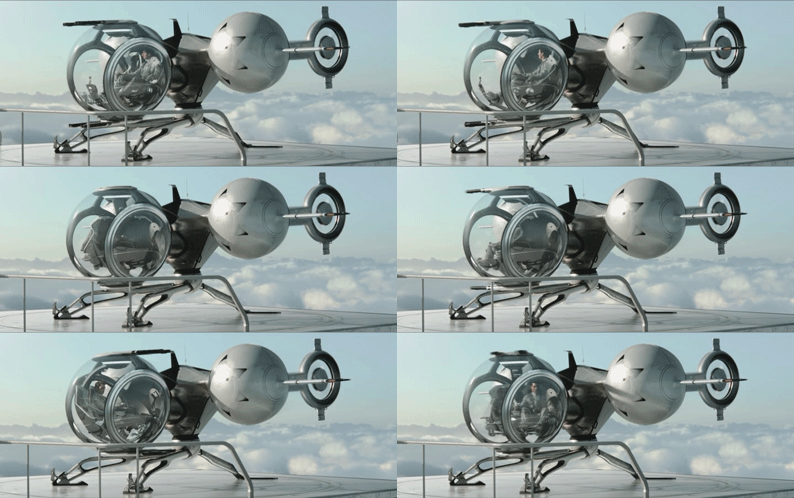
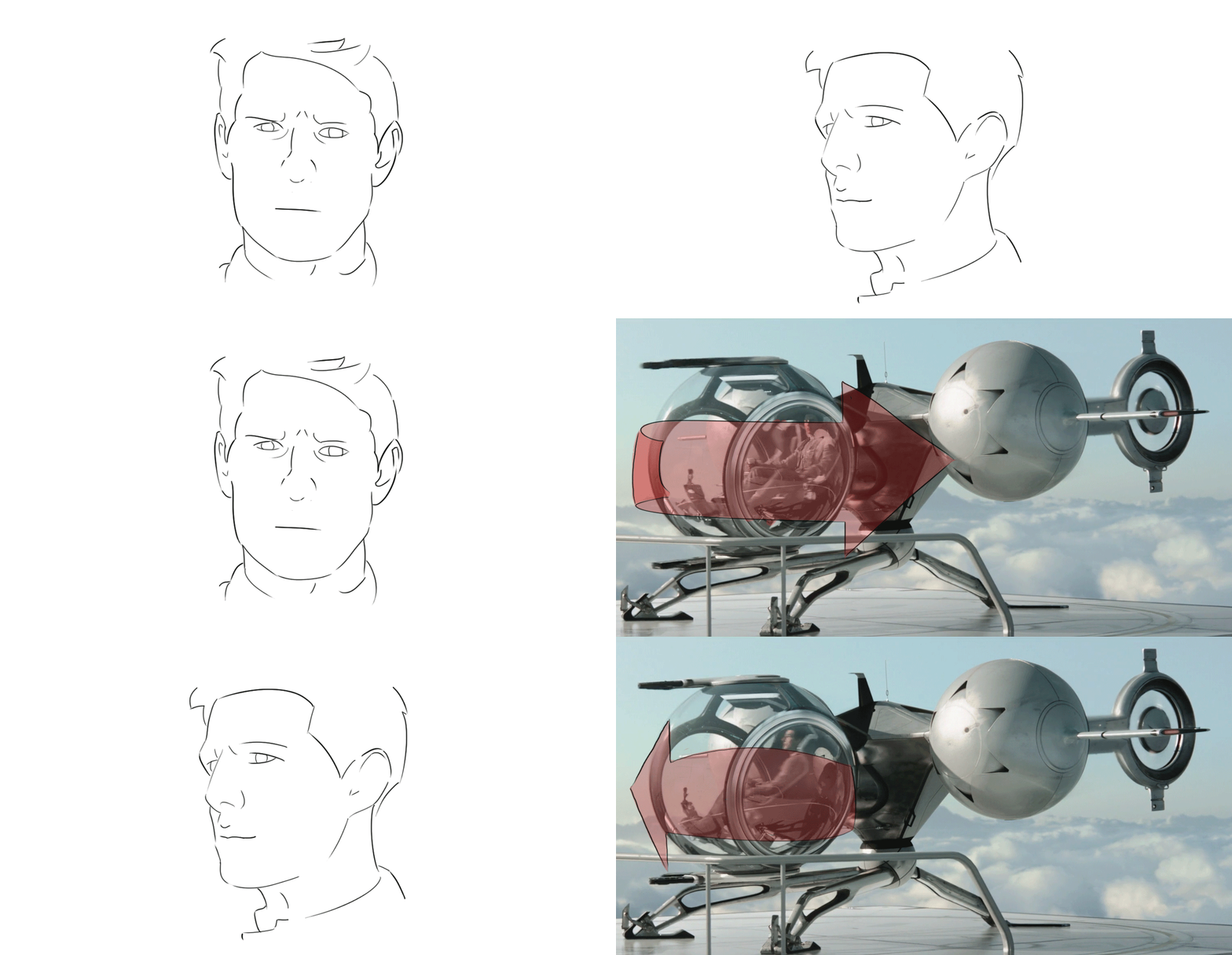
Another major addition is the swivel seating. Using a dedicated control on his joystick, Jack can move his seat around to get a better view as he is flying, without redirecting the Bubbleship in that direction.

It is not clear based on the evidence shown whether Jack has set seat positions (one click per a certain degree of rotation), or whether he is able to hold down the control and rotate the seat based on the click duration. Jack is very familiar with this interface and piloting scheme. Even in an emergency situation when the Bubbleship’s power goes out and he loses control, Jack does not panic and goes through his emergency checklist. We see later that the Bubbleship does have an eject system (a large red handle in the top of the command pod), that detaches the entire passenger compartment and deploys a parachute. Jack decides that he does not need this rescue system and can pilot his way to safety.
Click-to-swivel
We see that Jack is often the only person in the Bubbleship, and that he often uses the seat swivel to get a better view of what he needs to survey. Piloting is a high-concentration activity, with a large amount of muscle memory training. A pilot can be expected to know how his (or her) craft will react to specific inputs at specific times. Moving around the seat allows Jack a better view of his surroundings, but could interrupt the muscle memory he uses for his daily piloting and emergency maneuvering. Given the muscle memory requirement, Jack is probably able to control the swivel based on a number of clicks, not a duration. Specific swivel points has several advantages:
- The pilot can memorize control relationships for each swivel spot
- Jack can click the position he wants, then forget about that control while he continues piloting
- Less cognitive load to learn and operate
- Automatic Swivel
Click-to-swivel has advantages, but it is not the most advantageous control scheme for the level of technology shown. We know that Jack has destinations in mind when he is traveling, or Vika has given him a waypoint. We also know that the Drones have a low level intelligence capable of free flight and complicated maneuvers. Jack could easily activate an autopilot mode (straight and level, emergency maneuvers, return to base, go to the secret cabin), then he could ‘free swivel’. This free swivel movement would be based on his eyes and head movement, with the seat merely following where Jack wants to look. Otherwise, the Bubbleship could follow his head movements for regular flight inputs, augmented by the control stick inputs.

The Bubbleship would need some intelligence then to know the difference between when Jack actually wants to go somewhere, and when he is merely looking at his dashboard. Artificial intelligence is a given here. A good method would be focus tracking. When the Bubbleship tracks Jack’s focal point, it would know whether he’s looking at a spot on the horizon, or whether he’s looking at a point inside the cockpit. It would also be an effective way to focus the Bubbleship’s weapons pod for convergence—the guns would always meet at the point Jack was focused on, instead of firing wildly based on his joystick inputs.
Highly Refined
Modern day flight controls are highly refined tools with a well practiced group of users and a solid history of training programs. It makes sense to pull from this history when designing for a new flight machine, especially when its controls map so well to modern day equipment. The largest improvements can come from automation, especially when there is a solidly tested machine intelligence able to augment pilot intentions (see: the Drone, to be published later). By taking away the monotonous tasks from the pilot, and allowing them to focus on the difficult decisions, a machine can make the pilot’s life easier and safer.