Report Card: Oblivion

Read all the Oblivion reviews in chronological order.

According to the director, Oblivion is “a daylight science fiction film with a kind of Twilight Zone story,” a callback to pre-Star Wars, 1970’s lonely man sci-fi set against a huge backdrop. (Read the full interview by Germain Lussier on /Film for more.) Certainly, it’s more visually-satisfying thing than intellectually-satisfying thing, but fortunately that same thing does not play out in the interfaces.

Oblivion-Report-Card

Sci: B (3 of 4) How believable are the interfaces?

One of the great strengths of the interfaces are their deep ties to the diegesis. There’s little fuidgetry, little that could be generically lifted and placed in another film. It’s what we used to call site-specific in design school and that’s a good thing for believability.

See how in Vika’s desktop the sections of interface contain things she has to monitor: Land, hydrorigs, drones, the Tet’s orbital position. Most of the interfaces in the film are this considered.
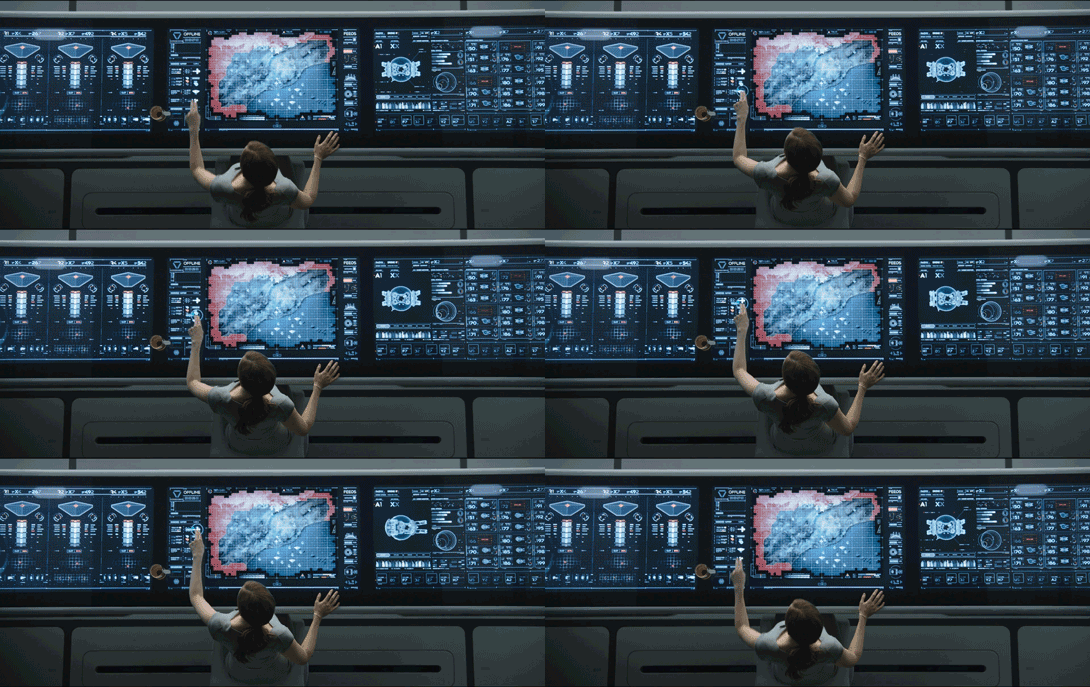
image00

On the flip side, there are communication systems that suffer more downtime than modern systems. There’s a flight control interface that omits the weather. The Scav binoculars just don’t make sense. And the Odyssey has a bunch of problems given that’s meant to be a near-future-ish extension of what we know today.

And then…then…then there’s the narrative-shortcut trope of the oh-by-the-way faster-than-light communication system that would have meant a much more advanced (and more defended?) world for the Tet to encounter in the first place.

Desktop_2014_07_15_19_32_16_746

So, some dings.

Fi: A (4 of 4) How well do the interfaces inform the narrative of the story?

This is where Oblivion’s interfaces really shine. They’re gorgeously realized with a rich stylistic and motion language. But moreso IMHO some of the apparent “problems” with the interfaces actually tell of the deep deception by the Tet. It’s core to telling that central story, and partly told through the interfaces.

Home 49 disconnects its inhabitants from the land they’re tasked to protect. Tet’s thinking: Perfect.

image02

Jack’s bike doesn’t make a lot of sense in the diegesis except that it is a perfect outlet for his sense of “freedom.” Tet’s thinking: Whew. Glad he has that outlet.
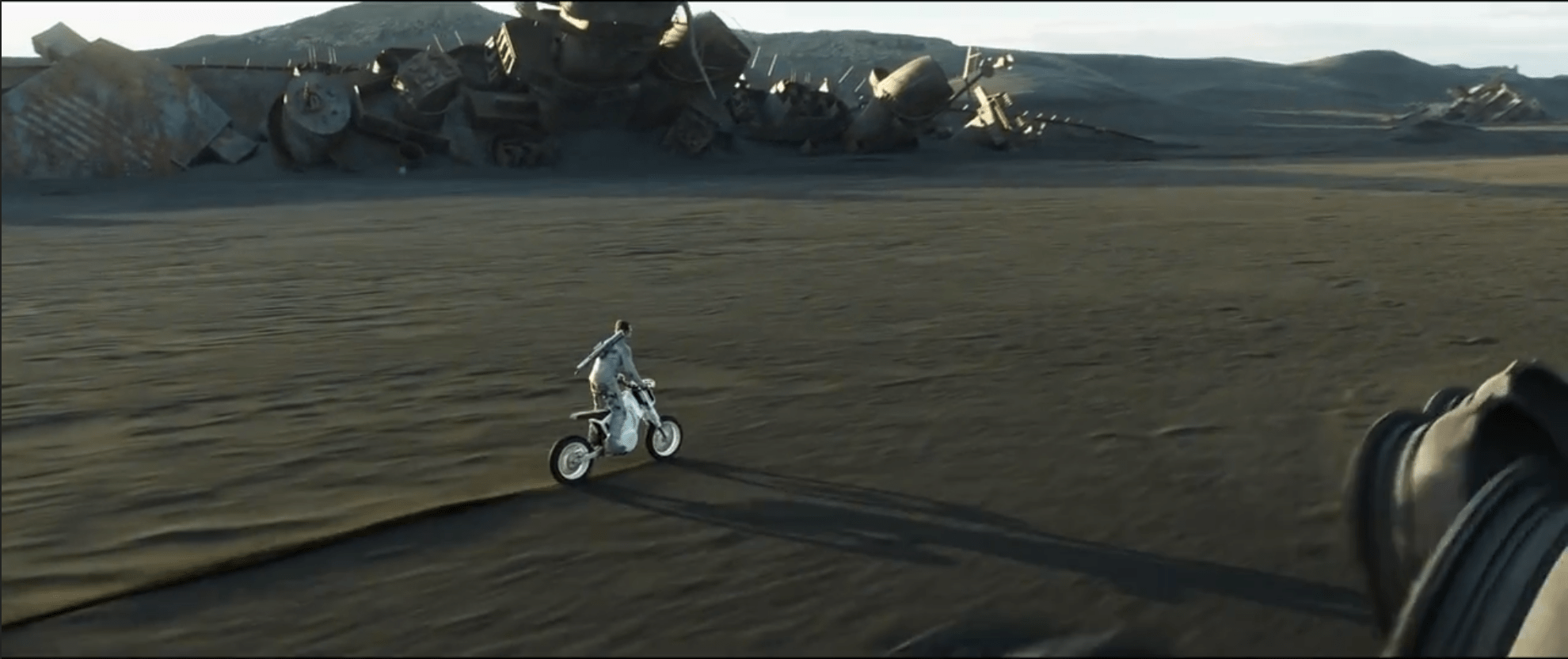
image00

Other narrative aspects of the interfaces like the drone programmer help underscore the drones as aggressive, suspect, and alien, rather than defensive human measures.

I’d add a + to that A if the drones hadn’t been designed to look evil and menacing. Had they been more Hello Kitty and less Galactic Empire, Jack might have been less suspicious.

hello-drone
If it needs to be said: Not actually from Oblivion. Maybe the reboot.

Interfaces: B (3 of 4)
How well do the interfaces equip the characters to achieve their goals?

The centerpiece of the film is Vika’s desktop. It’s her command and control center workstation that enables her to manage the strategy to Jack’s tactics, and even rest her teacup as she works. The most commonly accessed bits are in easy reach, and the display-only information is turned vertically for her like a clock on the wall.

Oblivion-Desktop-Overview-003

It has a few ergonomic problems, like angling its displays away from her observational sphere (just for a teacup?) It doesn’t equip her for crisis conversations like it should. Some of its interactions are inconsistent. It sometimes makes her hunt for information rather than leading her there. But, all in all, a nice dashboard for her task.

There are other interesting bits, like the situationally-shaped reticle, the breakfast table that allows for sitrep breakfasts, and well-mapped Odyssey controls that imply a bit of agentive support.

There are some usability problems throughout, or it would have fared better, but overall a good show.

Final Grade B+ (10 of 12), MUST-SEE

All told, these interfaces are rich and powerful and embody solid modern thinking about visual styling, motion design, gestural interaction, and heads-up-displays. Big props to that pro gmunk for his work (and keep an eye out for an interview with him about his work on the film soon.)

And may I send out a special shout-out to the guest bloggers for their excellent insights and write-ups: Clayton, Aleatha, Heath, and Maximilion. They did great and I’m very glad that at least four other people in the world know how much effort goes into providing these in-depth interface analyses. Let’s hope we hear from more about them on this blog in the future.

Pitch time: Learn more lessons about gestural interfaces, heads-up-displays, and other interface concepts from a vast survey of science fiction movies and television programs in the book I co-authored with Nathan Shedroff, Make It So: Interaction Design Lessons from Science Fiction.

IMDB: https://www.imdb.com/title/tt1483013/Currently streaming on:

A definitive list of sci-fi drones (in progress)

In chats with friends and followers of the blog about sci-fi Drone Week, folks seem interested in coming up with a definitive list of sci-fi drones in movies and TV shows. While we might get there eventually by reviewing the movies and TV shows in which they appear, let’s beat that to the punch by creating the list FROM OUR MINDS.

Criteria:

  • In a sci-fi movie or television show
  • Is not simply a representation of a real-world drone
  • Is mobile (in the air, on the ground, or in space)
  • Appears (or defined as) technolgoical, not biological
  • Does not have a sentient controller/pilot aboard
  • Does not possess strong/general artificial intelligence
  • Either automous or remotely-controlled

Here’s what I’ve collected so far. Add more in the comments if you think of them.

Aerial (UAVs)

  • Star Wars: Episode IV – A New Hope (1977)
    • The lightsaber training orb
    • The mouse-bot that Chewbacca scares
  • Flash Gordon (1980) the bot in Ming’s chamber
  • Viper Probe Droid seen on Hoth in Star Wars: Episode V – The Empire Strikes Back (1980)
  • Terminator diegesis (1984–)
    • Aerostats
    • Moto-Terminators (Salvation)
    • Aerostats (Salvation)
    • Hydrobots (Salvation)
  • Star Trek: The Next Generation (1987)
  • They Live (1988) but only when you wore the glasses
  • Back to the Future II (1989) had USA Today drones (unclear if they’re AI, but benefit of the doubt?)
  • Babylon 5’s (1994) camera drones
  • Stargate diegesis (1997–)
    • (early versions of the) Replicators
    • Kinos
    • World-testing UAVs
    • S4E2 The Other Side was all about drone warfare
  • Star Wars: Episode I – The Phantom Menace (1999) had “holocameras” following the podraces
  • Farscape (1999) has adorable little DRDs
  • Dark Angel (2000) had Police Hover Drones that the titular character got to surf.
  • The Incredibles (2004) Syndrome controls a few drones to do his bidding
  • Stealth (2005) (prior to the lightning strike that gives it strong general intelligence
  • Sleep Dealer (2008)
  • Wall•E (2008) SO many, though the level of their AI might disclude some
  • Skyline (2010) (has both alien drones and real world human drones)
  • The topography “pups” of Prometheus (2012)
  • Robocop (2013) (has both aerial and ground)
  • Agents of S.H.I.E.L.D. (2013–) (Seriously, this show has a thing for them)
  • Star Trek: Insurrection’s (1998) transporter/transponder drones
  • Battleship (2012) battle bots
  • Hunger Games (2012) delivery droids
  • Elysium (2013)
  • Drone (2013)
  • Oblivion’s numbered, Tet-tech drones (2014)
  • Captain America: The Winter Soldier’s city-sized drones (2014)
  • Chappie (2015) (aerial-capable, but mostly ground)

Ground

  • The floor-sweeping robots from The Fifth Element (1995)
  • The Robot from the Lost in Space movie (1998), which Will could remotely control
  • The Spyders of Minority Report (2002)
  • The remotely-controlled robots in Surrogates (2009)
  • Microbots from Big Hero 6 (2014) (a swarm of drones)

Thanks to the following suggestors for the initial list: Kelley Strang, John Danuil, Devin Hartnett, Derek Eclavea, Lane Bourn, Wally Pfingsten & kedamono.

Almost but not quite

Some suggestions seem like they would be perfect candidates, but for some reason skim the definition.

  • Bit from Tron (1982) may have been limited to yes or no answers, but was an AI
  • Machine gun drones from the deleted scenes of Aliens (1986) can only swivel, not move
  • Dreadnought from Star Trek: Voyager (1995)(VOY, Dreadnought) it’s AI
  • Jarvis from the cinematic Iron Man/Avengers diegesis, also strong AI

Keep them coming in the comments. What did we forget?

Scav Reticle

The last Scav tech (and the last review of tech in the nerdsourced reviews of Oblivion) is a short one. During the drone assault on the Scav compound, we get a glimpse of the reticle used by the rebel Sykes as he tries to target a weak spot in a drone’s backside.
Scav reticle

The reticle has a lot of problems, given Sykes’ task. The data on the periphery is too small to be readable. There are some distracting lines from the augmentation boxes which, if they’re just pointing to static points along the hairline, should be removed. The grid doesn’t seem to serve much purpose. There aren’t good differentiations among the ticks to be able to quickly subitize subtensions. (Read: tell how wide a thing is compared to the tick marks.) (You know, like with a ruler.)

ruler

The reticle certainly looks sci-fi, but real-world utility seems low.

The nicest and most surprising thing though is that the bullseye is the right shape and size of the thing he’s targeting. Whatever that circle thing is on the drone (a thermal exhaust port, which seem to be ubiquitously weak in spherical tech) this reticle seems to be custom-shaped to help target it. This may be giving it a lot of credit, but in a bit of apologetics, what if it had a lot of goal awareness, and adjusted the bullseye to match the thing he was targeting? Could it take on a tire shape to disable a car? Or a patella shape to help incapacitate a human attacker? That would be a very useful reticle feature.

Scav dual-monoculars

As Jack searches early in the film for Drone 172, he parks his bike next to a sinkhole in the desert and cautiously peers into it. As he does so, he is being observed from afar by a sinister looking Scav through a set of asymmetrical…well, it’s not exactly right to call them binoculars.

scav_oculars_04

They look kind of binocular, but that term technically refers to a machine that displays two slighty-offset images shown independently to each eye such that the user perceives stereopsis, or a single field in 3D. But a quick shot from the Scav’s perspective shows that this is not what is shown at all.

scavnolculars

This device’s two lenses take in different spectrums of light and displays them side by side, with a little (albeit inscrutable) augmentation at the periphery. The larger display on the left appears to be visible light and the smaller on the right appears—based on the strong highlight around the bike’s engine and Jack’s body—to be infrared, or heat.

At this point in the story, the audience is meant to believe that the scavs are still the evil alien race, and this interface helps to convey that. It seems foreign, mysterious. All of its typographic elements (letters, numbers, symbols) are squeezed into little more than 4×4 grids of pixels, so we’re not even sure if this is a human language. So, fine, this interface serves its narrative purpose here. “Oh my,” we must think, “…he is being watched. But by what? And why?”

But after we find out [again, spoilers] that the scavs are the Terran survivors after the Tet attack, we can look at this again to understand that this interface is for humans, and with that in mind it does not fare well.

Yes, the periphery is augmented, so that’s good, but the information is unusably small, and forces the user to glance back and forth between the two images to put the disparate information together.

Two views reduce the amount of information

It almost goes without saying, but let’s say it—by dividing the available display into two halves, the amount of visual information provided to the Scav is roughly a quarter of what it would be with a single view. And since the purpose of the device is to magnify, this is a significant loss.

Two views add work

In this scene, which is quite barren, it’s very easy to tell that the objects that are warm in the right are the only two objects on the left, but if you imagine looking at a cityscape, where the bomb (hot) looks very much like every other thing around it, you can see where piecing those two disparate views together in your head can become problematic.

This is made worse when the views aren’t even positionally synchronized. In the gif below you’ll see that when you superimpose them, they drift away from each other, making the comparison between the two even more difficult. There are diegetic reasons why this might have happened, but rather than reverse engineering why, let’s just leave it that it makes using it more difficult.

scavnolculars_overlaid

The blur and low-contrast don’t help

Note that the thermal view is blurrier and lower-contrast. That might be an artifact of the diegetic tech, but it would confound quick mapping in a complex image. Even if it’s just a lower-res image, at least the device should perform some auto-leveling and sharpening functions on the live image to help make it easy to use.

Having one scaled makes it worse

The scaling makes the mapping of items from one screen to the other more difficult. Again, in the Oblivion example, there are two objects on the left and two objects on the right, and the “horizons” on which they walk are roughly aligned, so it’s trivial to track one to the other. But if the image is highly repetitive—say for example, a building—the scaling would make it difficult to map the useful point-of-interest on the right to the best-resolution image on the left. Quick…in which window is the sniper?

scav_oculars_buildings

A more direct solution

Better would be a live augmentation of a single, visual-light image. The visual light is the best anchor to the real world, with augmentation helping to convey specialness to the objects in the scene. In the comp below, you’ll see a single image where the “hot spots” have been augmented with a soft red and some trend lines in white. That red color is not arbitrary, by the way. It builds on the human experience with black body radiation associations of red == hot. This saves the (quite human) user both the physical work of glancing back and forth and the extra cognitive processing to recall that green/yellow == heat.

scav_oculars_comp

Ghost in the Shell: Home viewing

San Francisco Bay Area folks may have been wondering what was up with the Ghost in the Shell 20th anniversary movie night. Well, some bad news.

GitS-Aramaki-11

There weren’t enough pre-sales to rent the cinema. We might have just run it as a public showing, but the cinema could not find a way to secure the rights for a public showing despite best efforts and the use of Google Translate on promising Japanese sites. You might think in that case that you could just show it anyway, but the owners cited a story in which independent filmmakers once had to fork over a cool $8000 for an unauthorized showing of a film, even when the normal licensing was only $200. So, without licensing, no public showing. But that doesn’t have to stop us. We have technology.

GitS-Hands-06

A synchronozed home viewing of Ghost in the Shell

I’m watching Ghost in the Shell on Saturday, 28 March 2015, starting at 20:30 PDT. I may have a few friends over. Want to join? Well, my couch will likely be full, but get a copy of the movie yourself on Blu-Ray, or Amazon instant video, or Netflix DVD (not available at this time streaming through Netflix), and we can live tweet the event. I’ve just launched the twitter handle @SFImovienight, where

  • I will announce upcoming movie nights
  • I will track movie night requests
  • I will live tweet movies as we’re watching
  • Anyone else watching along can join in

The hashtag for this viewing will be #gits20.

Yes a contest

Since this won’t be a live event, let’s shake the contest up a bit. No trivia. Whatever tweet that:

  • Includes #gits20
  • Tags @SFImovienight
  • Gets the most retweets

…between now and 28 March 2015 23:00 PDT will win an Adobe Creative Cloud license for 1 year, a $600 value, as an offer by in-kind sponsor Adobe.

Has anyone tried this before? Have suggestions?

Scifiinterfaces.com presents the 20th anniversary of Ghost in the Shell at the New Parkway

GitS-heatvision-01

UPDATE (21 MAR): Owing to some licensing complications, the event can not be held publicly. But we’re nerds. That doesn’t need to stop us.

Let’s celebrate the 20th anniversary of this awesome, hand-drawn anime title that features some amazingly foresightful wearable tech. The show will be at the New Parkway cinema in Oakland, California on Thursday March 26th at 7PM. As usual there will be an awesome preshow with an analysis of one of the interfaces, a mobile-phone trivia contest to win GitS t-shirts, a possible 30-finger race (if we get enough people and I can make the apparatus), and your ticket includes you in a raffle for one of the year-long Creative Cloud subscriptions (a $600 value) provided from my in-kind sponsor Adobe. Join Major Motoko Kusanagi in her mind expanding search for the Puppet Master, and please spread the word to your friends and mid-1990s anime fans!

Entrevista Maximiliano Pena

maximiliano

Hi there. Tell us a bit about yourself. What’s your name, where are you from, how do you spend your time?

Hi! I´m Maximiliano Pena and right now I live in La Plata, Argentina. I graduated in Multimedia Design not so long ago, and I usually spent my time doing some freelance work as a web designer. Besides that I like to practice drawing, learning new stuff—currently I’m teaching myself Portuguese—and I like to work on some DIY electronic projects now and then too.

I’ve always thought that I ended up into interaction design thanks to my flying lessons, it always surprised me how the controls on the plane somehow were always available, always at reach but never getting in the way of the task you were doing.

What are some of your favorite sci-fi interfaces (Other than in Oblivion)? (And, of course, why?)

GOTG

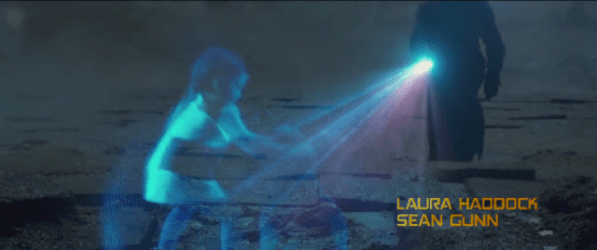
In Guardians of the Galaxy I was amazed by the holographic projector that Peter uses at the start of the movie. As he was walking through that ruined planet, he pointed the device at one specific spot and it showed him a whole city and its inhabitants. Somehow the device was able to play holographic video recordings from a way distant past. But not only that, it could also track and place those recordings exactly where they took place, of all places on an entire planet.

image00

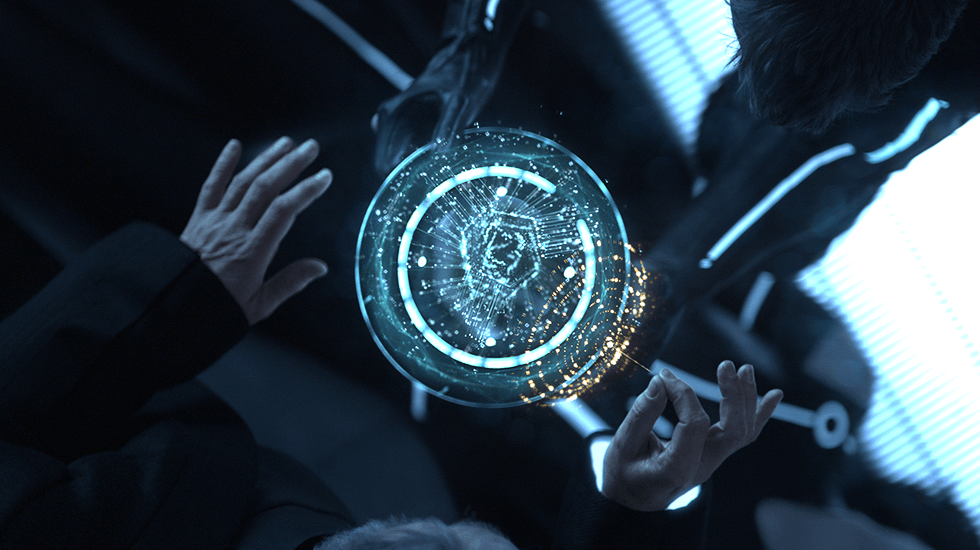
Tron: Legacy has a lot going for it but the one that really caught my eye was the hologram of Quorra´s DNA. While on board the solar sailer—which is awesome too—Flynn was trying to find the damaged code inside Quorra. The way the hologram looked and behaved really gave an organic feel to it, as Flynn was interacting with something more than a mere program. It got me thinking about affordances beyond shape and around interactions too.

Why did you decide to participate in the group review of Oblivion for your first scifiinterfaces review?

I’m a frequent reader and I had the idea of writing something for a while now. I looked into the Contribute! page on the blog a couple of times, but college kept me busy back then. So later when I saw the nerdsourcing post I jumped right in. I loved the idea of discussing opinions around interaction design with other people around the world, and to have something that I could show to other people at the end of that. And from the four movies listed there Oblivion was my favourite, so there was my vote.

What was your biggest surprise when doing the review?

It took me a while to realize that some interfaces were meant not for one but for many different users and scenarios too. Sometimes these interfaces acted as a contact point between users, some other times the same interface or device had to fit different purposes. So I found myself writing something that just made sense for one user, and later in the review I would realize those same design changes would make another user´s goals much more difficult to achieve. In a way I was saying that the interface was flawed, when actually it was just making a tradeoff.

What else are you working on? (Alternately: What other awesomeness should we know about you?

Something that I’m working on is an improved version of a gesture-driven desktop lamp that I made as my thesis project last year. I’m moving away from the mechanical parts—as those were somewhat cumbersome—and making it work based entirely on electronic components. If that does well enough, maybe I could be doing some marketable product.

Other than that I’m thinking about translating some of the reviews I made here into Spanish, just to spread la palabra. 🙂

5 Sci-fi U.S. Presidents not using interfaces (and 1 that is)

No…human…could have plotted these red dots.

It was my intention to simply show you some images of fictional United States Presidents using interfaces in science fiction movies for Presidents’ Day. But alas. They don’t.

I’m not going to claim this is exhaustive, but I looked at five Presidents:

  1. President Merkin Muffley from Dr. Strangelove or: How I Learned to Stop Worrying and Love the Bomb (1964)
  2. President Beck from Deep Impact (1998)
  3. President James Dale from Mars Attacks! (1996)
  4. President Thomas J. Whitmore from Independence Day (1996)
  5. President McKenna from X2 (2003)

Over these movies, Presidents can be seen reading displays and teleprompters,…

President Beck explains meteors to the public.
President Beck explains dire asteroids to the public.
President X prepares to read some bad news for mutants.
President McKenna prepares to read some dire news for mutants.

…speaking into public address systems,…

President Dale uses a microphone while Professor Kessler manages the interface.
President Dale delivers dire news about Martians.

…and standing around military displays,…

…but not really using any computer interfaces. The closest we come to a real interface is when President Whitmore pulls a Star Trek and declares himself part of the away team to pilot a fighter at a city-destroying alien spaceship swarming with deadly, deadly defense fighters, even though he risks dispiriting the entire nation with his possible battlefield death. But, hey, he is an angry man in need of revenge.

It’s worth noting that here he’s not using a presidential interface but a military one.

Given my definition of interfaces, i.e. all parts of a thing that enable its use, we can accept that paper and pen are the most common means by which presidents typically control the state of the system they’re using, which is the U.S. government. Fine. But the primary focus of this blog is human-computer interaction. Maybe someone else can take up the service and graphic design issues in another blog.

President TAFT worriedly signs the orders to launch nukes.
President Dale worriedly signs the orders to launch nukes.

So if sci-fi Presidents don’t use interfaces, it tells us a bit about the nature of the Presidency. At least as far as Hollywood is concerned, it is a role of consideration and decision-making. He or she is not a do-er, and so putting his or her hands on an interface would not befit the position.

But more importantly, it also tells us something about the relationship of status to computers. When you’re at the top, computers are not as easy to use as people. The boss has people to do that kind of thing on his or her behalf. The rest of us schlubs get stuck figuring out where the hell they hid the Airdrop button this time. And I suspect until we get a computer that is as comfortable to use as a person, but more useful in other ways, this will continue to be the case. Keep an eye out for films that showcase a President in the time of strong artificial intelligence and perfect voice recognition.

People in positions of power ensure that their world is as easy to use as possible, and this miniature Presidents’ Day survey reminds us that, still, humans are the most comfortable interface for other humans.


13 OCT 2019 Update: While reviewing Colossus: The Forbin Project, I noted that the President actually does terminate his call with the Russian Chairman—to date the only time in the survey I’ve ever seen a president use an interface.

“…And thank you for yours, Mr. Chairman.”

Introducing Heath Rezabek

MLIS—Librarian and Futurist.

rezabek-heath-01-tall-halfsize

Hi there. Tell us a bit about yourself. What’s your name, where are you from, how do you spend your time?

I’m Heath Rezabek. I live in Austin, Texas, and have been an enthusiast of user interface design for many years. By career and calling I’m a librarian, and am a library services and technology grant manager by day. I have long been interested in how information is portrayed, symbolized, and accessed. I’m also writer of experimental speculative fiction, and have an interest in how the future is seen by creators and audiences. Interfaces play a key role in my fiction series, as well, from holographic to virtual world driven to all-out surrealist.

Screen Shot 2015-01-22 at 22.47.52

What are some of your favorite sci-fi interfaces (Other than in Oblivion)? (And, of course, why.)

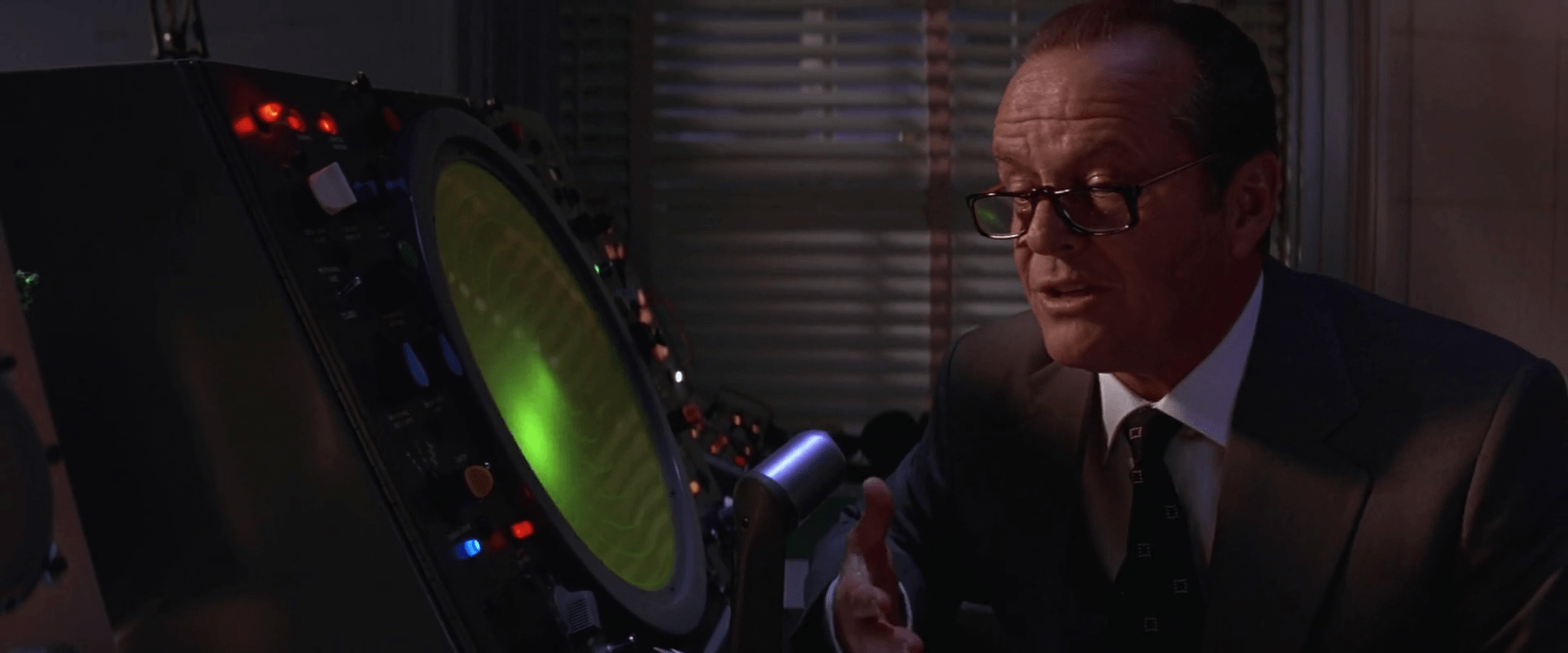
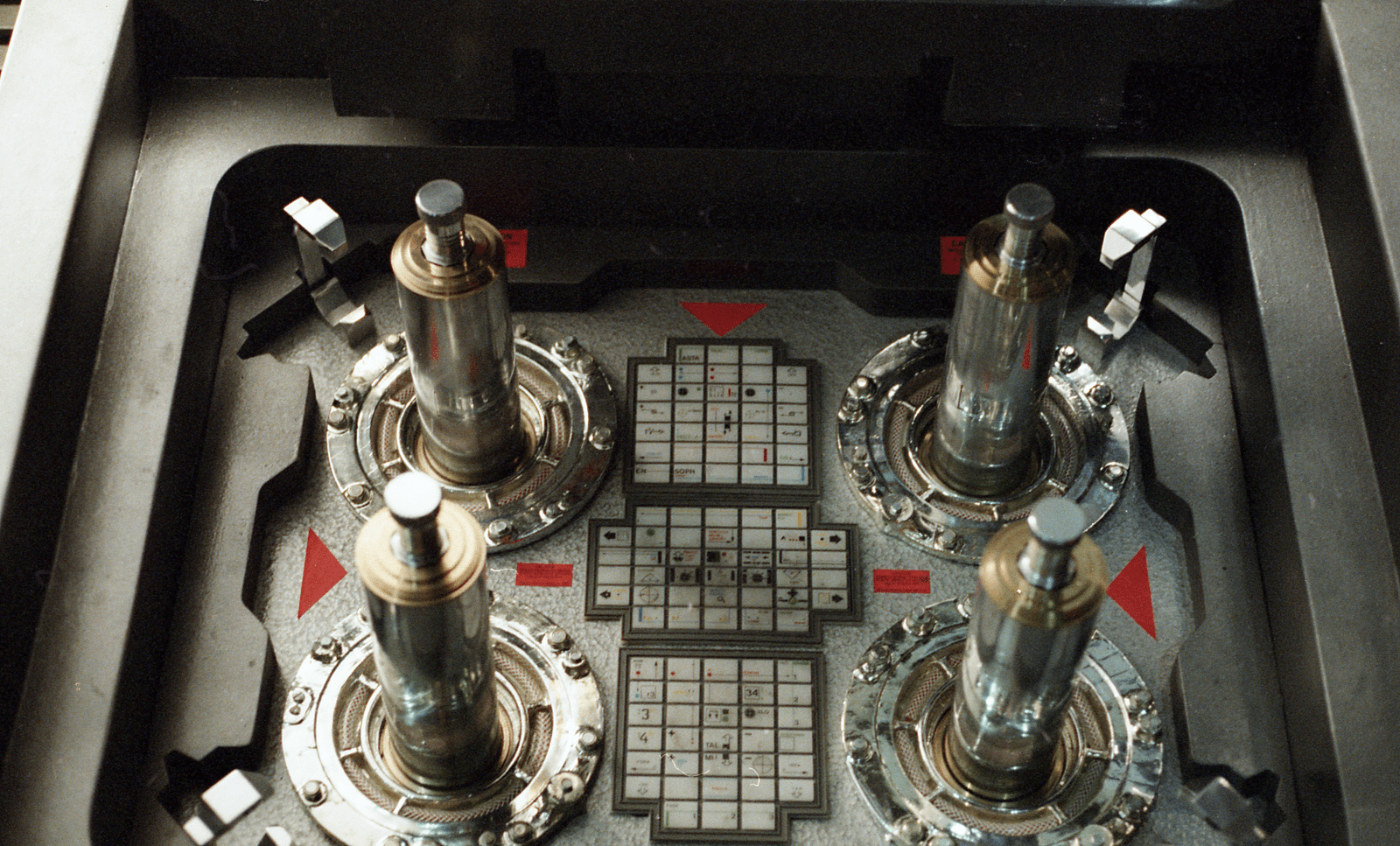
In the realm of sci-fi interfaces, I’m quite drawn to the interplay between computer-based systems and the more physical failsafes often used to counterbalance or circumvent them. Two favorite examples would be the range of interfaces found in 2001: A Space Odyssey (from vocal interface to highly abstracted displays to physical systems such as HAL’s memory chamber), and the blend of failsafe systems in Danny Boyle’s Sunshine. Another favorite interface is that of the infamous Self Destruct levers in Ridley Scott’s Alien. Gmunk’s interfaces in TRON Legacy, particularly the ISO DNA editing orb interface, is another key inspiration. Again: Information as alive, as primal, as root-level mission-critical source-code.

2001: A Space Odyssey

HR01

Sunshine

02_sunshine_Blu-ray

Alien

HR04

Tron Legacy

HR05

Why did you decide to participate in the group review of Oblivion for your first scifiinterfaces review?

I decided to participate in the group review of Oblivion partly for a behind-the-scenes look at how Chris Noessel / scifiinterfaces approached such a project, and partly to get myself to take a deep look at interfaces I might otherwise only have considered from a distance. I’m an admirer of gmunk’s design work, on TRON Legacy as well as here, and that was another draw.

What was your biggest surprise when doing the review?

I don’t know whether this bit of analysis will make the final cut in the review, but my biggest surprise came as a mental leap while evaluating the direct drone linking and maintenance system used by Jack before deploying the hacked drone. In the end, I arrived at the idea that in tech-heavy stories, low-level physical interfaces (such as the thick, external cable which not only carried data from the reprogramming unit to the drone but also sparked, livewire-like, when detached) might often be symbolic signifiers of particularly root-level or fundamental information, commands, and (in the end) plot points. As important as a fictional interface is the way in which it is (or isn’t) eventually circumvented, (also built into the interface as a whole system) and what that moment means for the story.

In the case of Oblivion, I ended up drawing a connection between this brute, physically hazardous (sparking data cable!) reprogramming method and the sudden, stunning, reorienting effect that finding the crumbling book of poetry had on Jack. It’s no surprise to me that this particular moment had such an impact, given my interest in the role of physical-level and failsafe systems in overall fictional interfaces elsewhere. I’ll have to rewatch 2001 and Sunshine with this thought in mind.

What else are you working on? (Alternately: What other awesomeness should we know about you?)

I’m the Director of Strategic Initiatives at Icarus Interstellar, a research group focused on developing our prospects for eventual interstellar travel.  (Yes, actual eventual interstellar travel.)

I’m Deputy Lead of Project Astrolabe (also via Icarus Interstellar), a project to research long-term models of civilization.  My main research focus is very long term archival of the biological, scientific, and cultural record as a mitigation of risk to civilization’s capabilities over the long term.  I’ve Interned with the Long Now Foundation on their Manual for Civilization, and am advising Lunar Mission One on their Public Archive.

I’m also a lead for a project called the FarMaker Design Corps (also via Icarus Interstellar), which at a basic level is a biannual concept art contest with brackets for starship visualizations as well as (if all goes well) interface design. Chris Noessel is one of our Judges, and joins an amazing team of Advisors:

  • Mike Okuda (Star Trek)
  • Mark Rademaker (freelance ship concept designer)
  • Stephan Martiniere (Guardians of the Galaxy)
  • Steve Burg (Prometheus & Nolan’s Interstellar)
  • Oliver Scholl (Edge of Tomorrow)
  • Doug Drexler (Star Trek & Battlestar Galactica)
  • Thomas Marrone (UI for Star Trek Online)
  • Chuck Beaver (story, game, and UI director for the Dead Space series, formerly at EA)

We’ve started with an art contest to help find and encourage artists envisioning an interstellar future. Of course, with an advisory team like that, I most definitely look forward to seeing what the future holds.

Introducing Aleatha Singleton

Hi there. Tell us a bit about yourself. What’s your name, where are you from, how do you spend your time?

Hi. I’m Aleatha Singleton, hailing from Houston, Texas. I’ve been a UX Designer for over 15 years. I enjoy solving problems and making things that are easy and fun to use whether they’re digital or analog.

aleatha

When I’m not at work, I like to read, study the Japanese culture, and teach myself new things such as designing and building furniture or making udon noodles from scratch.

I’ve always been a big fan of sci-fi interfaces and technology, especially when the concepts become reality. It’s always fun and exciting to see how ideas that seemed so impossible only a couple of decades ago are being prototyped and developed in labs around the world, such as holodecks, 3D volumetric interfaces, neural scanners, etc., etc.

In the future, I would like to be a part of cutting edge innovation and ideation—thinking about how technology could improve lives—and then build it and make it real.

What are some of your favorite sci-fi interfaces (Other than in Oblivion)? (And, of course, why?)

Psycho-Pass-Hue-545

Psycho-Pass: This futuristic, high-tech society is dictated by the Sybil system, which is a fully integrated system of technology including wearables, cameras and sensors that are placed throughout the country.

Sybil analyzes a person’s psychological state and dictates career and other choices in life. The lower rankings result in blue collar work while higher rankings provide better opportunities and choices. People with mental states that are considered by the system to be unstable are institutionalized and are locked away from society for the rest of their lives.

Most people blindly follow Sybil, resulting in a society that accepts things without question in the fear that thinking differently will result in the system considering them to be at risk.

“What needs to be done is done by those capable of doing it. Such is the grace bestowed upon mankind by Sybil”

This system shows that there are a lot of social ramifications and ethical questions that designers and society should consider when creating and utilizing technology. It can be terrifying if used improperly, but can make society a better place if used conscientiously and ethically.

Gargantia-Translator-545

Gargantia on the Verdurous Planet: Ledo is shipwrecked and stranded on a “primitive” planet when his AI automated mobile suit gets sucked into a wormhole during an intense battle. While he is still learning the language, he uses a floating translation display with accompanying audio that helps him communicate with the people on the planet. It’s a great implementation since he can take the time to read body language and expressions instead of having to keep his head down, staring at a screen.

IronMan-Table-Prototype-545

I’m fascinated with the interfaces and technology from the Iron Man and Avengers universe, especially how Tony Stark works across multiple channels—both physical and digital—that flow seamlessly together. For example, he can easily switch a file from a phone to a monitor, to a computer, to a table with 3D volumetric projection for instant prototyping and virtual testing.

Why did you decide to participate in the group review of Oblivion for your first scifiinterfaces review?

I’ve been doing personal observations of sci-fi interfaces and technology in movies, TV shows, books and Japanese anime for a few years now in order to study how they influence society for better or worse. I was considering starting my own blog when I saw the call for nerdsourcing volunteers and decided to take the leap.

What was your biggest surprise when doing the review?

It is really easy to get into the nitty gritty details of the designs. I like building things and seeing ideas come to life, so I catch myself trying to figure out details of the interactions so I can make it real.

A one finger swipe from here to here does this…a two finger swipe from here to here does that…if this, then this, otherwise that…like I was getting ready to write design annotations.

It took longer to write the articles, so I had to stop myself and step back to look at the overall experience.

What else are you working on? (Alternately: What other awesomeness should we know about you?)

I take Japanese language classes at the local Japan America Society. A lot of my time is spent immersing myself in the language through textbooks, reading Japanese language manga and light novels and watching anime in Japanese with and without the subtitles.

My next project for scifiinterfaces.com will be an anime interface. Please look forward to it.
楽しみにして下さい。