Touch Walls

Prometheus-134

When exploring the complex, David espies a few cuneiform-like characters high up on a stone wall. He is able to climb a ladder, decipher the language quickly, ascertain that it is an interface rather than an inscription, and figure out how to surreptitiously operate it. To do so, he puts his finger at the top of one of the grooves and drags downward. The groove illuminates briefly in response, and then fades. He does this to another groove, then presses a dot, and presses another dot not near the first one at all. Finally he presses a horizontal triangle firmly, which after a beat plays a 1:1 scale glowing-pollen volumetric projection.

The material and feedback of this interaction are lovely. The grooves provide a nice, tactile, physical affordance for the gesture. A groove is for dragging. A dot or a shape is for pressing. But I cannot imagine what kind of affordances are available to this language such that David can suss out the order of operation on two undifferentiated grooves. Of course presuming that the meaning of the dot and triangle are somehow self-evident to speakers of Architect, David has a 50% chance of getting the order of the grooves right. So we might be able to cut this scene some slack.

Prometheus-139

But a few scenes later, this is stretched beyond credulity. When David encounters a similarly high-up interface, he is able to ascertain on sight that chording—pressing two controls at once—is possible and necessary for operation. For this interface, he presses and drags 14 different chords flawlessly to open the ancient alien door. This is a much longer sequence involving an interaction that has no affordance.

Prometheus-149

Looking at the design of the command, an evaluation depends if it’s just a command or a password. If it’s just a control that means “open the door,” why would it take 14 characters’ worth of a command? Is there that much that this door can do? Otherwise a simple press-to-open seems like a more usable design.

If it’s a door security system then the 14 part input is a security password. This would be the more likely interpretation since the chamber beyond contains the deadly, deadly xenomorph liquid. With this in mind it’s a good design to have a 14-part password that includes a required interaction with no affordance. I’m no statistician, but I think the likelihood of guessing the correct password to be 14 factorial, or around 87,178,291,200 to 1. I have no idea what the odds are for guessing the correct operation of an interaction with zero affordance. We’d have to show some aliens MS-DOS to get some hard numbers, but that seems pretty damned secure. Unfortunately, it also stretches the believability of the scene way past the breaking point, to presume that David can just observe the alien login screen and guess the giant password.
Alien head stem line

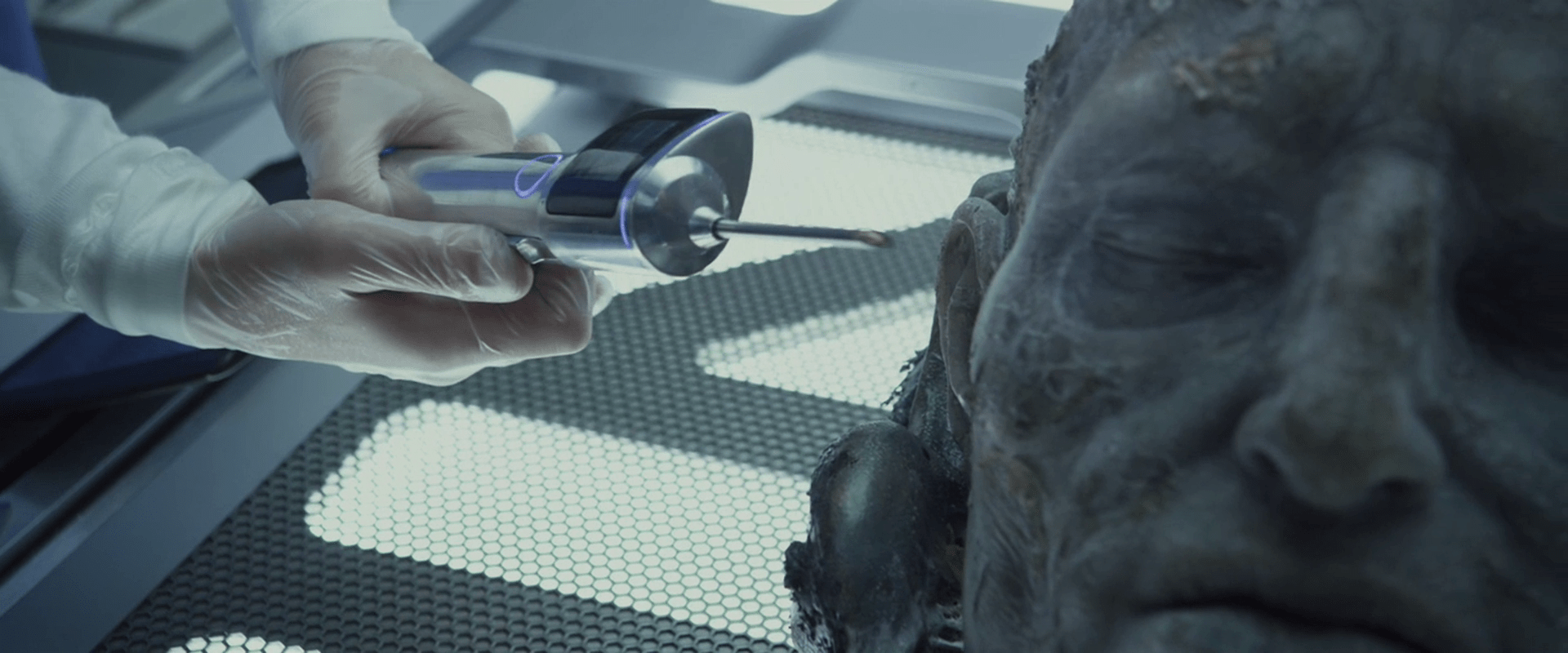
Using a tool that looks suspiciously identical to the Injection Carbon Reader, the stem line provides electrical current to nerve endings. It is inserted directly into the alien head and then controlled wirelessly via unseen controls on a nearby touch-sensitive slate pad.

Prometheus-168

The output on the stem line device animates with changes, but it seems the numbers appear near the middle and then slide to fixed positions on the top and bottom. If the point of the display was output, and it is meant to be seen from a distance, wouldn’t a simpler large-number display make more sense? If motion is meant to convey the meaning, like a digital gauge on a multimeter, then the text should be fixed on the graduated background and slide with it.

stemline

By stimulating the locus coeruleus of the alien, the Prometheus scientists seek to “trick it into thinking it’s still alive,” even though they have not confirmed the physiology of this 2000 year old alien specimen, or even that (in a quick Googling, the author learned that) this is the panic area of the nervous system. Were the results really that surprising?

Floating-pixel displays

In other posts we compared the human and alien VPs of Prometheus. They were visually distinct from each other, with the alien “glowing pollen” displays being unique to this movie.

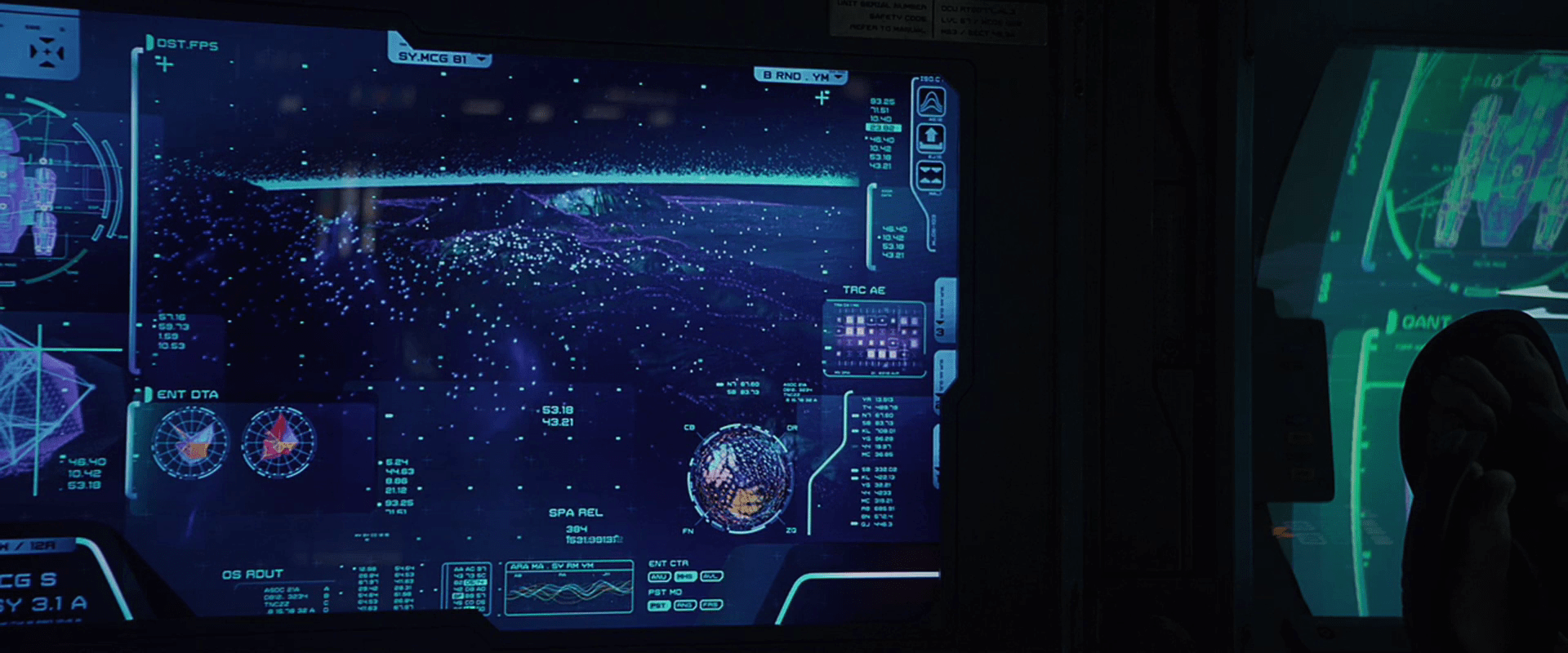
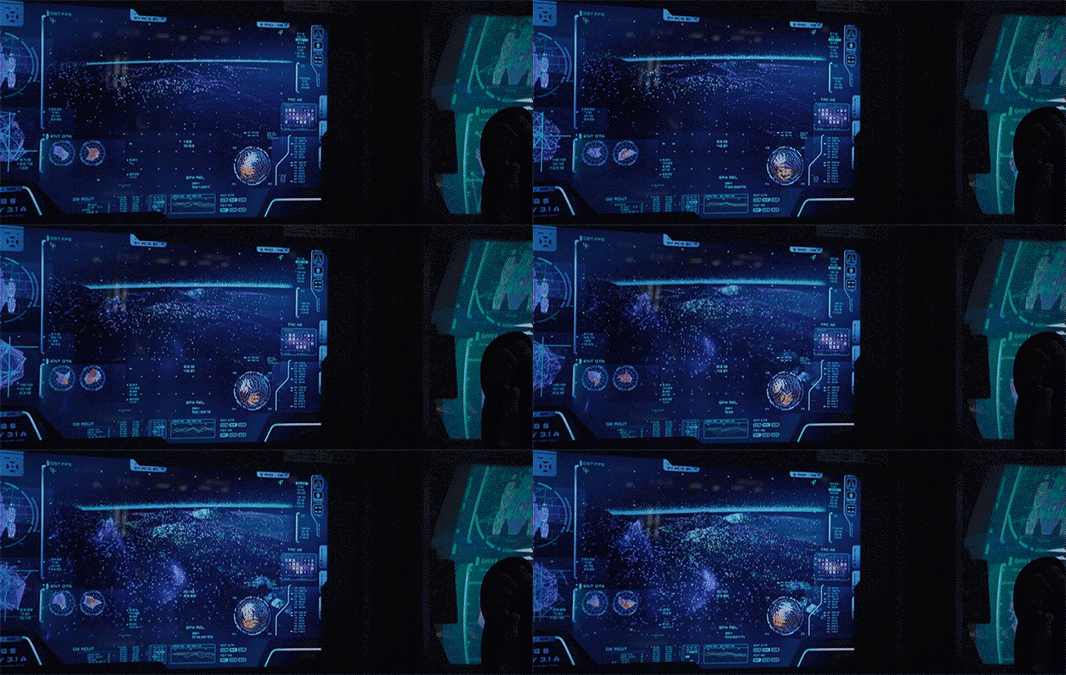
There is a style of human display in Prometheus that looks similar to the pollen. Since the users of these displays don’t perceive these points in 3D, it’s more precise to call it a floating-pixel style. These floating-pixel displays appear in three places.

  • David’s Neurovisor for peering into the dreams of the hypersleeping Shaw. (Note this may be 3D for him.)
  • The landing-sequence topography displays
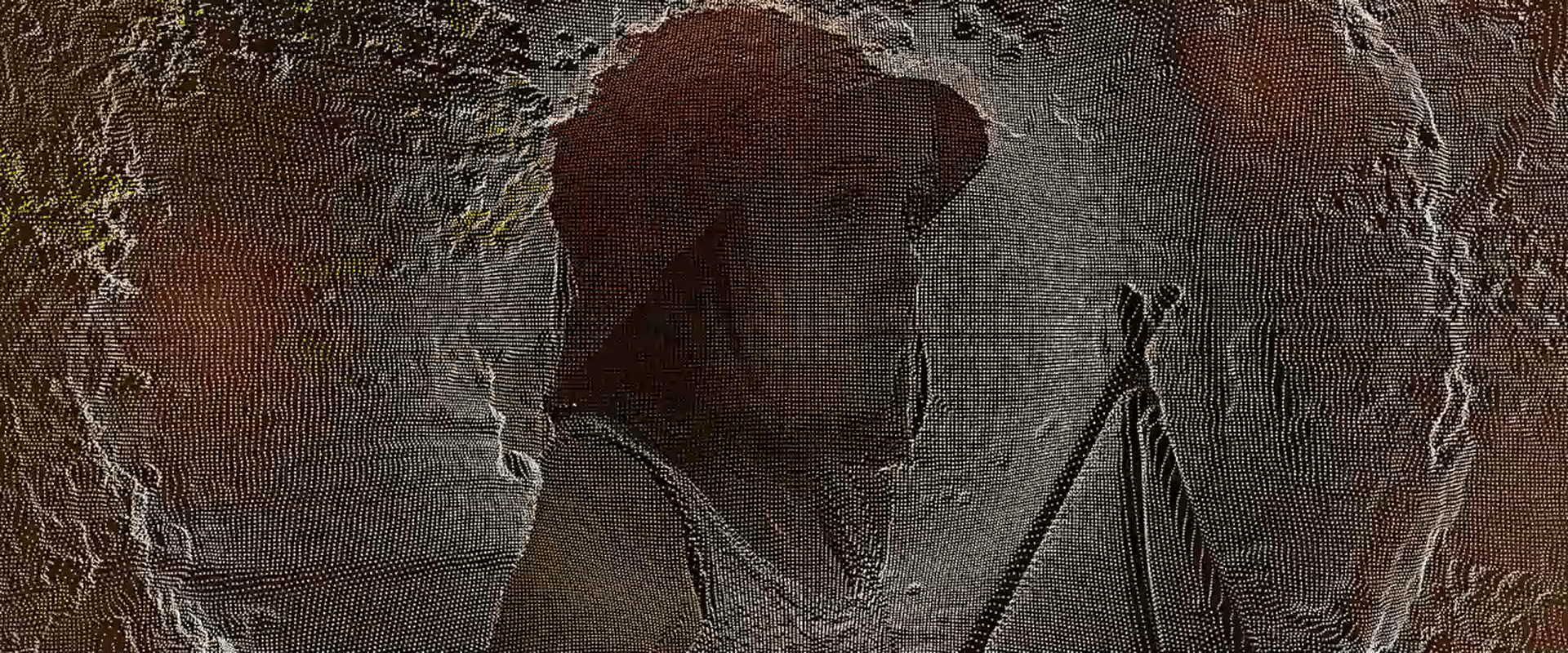
  • The science lab scanner, used on the alien head
Prometheus-007
Prometheus-096
Prometheus-165

There is no diegetic reason offered in the movie for the appearance of an alien 3D display technology in human 2D systems. When I started to try and explain it, it quickly drifted away from interaction design and into fan theory, so I have left it as an exercise for the reader. But there remains a question about the utility of this style.

Poor cues for understanding 3D

Floating, glowing points are certainly novel to our survey as a way to describe 3D shapes for users. And in the case of the alien pollen, it makes some sense. Seeing these in the world, our binocular vision would help us understand the relationships of each point as well as the gestalt, like walking around a Christmas tree at night.

But in 2D, simple points are not ideal for understanding 3D surfaces. Especially when the pixels are all the same apparent size. We normally use the small bits of scale to help us understand an object’s relative distance from us. Though the shape can be kind-of inferred through motion, it still creates a great deal of visual noise. It also hurts when the points are too far apart. It doesn’t give us a gestalt sense of surface.

I couldn’t find any scientific studies of the readability of this style, this is my personal take on it. But we also can look to the real world, namely to the history of maps, where cartographers have wrestled with similar problems to show topography. Centuries of their trial-and-error have resulted in four primary techniques for describing 3D shapes on a 2D surface: hachures, contour lines, hypsometric tints, and shaded relief.

(images from http://www.siskiyous.edu/shasta/map/map/)

These styles utilize lines, shades, and colors to describe topography, and notably not points. Even modern 3D modeling software uses tessellated wireframes instead of floating points as a lightweight rendering technique. To my knowledge, only geographic information systems display anything similar, and that’s only when the user wants to see actual data points.

These anecdotal bits of evidence combine with my observations of these interfaces in Prometheus to convince me that while it’s stylistically unique (and therefore useful to the filmmakers), it’s seriously suboptimal for real-world adoption.

Interior Doors

Certain doors within Prometheus require the user open them by providing input to a glowing keypad on the door. Reviewing these door panels in detail shows a great deal of variation in their design and interaction.

Descriptions

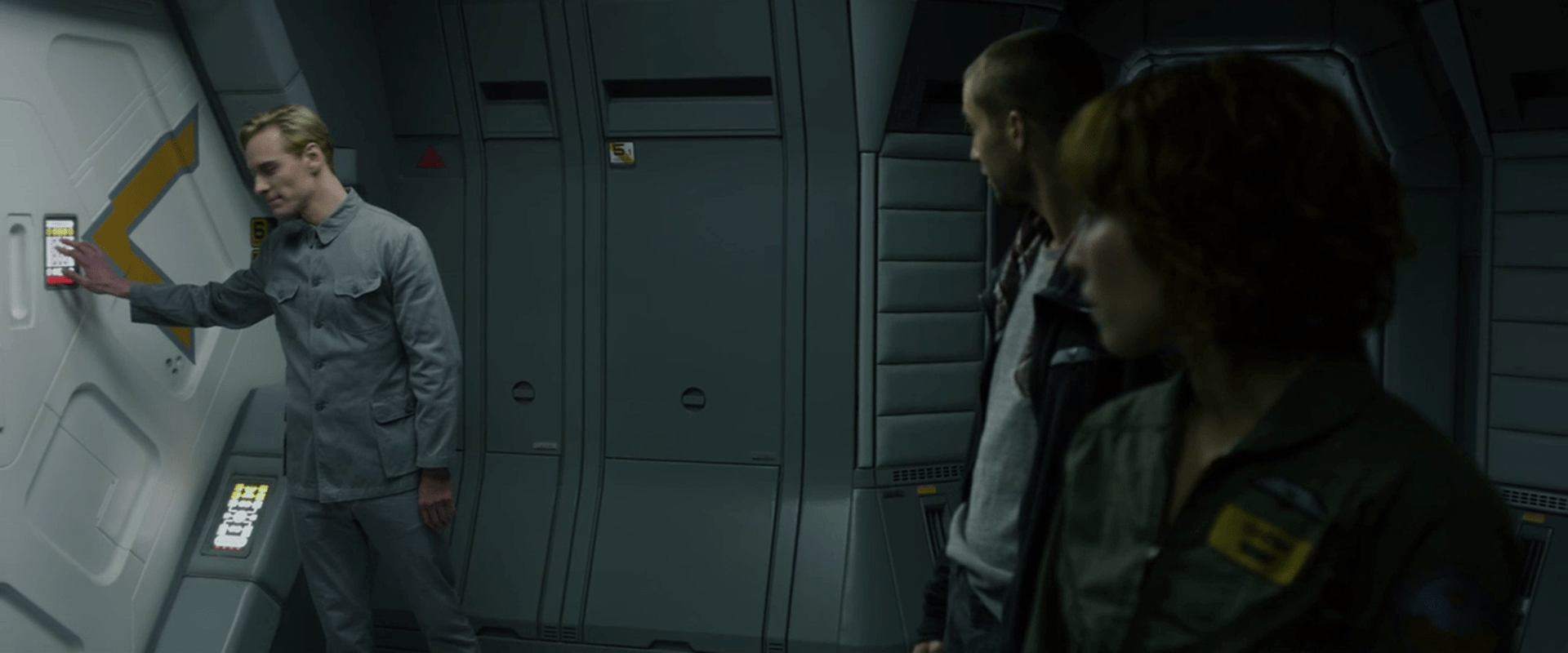
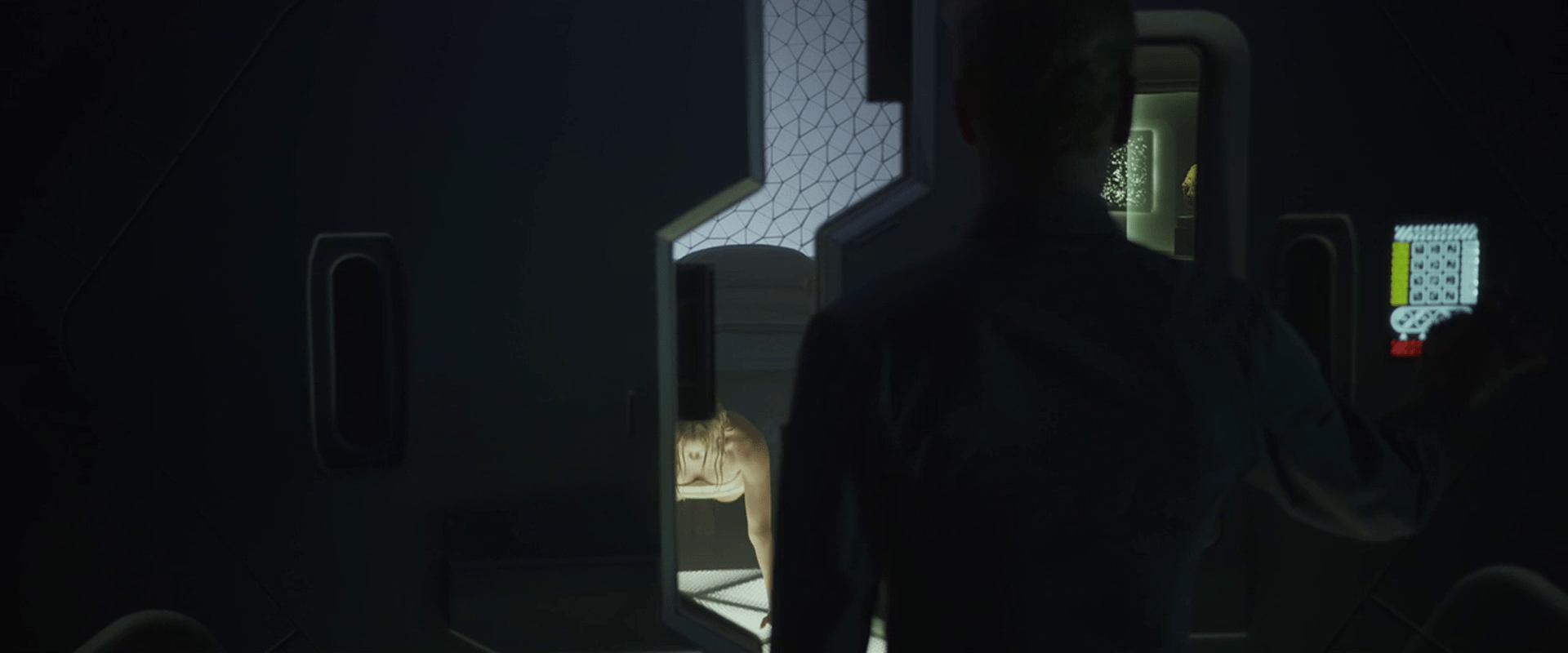
The first one we see has the panel to the left within arm’s reach of the door’s central seam. To open this door, David touches a black square on the interface, though its details are difficult to see. We do hear a beeping to confirm the touch before the door whooshes open.

Prometheus-008

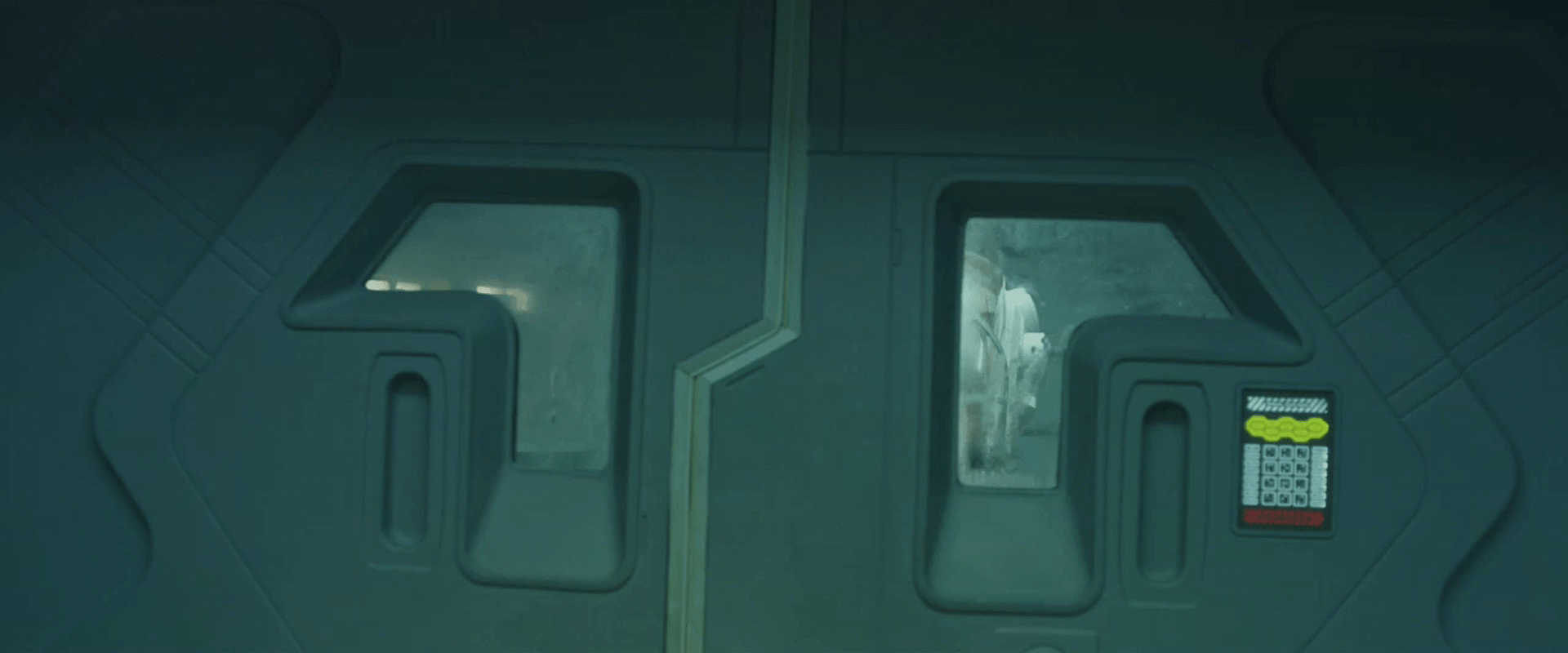
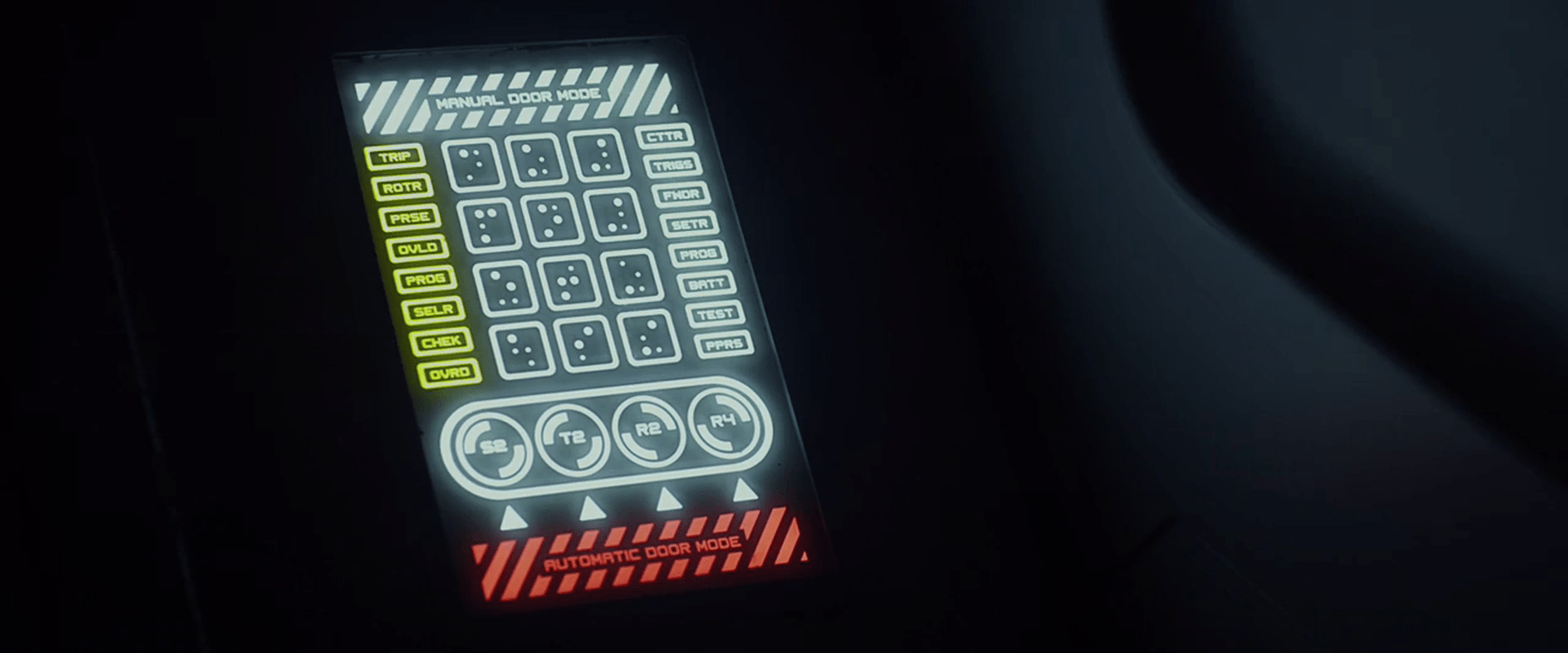
We get a clearer view of the panel that lets him into a hallway. This door is just around a meter wide, and the panel is on the left near the frame at chest level. This vertical panel has white safety stripes at the top, with a yellow row of buttons below that. The middle of the panel has two columns on the left and right edges stacked with buttons, and a 4×3 grid of buttons, labeled with characters that look something like Braille, but that don’t translate readily from English Braille, and with some of the dots in the cells larger or brighter than others. Below that grid of buttons is a white duplication of the yellow buttons above. At the bottom is a red duplication of the safety stripes button at the top.

To gain access to the hallway (where the destination threshold event occurs), David presses two keys at once—what would be the 2 and 4 keys on a telephone keypad—and the door slides open.

Later he touches the same chord of keys to open a door for Shaw and Holloway.

Prometheus-084

There is another design for the door panel outside of Meredith’s room. This panel has the white safety stripe button, the Braille-ish panel (but with the left column colored yellow), a new yellow panel of triangles, and the red safety stripe button at the bottom.

The door is slightly open when he approaches it, but unpassable. After Meredith commands, “Robe!” he presses the “5” key on the panel and the door opens fully. This panel is on the right side of the door.

Prometheus-036

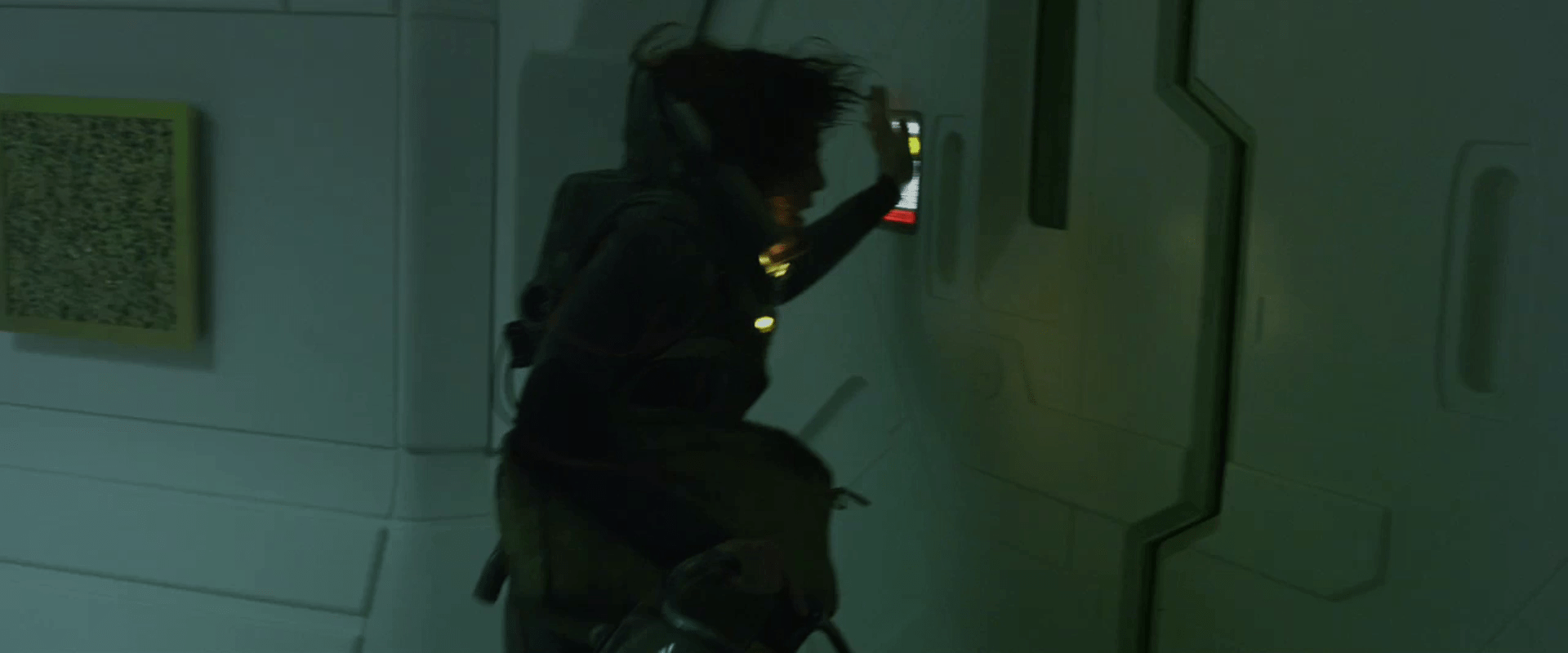
The panel to exit Weyland’s sickbay is on the door just to the left. When Shaw wants to leave the room after her traumatizing alien-abortion, she slams both hands against the panels, sliding her fingers along it and pressing what sounds like five separate buttons.

Prometheus-271

The panel that gives Shaw access back into the escape pod’s sickbay is again different, with many of the same elements from other panels, but a row of five yellow ovals outlined below the safety stripes button at the top.

Prometheus-323b

This is the only time we also see the panel on the far side of the same door. We only see a corner of it, but it does not have ovals on the other side, and some circular elements below the Braille panel. It is probably the same design as on Meredith’s door.

Prometheus-323c

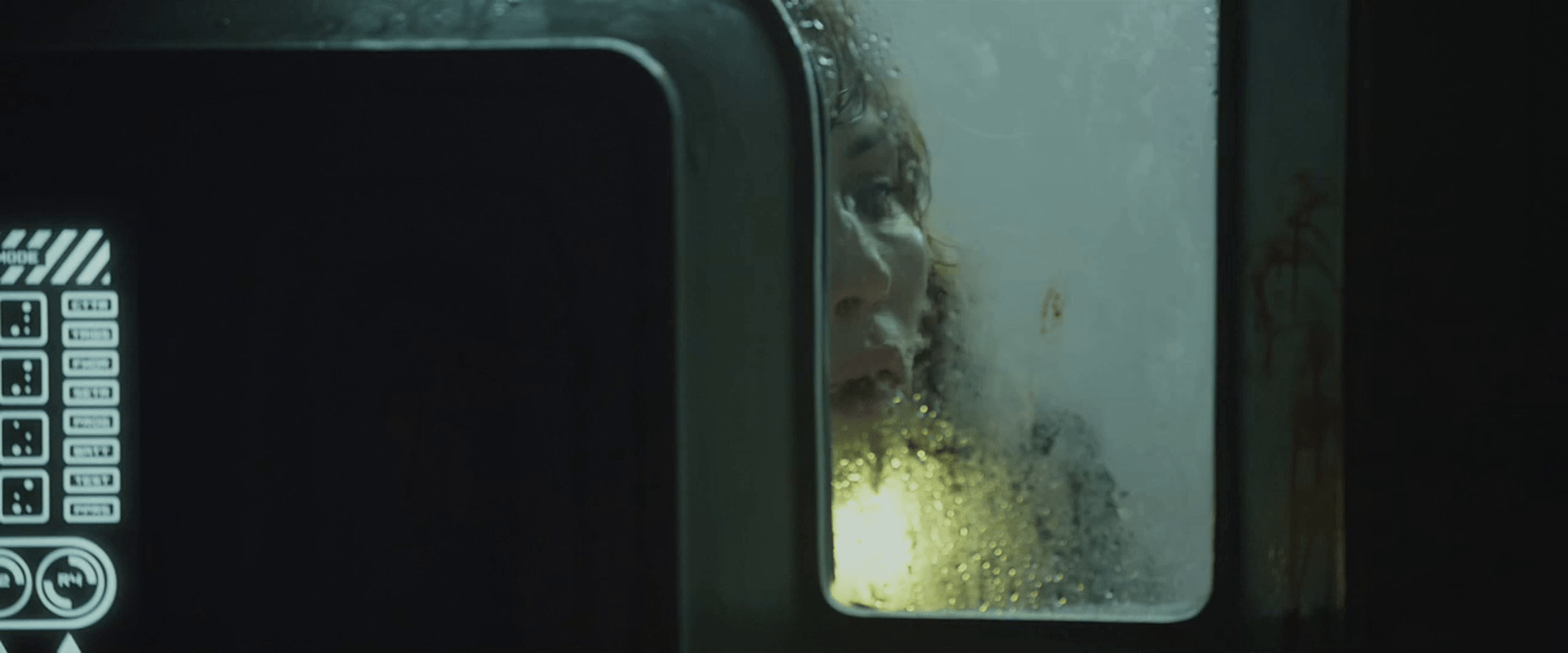
Then when the alien breaks into the escape pod and pins her against this door, we see a close up of a panel, but this one appears identical to the one on the inside of the door, rather than the yellow-oval one we saw moments before. It also appears to be identical to the one on the inside of the door (and outside Meredith’s quarters.) A confusing detail in this panel is that while similar “Braille” cells are differentiated in other panels by a variation in the dots, in this one the the “3” and “6” keys seem to be the exact same character, highlights and all. Since we don’t know the meanings of this character, it could be a “shift” or modifier key which bears repeating, we don’t know. To activate this panel, she slams her left hand downward onto it. This opens the door, freeing the massive xenomorph alien within to grapple the architect alien.

Prometheus-326

And finally, when we see her escaping the hallway where the aliens are locked in combat, she approaches a door with an oval interface, which she opens by slamming the heel of her palm against it with a grunt.

Prometheus-327

Analysis

Passing through doorways is probably one of the most common non-work activities that a crew member can do onboard a spaceship. To have crewmember key in a password every time seems like a pointless waste of everyone’s time. There are so many passive ways to check identity to authorize access that it seems silly to even bother to list them. Why not use any of these alternate technologies?

Add to that that each door panel seems to have a different one of half-dozen different designs, placed randomly on the left or right side of the door, and at least in the escape pod, multiple designs per door at several different heights. What value can there be to this chaos? It would be grossly error prone and frustrating. This level of randomness to the interface even defies the notion of it being a watchclock.

Since David and Shaw each had multiple, different-length passwords for different doors, it might seem that it’s a security measure. But when it can be opened with a punch or a hand bump, is it really security? Giving this aspect of the design the benefit of the doubt, perhaps it has some contextual awareness of Shaw’s heightened stress levels, and responds to the affective command where it might not in normal circumstances. This affective computing apology would be the way you wanted doors to work, but the film gives no evidence that this is what is at play.

Given the apparent randomness of the other panel interfaces, even apology ultimately fails us in making sense of these confusing interfaces.

Worst. Self-destruction mechanism. Ever.

When Morbius has taken a mortal wound from his monster and destroyed his “evil self,” he realizes that mankind is not ready for the power available to him through the Krell technology. Without explaining what he’’s doing, Morbius instructs Adams to “turn “that disc”.” Adams mindlessly obeys, and a plunger emerges from the floor near him.

Adams initiates the irreversible Krell self destruct mechanism.

Morbius commands Adams, ““The switch, throw it.”” Again, Adams does as he’’s told, and the plunger clicks into place as a red ring (the same red ring below the educator lever) illuminates. Then, and only then, Morbius explains that, ““In 24 hours you must be 100 million miles out in space. The Krell furnaces’ …chain reaction……they cannot be reversed.”” You think that with that kind of finality, he might have bothered to explain what was going to happen, or inquire whether the crew could make it out that far in that amount of time, but you know, science knows best.

The krell self-destruct warning signal is a silent, blinking red ring around the plunger.

Adding insult to injury, the complete warning system for this massive, solar-system-sized explosion consists of, in total, a silently pulsing red ring around the base of a plunger located in the heart of a hidden underground city behind a series of impenetrable doors sealed with combination locks. There is no klaxon, no lights seen elsewhere to indicate that your star system is about to go boom. I guess if you didn’’t know, you didn’’t really need to know.

The Monster from the Id

The plastic educator has a side effect that serves as the mystery at the dark heart of the film. Use of the device gives rise to ““monsters from the id,”” which manifest while the user is asleep and attack the sleeper’’s enemies. Our first clue to the origins of the monster appear when Morbius explains the Krell gauges.

The encyclopedia registers a negligible amount of power.

“Gauges line the curving walls of the lab in stacks of two,” Morbius explains, ““Their calibrations appear to indicate that they are set in decimal series, each division recording exactly ten times as many amperes as the one preceding it. Ten times ten, times ten, times ten, times ten, times ten, on and on and on, row after row, gauge after gauge.””

He turns on the encyclopedia and a small bit of light appears on the first gauge. He turns on the plastic educator and the gauge shows a little more.

Asleep, Morbius’’ id manifests as a horrible monster.

This explanation helps to set up the awesome power of Morbius’’ monster when we see Morbius sleeping in the lab, and sixteen of the gauges are lit up. (It’s 10^16 times more powerful than an encyclopedia.) We know the (then) unbelievable technologies showed the barest sliver of a reading, and here they are blasting power to…somewhere.

After waking, both Morbius’’ monster and the power gauges fade.

The connection is severed as Morbius awakens, and within seconds the monster fades and the gauges behind him dim one by one.

Adams wrestles Morbius into the seat of the educator.

This dramatic link is underscored when the monster has come into the underground city to destroy Morbius, Adams, and Alta. As Adams wrestles Morbius down, we hear the angry pounding of the monster against the vault like doors, and see the gauges glowing and fluctuating wildly in the background.

The plastic educator

Dr. Morbius introduces the Krell “plastic educator,” saying, ““As far as I can make out, they used it to condition and test their young, in much the same way as we once employed finger painting among our kindergarten children.””

Morbius grasps the educator’s head mount.

The device is a station at which the learner sits. There is a large dashboard before him, in turn before a space enclosed in a tetrahedral encasement of plastic. To his right is a large column made of plastic with red and yellow graduations running up the side. Inside the column is a strange shape like a lathed accordion, terminating in a pulsing ring that indicates a level against the graduations. An arced panel hangs from the ceiling with other printed graduations with lines of light above and below. Blue neon squiggles blink randomly along the walls.

Morbius demonstrates proper placement of the educator interface.

To activate the station, the learner grasps a pair of curved metal arms, which are connected at a hinged base and tipped with crystal orbs. He leans forward, rests his forehead on a third arm, and pulls the pair of arms to rest on his temples. He turns a pair of dials on the dashboard before him, and the crystal orbs on all three arms glow, indicating that the headset is operational.

Morbius points to the intelligence indicator.

Adams and Doc try to guage their own IQs.

The device’’s immediate result is that the accordion shape inside the column rises such that the lit ring indicates the intelligence of the user. (To Adams’ and Doc’’s dismay, their readings are much lower than Morbius’.)

With the press of a lever Morbius manifests a thought visually.

The primary function of the device is for the user to make a thought of theirs manifest in the tetrahedral space. The user concentrates on the thing, and then pulls a lever at the base of the headset. A red ring at the base of the headset illuminates, and a material appears above a pedestal at the base of the tetrahedron. By concentrating, the user shapes this material into the desired thing. Morbius shapes it into an image of Alta. The image is a scaled, translucent, volumetric display of Alta, which moves and smiles just as she would.

The projection ceases immediately when the mechanism is removed.

To stop using the device and shut down the projection, the learner simply lifts the lever and removes the headset from contact, and the orbs, the red ring, and the volumetric projection all fade within moments.

Finished with his demonstration, Morbius turns the educator off.

Turning the dashboard off requires a user to turn two free-spinning dials that sit to each side of the headset inwards. The lights of the dashboard fade.

Krell technology

Morbius is the inheritor of a massive underground complex of technology once belonging to a race known as the Krell. As Morbius explains, ““In times long past, this planet was the home of a mighty and noble race of beings which called themselves the Krell….”

Morbius tours Adams and Doc through the Krell technopolis.

“Ethically as well as technologically, they were a million years ahead of humankind; for in unlocking the mysteries of nature they had conquered even their baser selves… “…seemingly on the threshold of some supreme accomplishment which was to have crowned their entire history, this all but divine race perished in a single night.

““In the centuries since that unexplained catastrophe even their cloud-piercing towers of glass and porcelain and adamantine steel have crumbled back into the soil of Altair, and nothing——absolutely nothing——remains above ground.””

Despite this advancement, unless we ascribe to the Krell some sort of extra sensory perception and control, much of the technology we see has serious design flaws.

Morbius plays half-a-million-year-old Krell music.

The first piece of technology is a Krell recorded-music player, which Morbius keeps on the desk in his study. The small cylindrical device stands upright, bulging slighty around its middle. It is made of a gray metal, with a translucent pink band just below the middle. A hollow button sits on top.

The cylinder rests in a clear plastic base, with small, identical metal slugs sitting upright in recessions evenly spaced around it. To initiate music playback, Morbius picks one of the slugs and inserts it into the hollow of the button. He then depresses the momentary button once. The pink translucent band illuminates, and music begins to flow from unseen speakers around the office.

Modern audiences have a good deal of experience with music players, and so the device raises a great many questions. How does a user know which slug relates to what music? The slugs all look the same so this seems difficult at best. How does a user eject the slug? If by upending the device, one hopes that the cylinder comes free from the base easily, or the other slugs will all fall out as well. It must have impressed audiences to see music contained in such small containers, but otherwise the device is more attractive than usable.

Morbius inputs the combination to open the door.

Many Krell doors are protected by a combination lock. The mechanism stands high enough that Morbius can easily reach out and operate it. Its large circular face has four white triangles printed on its surface at the cardinal points, and other geometric red and yellow markings around the remainder. A four-spoke handle is anchored to a swivel joint at the center of the face. To unlock the door, a user twists the handle such that one of its spokes lines up with the north point, and then angles the handle to touch the spoke to the triangle there, before returning the handle to a neutral angle and twisting to the next position in the combination. When the sequence is complete, the triangles, the tips of the spokes, and a large ring around the face all light up and blink as the two-plane aperture doors slide open.

Even Walter Pigeon has trouble making sense of this awkward device. There appear to be no snap-to affordances for the neutral angle of the handle or the cardinal orientations, leaving the user unsure if each step in the sequence has been received correctly. Additionally, if the combination consists of particular spokes at this one point, why are the spokes undifferentiated? If the combination consists of pointing to different triangles, why are there four spokes instead of one? Is familiarity with some subtle cue part of the security measures?

Morbius shares operation of the Krell encyclopedia.

All of Krell wisdom and knowledge is contained in a device that Morbius shows to Adams and Doc. It consists of an underlit scroll of material sliding beneath a rectangular hole cut in the surface of a table. To illuminate it, Morbius turns one of the two ridged green dials located to the left of the “screen” about 45 degrees clockwise. To move the scroll, Morbius turns the other green dial clockwise as well.

Why is the least frequently used dial, i.e. the power button, closer than the more frequently used button, i.e. the scroll wheel? This requires the reader to be stretched awkwardly. Why is the on-off dial free spinning? There appear to be only two states: lit and unlit. The dial should have two states as well. If the content of the pages is discretely chunked into pages, it would also argue for a click-stop rather than free-spinning dial as well, but we do not get a good look at the scroll contents. One might also question the value of a scroll as the organizing method for a vast body of information, since related bits of information may be distractingly far apart.

(Other) Morbius technology

Aside from Robbie, we see two other instances of Morbius’’ post-Krell inventions, each of which is lacking in its own way.

A tossed orange demonstrates the very dangerous disposal system.

The first is the disposal, which is housed in a cylindrical nook off of the living room. The smooth walls of this nook are covered in the same metallic, cupric material as a short pedestal seated within. When something is tossed into the nook above the pedestal, it is instantly disintegrated in streaks of green-white energy. There is no indication that the device can distinguish between garbage to be disintegrated and, say, human flesh, but even if it can, the utter irreversibility of the action begs for some additional step of confirmation and safety.

Commander Adams discovers Morbius’’ hidden door.

The second is the secret door from Morbius’’ study to the Krell complex. It is a recessed stretch of wall off of the living room. Adams discovers it accidentally when he approaches and to his amazement, it slides open by dint of his mere proximity. If this is meant to be either secret or secure, it fails on both counts.

Handwave switches

Much of the control of Morbius’’ highly technological house is given to wave-over switches. These devices sit on the tops of tables, and illuminate briefly when they detect a hand moving above them. Each is keyed to a different job.

Alta must “beam” Robbie several times before he arrives.

One of these devices summons Robbie. After waving her hand several times over it, Alta expresses her frustration when Robbie finally arrives. ““Where have you been?”” she asks, ““I’’ve beamed and beamed.”” It hints at the need for some feedback from Robbie that he has heard the summons and is coming.

With a wave of his hand Morbius activates the security shutters around his house.

Another hand wave device closes or opens the protective metal shutters that seal Morbius’’ house.

To see the outdoors better, Morbius waves off the indoor lights.

Another one allows him to turn off interior lights, which he uses in the film to see what is approaching so noisily.

One interesting fact of these interfaces is that they lack any affordance for their cause and effect. How is a new user meant to know to wave? How would she know what would happen as a result? Though this is generally inadvisable, we can imagine that Morbius only ever planned for he and Alta to use it.