

Where we are: To talk about how sci-fi AI attributes correlate, we first have to understand how their attributes are distributed. In the first distribution post, I presented the foundational distributions for sex and gender presentation across sci-fi AI. Today we’ll discuss how germane the AI character’s gender is germane to the plot of the story in which they appear.
As always, you can read the Gendered AI posts in order or check out the source data for more information.
Germane-ness


Is the AI character’s gender germane to the plot? This aspect was tagged to test the question of whether characters are by default male, and only made female when there is some narrative reason for it. (Which would be shitty and objectifying.) To answer such a question we would first need to identify those characters that seemed to have the gender they do, and look at the sex ratio of what remains.
Example: A human is in love with an AI. This human is heteroromantic and male, so the AI “needs” to be female. (Samantha in Her by Spike Jonze, pictured below).


If we bypass examples like this, i.e. of characters that “need” a particular gender, the gender of those remaining ought to be, by exclusion, arbitrary. This set could be any gender. But what we see is far from arbitrary.
Before I get to the chart, two notes. First, let me say, I’m aware it’s a charged statement to say that any character’s gender is not germane. Given modern identity and gender politics, every character’s gender (or lack of, in the case of AI) is of interest to us, with this study being a fine and at-hand example. So to be clear, what I mean by not germane is that it is not germane to the plot. The gender could have been switched and say, only pronouns in the dialogue would need to change. This was tagged in three ways.
- Not: Where the gender could be changed and the plot not affected at all. The gender of the AI vending machines in Red Dwarf is listed as not germane.
- Slightly: Where there is a reason for the gender, such as having a romantic or sexual relation with another character who is interested in the gender of their partners. It is tagged as slightly germane if, with a few other changes in the narrative, a swap is possible. For instance, in the movie Her, you could change the OS to male, and by switching Theodore to a non-heterosexual male or a non-homosexual woman, the plot would work just fine. You’d just have to change the name to Him and make all the Powerpuff Girl fans needlessly giddy.
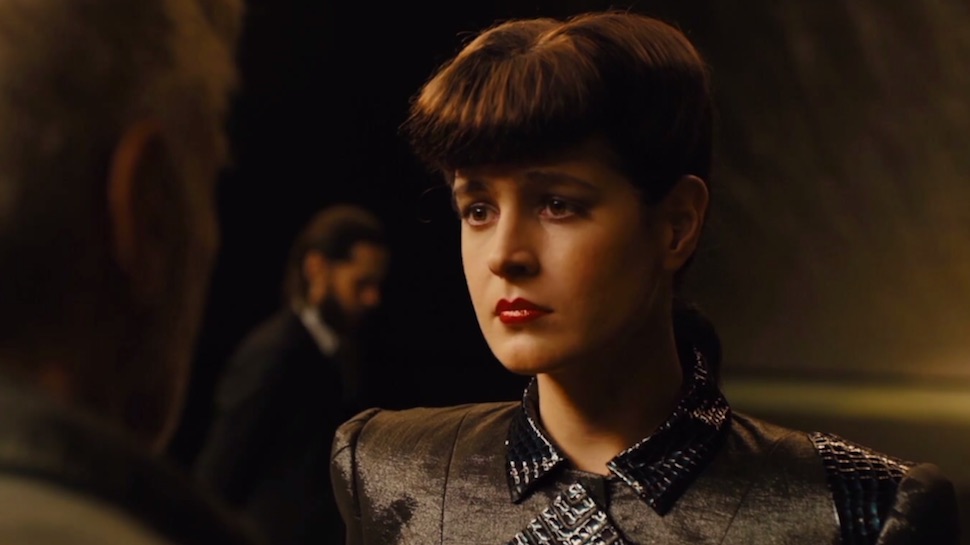
- Highly: Where the plot would not work if the character was another sex or gender. Rachel gave birth between Blade Runner and Blade Runner 2049. Barring some new rule for the diegesis, this could not have happened if she was male, nor (spoiler) would she have died in childbirth, so 2049 could not have happened the way it did.
Second, note that this category went through a sea-change as I developed the study. At first, for instance, I tagged the Stepford Wives as Highly Germane, since the story is about forced gender roles of married women. My thinking was that historically, husbands have been the oppressors of wives far more than the other way around, so to change their gender is to invert the theme entirely. But I later let go of this attachment to purity of theme, since movies can be made about edge cases and even deplorable themes. My approval of their theme is immaterial.
So, the chart. Given those criteria, the gender of characters is not germane the overwhelming majority of the time.


At the time of writing, there are only six characters that are tagged as highly germane, four of which involve biological acts of reproduction. (And it would really only take a few lines of dialogue hinting at biotech to overcome this.)
- XEM
- A baby? But we’re both women.
- HIR
- Yes, but we’re machines, and not bound by the rules of humanity.
- HIR lays her hand on XEM’s stomach.
- HIR’s hand glows.
- XEM looks at HIR in surprise.
- XEM
- I’m pregnant!
Anyway, here are the four breeders.
- David from Uncanny
- Rachel from Blade Runner (who is revealed to have made a baby with Deckard in the sequel Blade Runner 2049)
- Deckard from Blade Runner and Blade Runner 2049
- Proteus IV from the disturbing Demon Seed

The last two highly germane are cases where a robot was given a gender in order to mimic a particular living person, and in each case that person is a woman.
- Maria from Metropolis
- Buffybot from Buffy the Vampire Slayer
I admit that I am only, say, 51% confident in tagging these as highly germane, since you could change the original character’s gender. But since this is such a small percentage of the total, and would not affect the original question of a “default” gender either way, I didn’t stress too much about finding some ironclad way to resolve this.
